Spiti Valley
Ancient Key Monastery, High-Altitude Chandratal Lake & Passes
- Adventure
- Solo
- Scenic
- Culture
- Nature
- Family
Spiti Valley, your way.
With time for what matters.
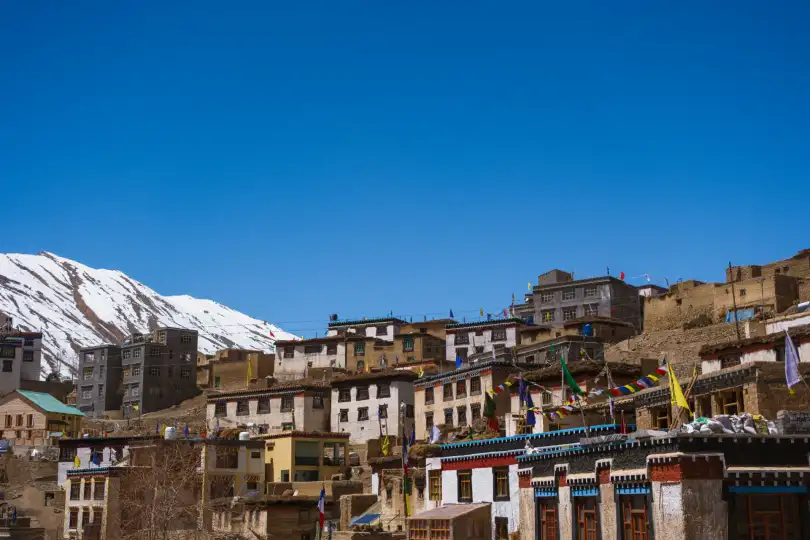
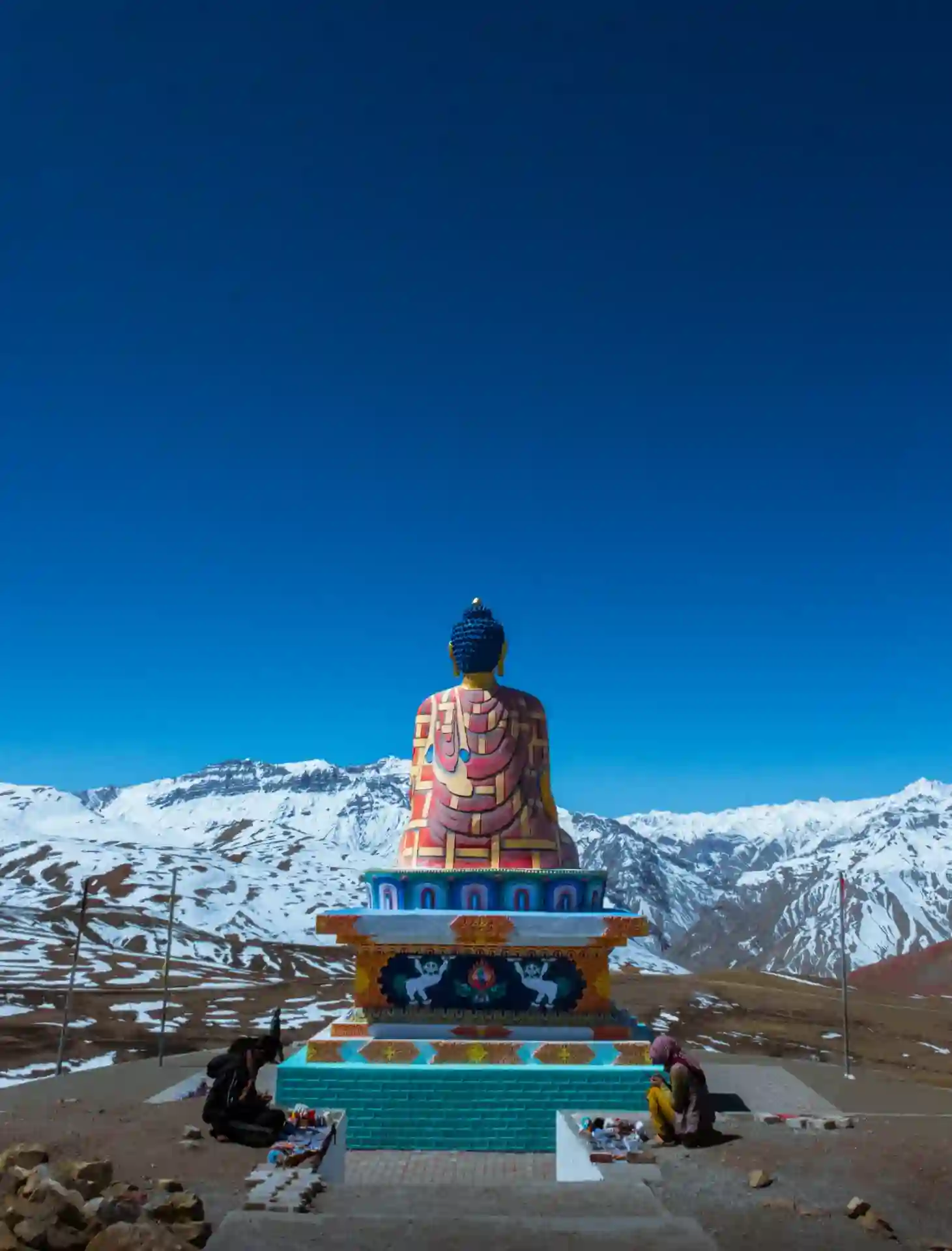
Spiti Valley is a high-altitude cold desert in the trans-Himalayan zone — geographically and culturally a Tibetan plateau landscape within Indian territory, terrain arid on the valley floor, with surrounding peaks at 5,500-6,500 m, vegetation limited to river valleys where snowmelt irrigation is possible. Takes its name from the Spiti River (Sutlej tributary) cutting through the district from Kunzum Pass to the Sutlej confluence at Khab. Culture is Tibetan Buddhist — monasteries (Key, Tabo, Dhankar, Komic, Kungri, Lhalung) founded in the 10th- 17th centuries, still functioning. One of India's least densely populated regions.
Is Spiti Valley Worth Visiting in 2026?
Why visit Spiti Valley.
Why Spiti Valley in September 2026? September is the single finest month to visit Spiti Valley — the post-monsoon sky at its clearest (the deep cobalt blue that exists only at 3,500-4,500m altitude in the post-monsoon clarity), the harvest fields at their most golden, both the Manali and Shimla routes fully operational, all monasteries open, and Chandratal Lake accessible before the first October snows close the Kunzum Pass. The Spiti that September produces is the Spiti that the photographs attempt to show and consistently fail to capture.
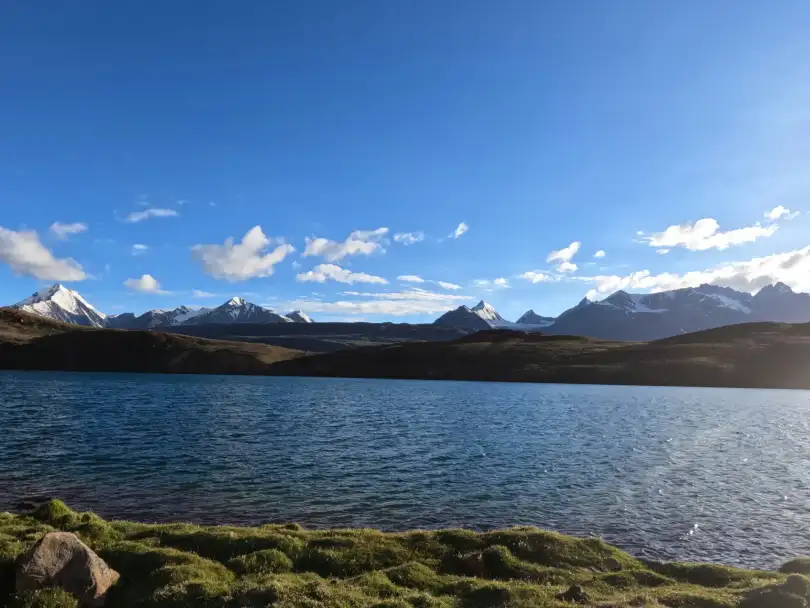
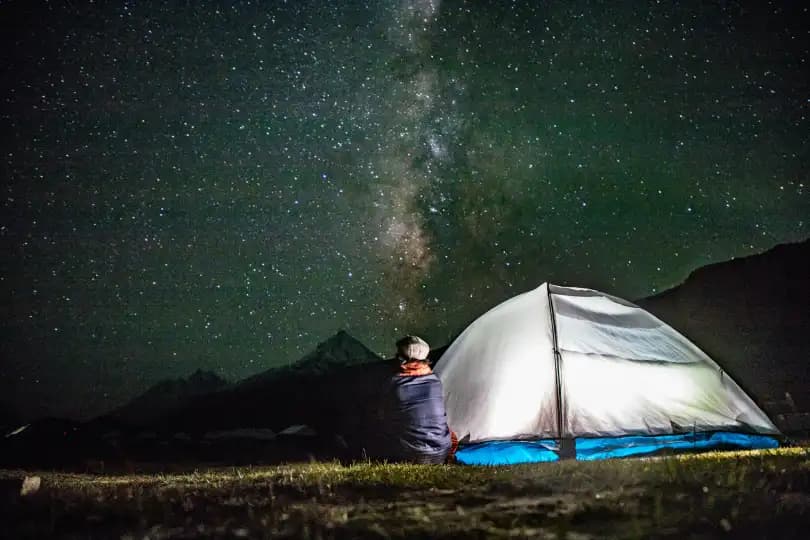
I arrived at Chandratal Lake at 6am on September 14, 2022. The camp (the cluster of tents on the plateau above the lake, 500m from the water) was still asleep. I walked to the lake edge alone in the September pre-dawn cold (-4°C, the breath visible). The lake at that hour: the water a specific dark cobalt that comes from depth and sky together, the crescent shape of the lake matching the crescent of the glacial cirque that formed it, and the reflection of Chandra Peak (6,001m) in the still surface. Nothing about Chandratal Lake is communicable by photograph because the photograph requires you to look at it through a screen, and the lake requires you to be at 4,300m in the cold with your breath visible and the sound of nothing except the wind moving off the glacier above. The photograph is accurate. The experience is different in kind.
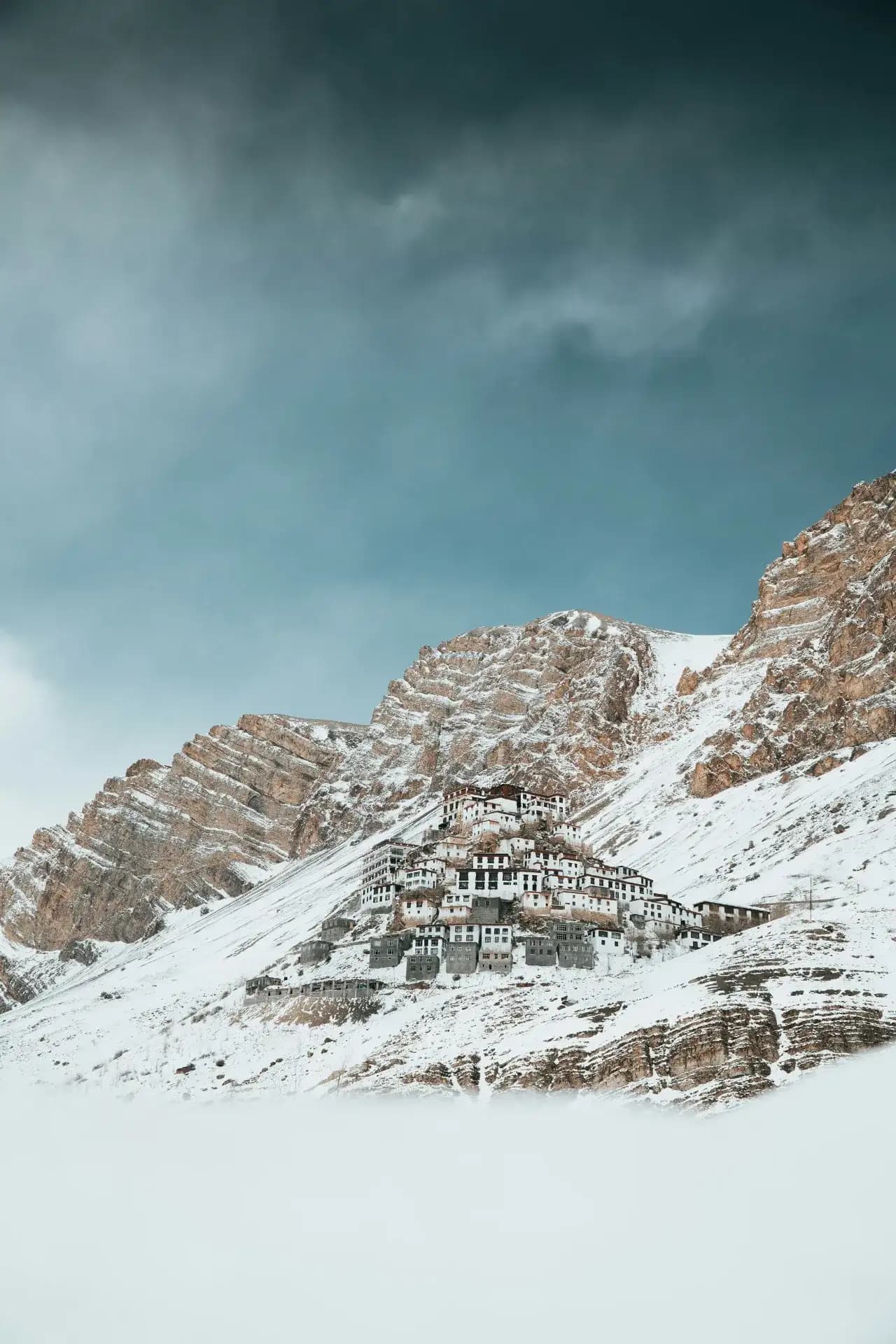
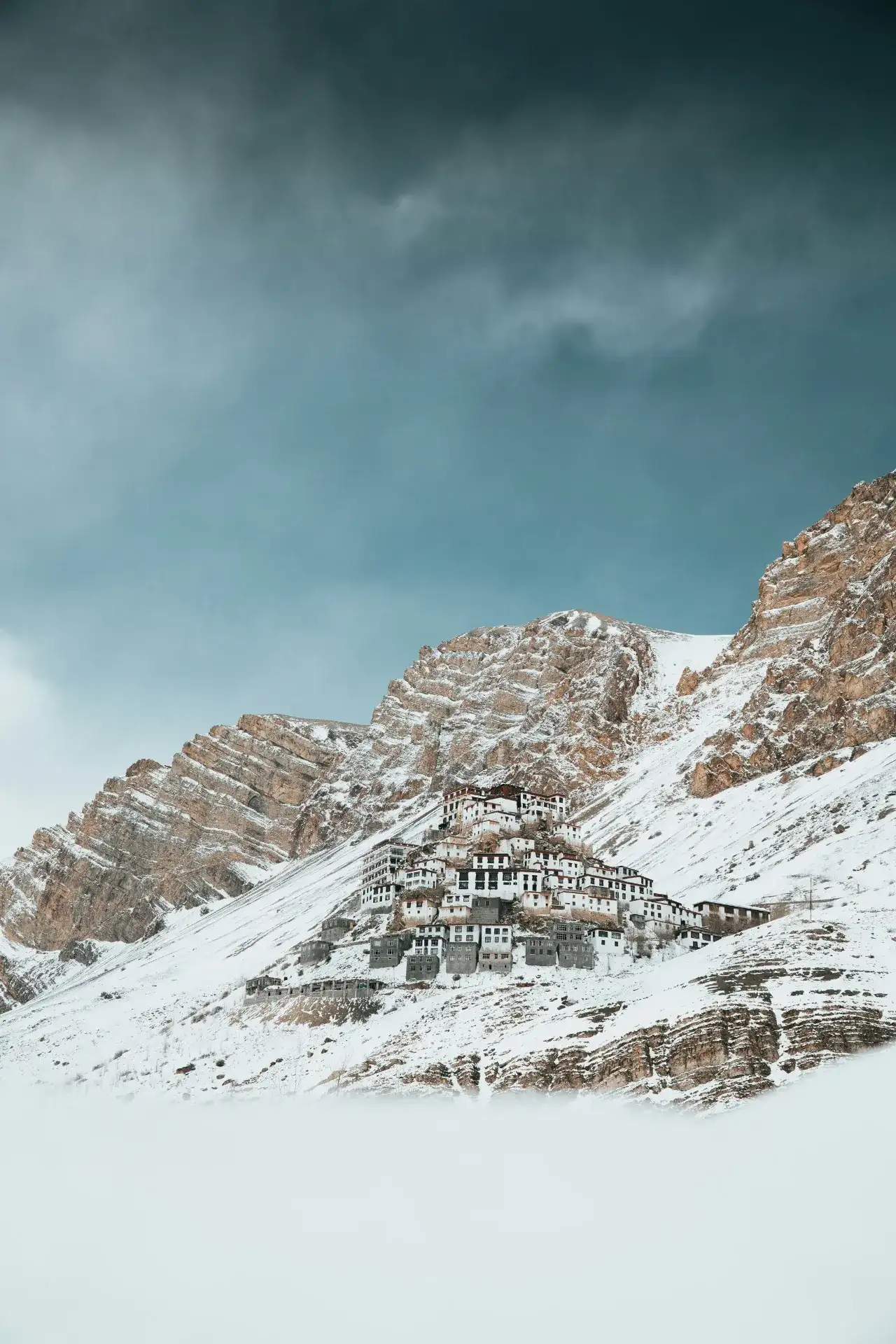
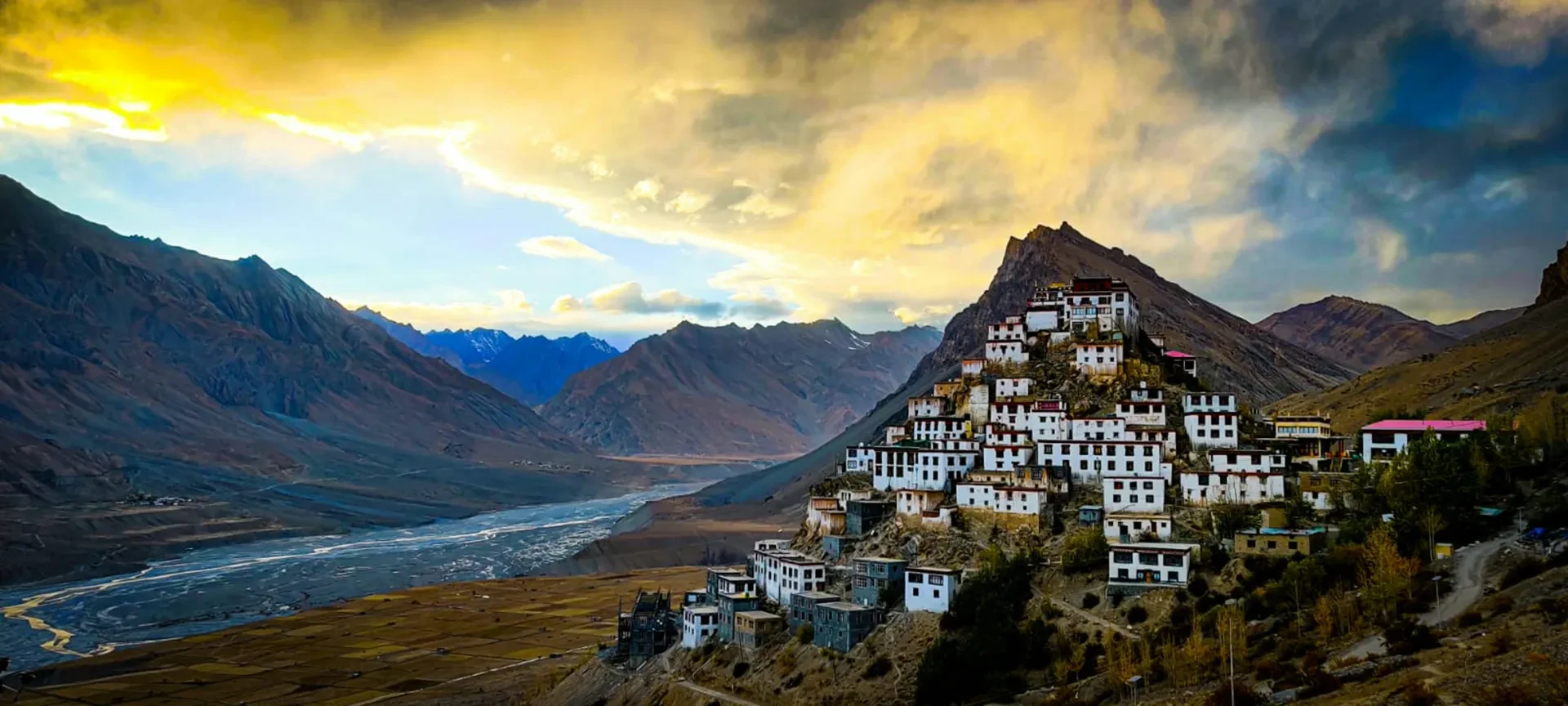
The Key Monastery at 6am on September 15: the approach from Kaza (14km, 1 hour by road) at dawn, the monastery appearing on its conical hill as the first light caught the whitewashed walls. I walked up the path from the road (15 minutes) and reached the monastery courtyard at 6:15am. The monastery was quiet — the morning prayer of the resident monks audible from inside the main prayer hall (the low, rhythmic chanting that has been performed in this building since the 11th century). From the monastery terrace: the Spiti Valley below, the river visible in its brown channel, the 6,000m peaks to the north, the harvest fields of Kibber and the valley villages visible in the early morning light. No other visitor on the hill at 6am. By 9am: the first tourist vehicles from Kaza.
Key features of Spiti Valley
Top 8 Places in Spiti Valley 2026
 01 / Place
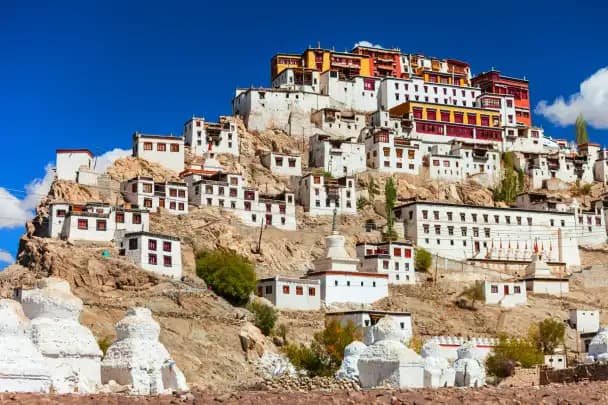
Key Monastery — Labyrinth at Dawn
The Key Monastery (Ki Gompa, 11th century, the name means 'key' in Tibetan — the monastery is the key of the Spiti Valley) occupies the summit of a conical volcanic hill at the confluence of the Key Nullah and the Spiti River, 14km from Kaza. The monastery is the largest in Spiti — 300 resident monks, the prayer hall containing the thousand-armed Chenrezig (Avalokiteshvara) statue, ancient thangka paintings dating to the 15th century, and the rooftop terrace from which the entire Spiti Valley is visible. The approach in September at 6am: the road from Kaza to the Key junction (14km, 30 minutes), then the 15-minute walk up the stone path to the monastery gate, then the monastery courtyard. The monks' morning prayer (the earliest monks begin at 4am, the formal prayer at 6am) is audible from the courtyard — the collective chanting from inside the main prayer hall, the deep bass of the ritual horns punctuating the chanting. The monastery at this hour: the chanting within, the valley below, the September light touching the higher peaks first (6,000m summits lit at 6:15am while valley floor still in shadow). 02 / Place
Chandratal Lake — Moon Lake Before Dawn
Chandratal (4,300m, the 'Moon Lake' — named for its crescent shape, which mirrors the crescent moon of the Tibetan Buddhist tradition) is in the Lahaul side of the Kunzum pass — 14km from Batal on a track that requires a high-clearance 4WD (the last 3km of the track is rocky and unmarked). The overnight camping at Chandratal (the cluster of authorised tents on the plateau 500m from the lake edge) gives the pre-dawn and dawn versions of the lake that the day-trip visitor (arriving at 10am from Kaza, 3 hours away) cannot access. The September Chandratal at 6am: the temperature at -4°C, the breath visible, the lake surface completely still in the pre-wind hour. The cobalt colour of the water — the specific dark blue that comes from the combination of depth (lake is 90m deep) and sky reflection at high altitude — and the crescent shape (eastern end narrow, western end broad). The peak above the eastern end of the lake (Chandra Peak, 6,001m) reflected in the still surface. The specific Chandratal dawn that no day visitor sees.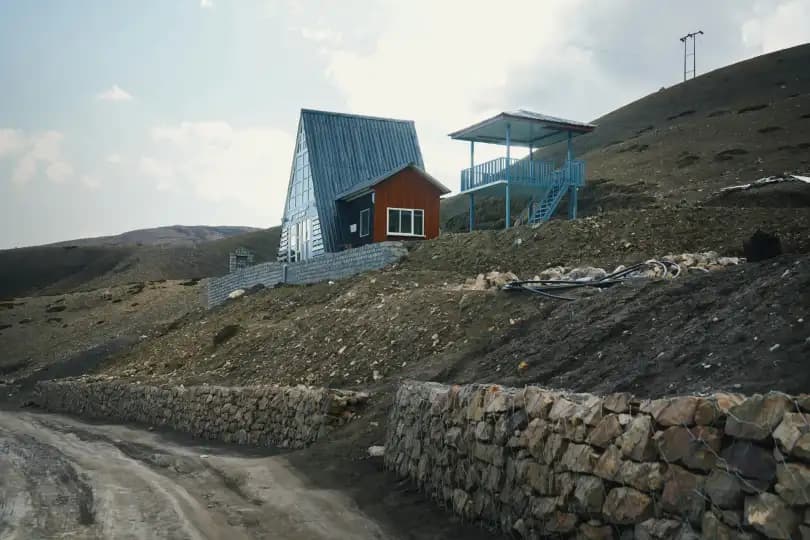 03 / Place
Hikkim Post Office — A Postcard from 4,440m
Hikkim (4,440m, 18km from Kaza, a 30-minute drive on the upper Spiti plateau road) has a Post Office that has been functioning since 1983 — the world's highest post office, according to the Guinness World Records. The post office building: a single room, approximately 3m × 4m, the counter behind a wooden partition, the rubber stamps and the scale for weighing parcels. The postmaster (the current postmaster is the second generation of the same family — his father opened the post office in 1983) issues the official stamp with the altitude and the date. The specific Hikkim experience: buying a postcard at the post office (₹10-20 from the small stock kept at the counter), writing the address in front of the postmaster, paying the ₹5 postage, and watching the postmaster stamp and post the card. The postcard then travels by the weekly Hikkim-Kaza bag to Kaza, then by the regular postal service to the destination. 18 days to Dehradun (Vikas's postcard in September 2022). The most specifically Spitian single experience — a proof of location, sent from the edge of what is habitable. 04 / Place
Tabo Monastery — 1,000-Year Murals
Tabo Monastery (996 AD, the year of its foundation — the same year the Alchi Monastery in Ladakh was founded by Rinchen Zangpo, the 'Great Translator' who established Tibetan Buddhism in the western Himalayan regions) is the oldest continuously functioning monastery in India. The monastery complex (the 'chhos-khor' — the sacred enclosure, 9 original temples and 23 chortens on the Tabo floodplain at 3,280m) contains the most complete surviving set of early-11th-century Tibetan Buddhist murals and stucco sculptures in India — the Assembly Hall interior has 96 clay stucco sculptures (the bodhisattvas and protective deities of the Rinchen Zangpo programme) in their original positions and condition. The Tabo murals: the 11th-century Kashmir-influenced paintings, the 15th-century murals added during the monastery's second period, and 20th-century additions. The archaeological significance: the complete programme of murals, sculptures, and texts of the Rinchen Zangpo period (996-1036 AD) has survived here in better condition than at any comparable site because the Spiti climate (extreme dry, very low humidity, stable temperature underground) preserves organic materials.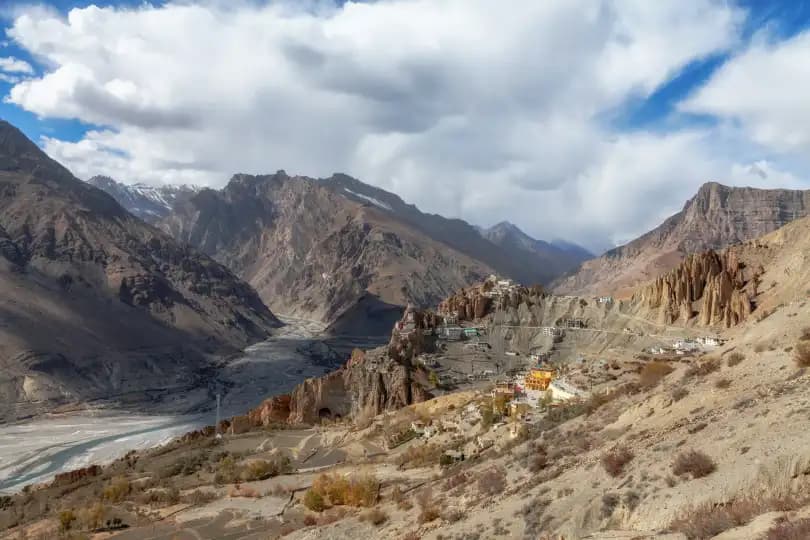 05 / Place
Dhankar Monastery + Dhankar Lake
Dhankar (3,894m, 30km from Kaza, the Pin Valley junction — the confluence of the Pin River and the Spiti River) has the most dramatically positioned monastery in Spiti — the old Dhankar Monastery (the cliff-face fortress-monastery, the original seat of the Spiti kings, now in fragile condition and being stabilised by INTACH) above the valley, the new monastery below it, and the 1-hour walk above the old monastery to the Dhankar Lake (the small high-altitude lake in the upper Pin Valley cirque). The Dhankar Lake walk (from the old monastery, up the rockfall and the rough trail — 1 hour each way): the lake at 4,100m, the Pin Valley visible below, the Dhankar Monastery visible on its cliff directly below the lake position. September Dhankar Lake: the lake in the post-harvest colour, the surrounding grassland at its final gold before the winter snow, and the specific view of the Pin Valley entering the Spiti Valley at the confluence below — the two valleys meeting, the rivers joining, the monastery watching from its cliff position as it has for 500 years.Best Time to Visit
January · Avoid Winter. Kunzum closed. Shimla route only (extremely difficult). -20°C nights. For experienced winter expedition travellers only.
February · Avoid Winter continuing. Losar (Tibetan New Year) festival if accessible would be most culturally specific — but requires expedition-level preparation. Generally inaccessible.
March · Avoid Winter closing. Spiti starting to prepare for road opening but still largely cut off. Cold remains extreme.
April · Avoid Pre-season. Some Shimla route access beginning. Kunzum still closed. Most monasteries still inaccessible.
May · Avoid Opening transition. Roads being cleared. Kunzum may open late May in good snow years. Most facilities still preparing.
June · Best Opening season. Both routes operational. Fresh season feeling. Some snow on high passes still. Fewer relative tourists. Chandratal accessible.
July · Good Peak summer. 15-25°C day. Clear skies. All roads open. More tourists. Rohtang/Manali side can be wet from monsoon spillover.
August · Good Peak summer continuing. Same as July. Maximum tourist density at Key Monastery. Some weekend influxes from Manali.
September · Best Vikas's Visit. FINEST month. Post-monsoon cobalt sky. Harvest season gold. All routes + passes open. Fewest relative tourists. Optimal Spiti window.
October · Good First half EXCELLENT (same as September). After mid-October: Kunzum Pass snowfall risk. Confirm road status before booking late October.
November · Avoid Closing season. Kunzum closes by mid-month typically. Shimla route narrowing. Tourist infrastructure shutting down.
December · Avoid Winter. Spiti isolated. Extreme cold. Kunzum closed. Limited Shimla access for expedition travellers only.
Spiti Valley trips,
ready to personalise.
 8D / 7N
Spiti Valley Adventure Tour Package
Shimla, Kaza, Chandratal, Manali
Spiti Valley experiencesBest 10 Things to Do in Spiti Valley
Key Monastery Dawn — 6 am, Walk Up the Hill
Insider tip
Key Monastery inner prayer hall (main assembly hall with thangkas and stucco) opens at 7 am when monks finish morning prayer. Enter respectfully after 7 a.m. for the interior; pre-dawn entry gives exterior and valley views; post-dawn entry gives interior views.
Chandratal Lake — Overnight Camp + 6am Dawn
Overnight camp at Chandratal is ESSENTIAL Spiti experience for non-negotiable reasons: day-trip visitor (arriving at 10am from Kaza, 3 hours away) arrives after dawn, in wind, with 50 other visitors. Overnight camp visitor arrives previous afternoon, sees sunset, wakes at 5:30 am, reaches lake edge at 6am in -4°C pre-dawn with lake still and reflection complete.
Insider tip
Authorised camp operators at Chandratal (HPTDC and private operators) provide sleeping bags rated to -10°C — essential for September nights at 4,300m.
Hikkim Post Office + Komic Village — High Altitude Circuit
Insider tip
Komic section (Hikkim to Komic, 4km of rough track) requires a local Bolero from Hikkim village — ask at Hikkim and arrange. This track is the roughest in the Spiti circuit for standard vehicles. Do NOT attempt in a Maruti Suzuki Swift or similar sedan.
Tabo Monastery — 8am, Before Day Tours
Tabo Monastery guide strongly recommends visiting the Assembly Hall — the iconographic programme of the Rinchen Zangpo period (arrangement of 96 stucco figures and mural cycles in a specific theological sequence that the 11th-century master planned) is not readable without explanation. The guide explains which figure is which bodhisattva and why the arrangement has been unchanged for 1,000 years. HPTDC tourist coaches from Kaza arrive at Tabo at 10-11am. Arrive at 8am (Tabo is 45km from Kaza, 1.5 hours — early departure gives monastery before day tours). Assembly Hall interior: stucco figures, 1,000-year-old murals.
Insider tip
Kaza 6:30 am · Tabo 8 am (Assembly Hall with guide, 1 hour) · Tabo Caves (meditation caves in cliff above village where monks have retreated for 1,000 years — 30-min walk from monastery) · Tabo village chai · Dhankar 11 am (30km from Tabo) · Dhankar Lake walk (1 hour up, 1 hour down from old monastery).
Chicham Bridge — Walk Across 150m Gorge
Wind at Chicham Bridge can be significant — in September, afternoon wind (after 2 pm) is consistently stronger than morning. Cross before 12 pm for the most comfortable experience. Bridge sways minimally at centre in strong wind — this is structural (suspension bridge design) and not a cause for concern. Specific vertiginous experience is gorge below through grating, not sway. Drive from Kibber (20km from Kaza, 45 minutes) to Chicham Bridge (5km from Kibber, 15 minutes). Walk across bridge (2 minutes, 150m span, gorge visible 150m below through metal grating).
Insider tip
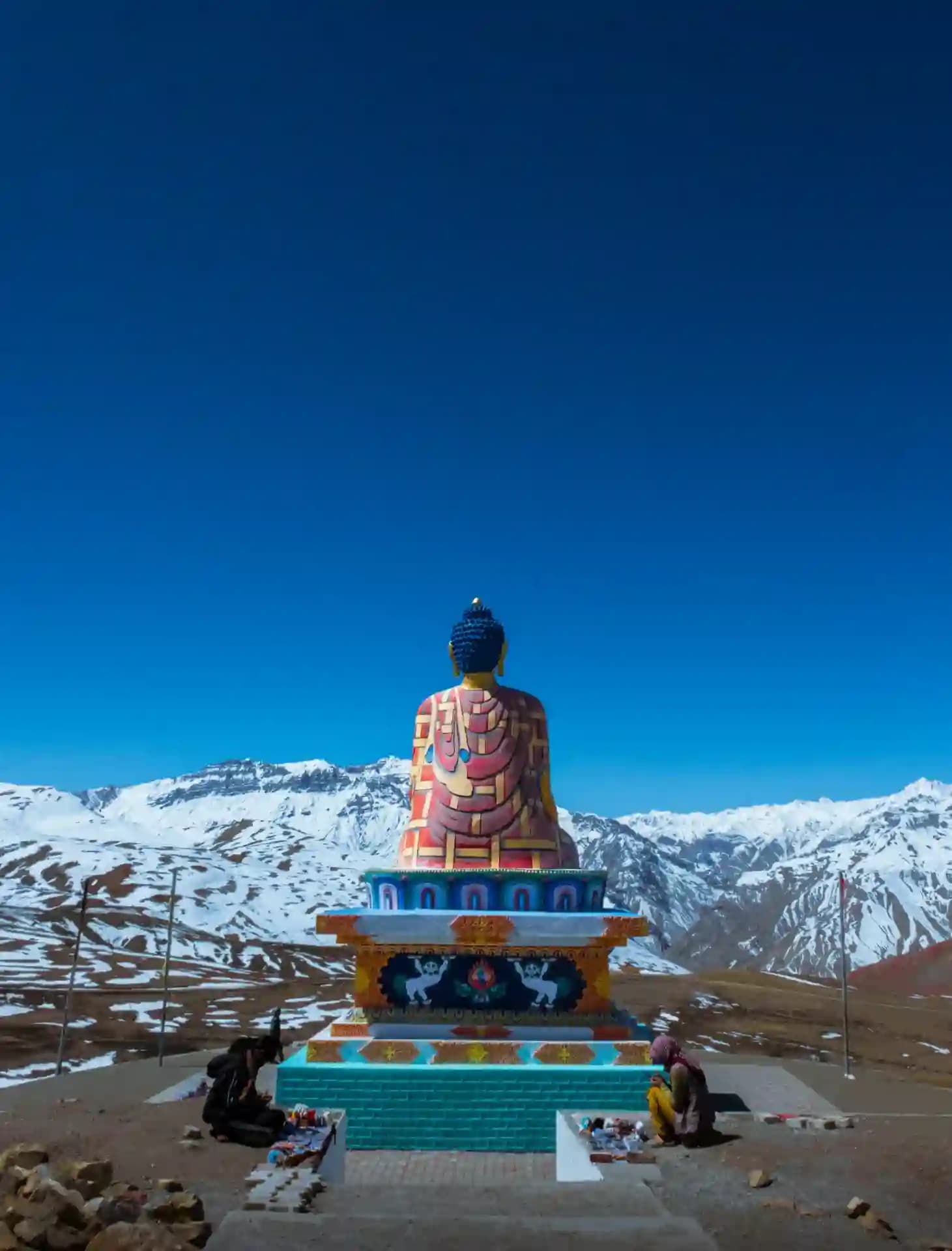
Kaza 8 am · Kibber 9 am (village walk, Snow Leopard Conservation Centre) · Chicham Bridge 10 am (2-minute crossing, 10-minute photography session) · Return Kibber · Langza 12 pm (Buddha statue, fossil beds) · Return Kaza 2 pm.
Dhankar Monastery + Lake — Complete Pin Valley View
Dhankar Lake gives only aerial view of Pin Valley in Spiti circuit accessible without trek of more than 1 hour. View from lake: Pin River entering Spiti Valley from south, Dhankar Monastery on cliff visible directly below, Spiti River visible at valley floor. September light at Dhankar Lake (11am, when sun is high enough to illuminate both lake and valley below): most complete single photographic composition in Spiti.
Insider tip
Drive Kaza → Dhankar (30km, 1 hour). New monastery visit (open 9am). Then old monastery climb (15 minutes above new monastery — cliff-face structure, INTACH stabilisation visible in scaffolding sections). Then Dhankar Lake walk (1 hour up from old monastery, 1 hour down).
Kaza Stargazing — 10pm, Rooftop
Specific September sky from Kaza at 10 pm: Milky Way rising from the southeast horizon (from the Sagittarius core area) and extending across the full sky to the northwest (Perseus arm). Andromeda Galaxy (Great Galaxy, M31) visible as a faint smudge in the Andromeda constellation in the northeast quadrant — the most distant object visible to the naked eye from anywhere on Earth, 2.537 million light-years distant. Specific instruction: look at Andromeda smudge and understand light you are seeing left that galaxy 2.537 million years ago.
Insider tip
Dinner 8 pm (Sakya Abode restaurant, Kaza: thukpa, tsampa porridge, butter tea, local barley bread — most specifically, Spitian restaurant in district) · Rooftop 10 pm · 1 hour of darkest sky in Indian domestic travel.
Kunzum Pass + Shrine — Ritual of Entry
Even as passenger (not driver), Kunzum Pass shrine circumambulation is specific beginning of Spiti Valley experience — act of crossing high mountain pass has been marked by ritual since Himalayan trade routes were established 2,000 years ago. Kunzum Mata is specific deity of Spiti people, NOT tourist performance. Participate respectfully.
Insider tip
Kunzum Pass (4,551m) has a shrine to Kunzum Mata — a local deity who governs the pass. Tradition: every vehicle driver and motorcyclist stops at the shrine before beginning the descent into Spiti, circumambulates the shrine (walking CLOCKWISE around the stone edifice, 3 times by tradition).
Spiti Food — Butter Tea + Thukpa + Tsampa
Sakya Abode restaurant in Kaza (the best restaurant in Spiti for authentic Spitian food) serves all three in correct forms. The owner is a Spiti native who trained in Tibetan cooking in Dharamsala. Butter tea: served in a wooden bowl; the first sip is always a recalibration of what tea means. Ask specifically for 'churned butter tea' — the hand-churned version has a different texture from the machine-blended shortcut.
Insider tip
Specific Tibetan food: butter tea (po cha — traditional Tibetan tea with brick tea, yak butter, salt — flavour specific and unlike any other tea tradition), thukpa (Tibetan noodle soup — hand-pulled noodles in broth of vegetables and sometimes meat), and tsampa (roasted barley flour, mixed with butter tea or water into dough — staple food of high-altitude Tibetan plateau).
Snow Leopard Territory — Pin Valley + Kibber Wildlife Sanctuary
Snow leopard sightings are NEVER guaranteed — the animal is an apex predator of the Spiti ecosystem and is typically seen by 5- 10% of visitors who spend time specifically looking. Snow Leopard Conservation Centre at Kibber has a community-based sighting notification system — local herders report leopard locations to the centre, which then guides interested visitors. Spend 2 hours at the centre, ask for the sighting log, and decide whether the current day's conditions warrant a leopard walk.
Insider tip
Pin Valley National Park (adjacent to Spiti, Pin River valley — accessible by jeep from Kaza, 25 km to the national park boundary) and Kibber Wildlife Sanctuary are the most productive snow leopard habitats in India (highest snow leopard density of any protected area according to Snow Leopard Trust India).
Three Itinerary Options — 6/10/14 Days
See how each trip is paced, from arrival to departure. These are sample day-by-day plans; we tailor the dates and details.
Spiti Quick — 6 Days (Kaza Circuit Only).
- Day 1Delhi → Manali (overnight bus or drive)Arrive Manali · Rest for altitude acclimatisation.
Advice
Manali at 2,050m — useful acclimatisation before Spiti. Critical first step. - Day 2Manali → Chandratal (via Atal Tunnel + Batal)Atal Tunnel → Batal dhaba → Chandratal camp.
Advice
High clearance vehicle ESSENTIAL for Chandratal track. Confirm with operator. - Day 3Chandratal → Kunzum Pass → Kaza6am dawn lake · Kunzum shrine circumambulation · Arrive Kaza afternoon.
Advice
Acclimatise in Kaza — REST Day 3 evening. No high villages today. - Day 4Kaza circuitKey Monastery 6am · Kibber + Chicham Bridge afternoon.
Advice
Key at dawn, Kibber afternoon — the correct order. - Day 5Langza + Hikkim + KomicFossil village · World's highest post office · Highest motorable village.
Advice
Komic: arrange local Bolero from Hikkim (₹500-800 return). - Day 6Kaza → Manali (return route)Kunzum Pass → Batal → Atal Tunnel → Manali.
Advice
Return by same route — 8-10 hours Kaza→Manali. Backtracking — Option 2 better avoids this.
Spiti Popular — 10 Days
- Day 1Delhi → ManaliOvernight Volvo bus or drive.
Advice
Day 9 Nako (the Kinnaur village with both a Buddhist monastery and an ancient mosque in the same village — the specific evidence of the religious syncretism of the Kinnaur trade route history) and the Kinnaur apple orchards (September in Kinnaur is harvest season — the roadside apple sellers, the specific smell of fresh apples at 3,000m, the orchards visible from the road for 50km) together give the richest cultural content of the entire Spiti-Kinnaur circuit. Most travellers rush through Kinnaur to get back to Shimla. Give Nako and the Sangla Valley half a day. Arrive Manali evening. - Day 2Manali → Batal → ChandratalAtal Tunnel → Batal → Chandratal camp.
Advice
Batal dhaba: only food for 50km in either direction. - Day 3Chandratal → Kaza6am dawn lake · Kunzum Pass shrine · Arrive Kaza 1pm.
Advice
Rest afternoon in Kaza (altitude acclimatisation critical). - Day 4KazaKey Monastery 6am · Evening Kaza market walk.
Advice
Key at dawn — most important Spiti morning. - Day 5Kibber + Chicham Bridge + LangzaKibber harvest · Chicham 150m bridge · Langza fossil village.
Advice
Full day upper plateau circuit. - Day 6Hikkim + Komic + StargazingWorld's highest post office · Highest motorable village · Night sky 10pm.
Advice
Send postcard from Hikkim — arrives within 3 weeks. - Day 7Dhankar Monastery + LakeHanging monastery · Dhankar Lake 1-hour walk · Pin Valley view.
Advice
Dhankar Lake walk in September morning light. - Day 8Tabo Monastery8am arrival (before day tours) · Assembly Hall with guide · Tabo caves.
Advice
Guide fee: ₹100-200 for mural explanation. Non-negotiable for Assembly Hall. - Day 9Nako Lake + KinnaurNako Lake (3,625m, Kinnaur) · Apple orchards of Kinnaur · Sangla Valley.
Advice
Nako: ancient mosque-and-monastery co-existence village. - Day 10Shimla → DelhiDrive Nako → Rampur → Shimla (430km, 12 hrs) · Delhi by night.
Advice
Break at Narkanda for apple market (September harvest).
Spiti Complete — 14 Days (+ Pin Valley + Losar).
- Day 1Delhi → ManaliTravel + arrival.
Advice
Day 9 Mud Village (the Pin Valley's most remote inhabited village — the traditional architecture, the villagers of the Bon tradition — the pre-Buddhist religion of Tibet, still practised in some Pin Valley communities) is the most specifically anthropologically interesting Spiti village. The Bon tradition villages are visited by approximately 100 photographers and researchers annually — vs the 5,000+ tourists who visit Key Monastery. Mud Village requires advance arrangement (the village does not have walk-in guesthouse availability). Contact the Spiti Ecosphere foundation in Kaza 3-4 days ahead. - Day 2Manali AcclimatiseRohtang viewpoint + Solang Valley walk.
- Day 3Manali → ChandratalAtal Tunnel → Batal → Chandratal camp.
- Day 4Chandratal → KazaDawn lake → Kunzum Pass → Losar (first Spiti village, 30km before Kaza, ancient monastery) → Kaza.
- Day 5KazaKey Monastery 6am · Rest · Stargazing 10pm.
- Day 6Kibber + Chicham + LangzaUpper plateau circuit.
- Day 7Hikkim + Komic + Pin ValleyPost office + highest village + Pin Valley NP afternoon.
- Day 8Dhankar + LakeFull Dhankar day.
- Day 9Mud Village (Pin Valley)Most remote inhabited Pin Valley village · Traditional architecture · Bon tradition villagers.
- Day 10Tabo + CavesFull Tabo day — Assembly Hall + meditation caves.
- Day 11Nako + SanglaKinnaur transition — Nako Lake + Sangla Valley (apple harvest + Kamru Fort).
- Day 12ChitkulLast village before Tibet border · Highest inhabited Baspa Valley village · Traditional wooden architecture.
- Day 13ShimlaDrive Sangla → Shimla.
- Day 14DelhiOvernight bus or flight from Shimla/Chandigarh.
Where to Stay: Key Zones
Kaza
Chandratal (High-Altitude Camp)
Key Monastery Guesthouse
Tabo Village
Kibber/Langza Village Homestay
4-Tier Daily Cost (Per Person · INR · Excluding Delhi Travel)
Budget
₹1,200 – ₹2,500 (excl Delhi travel)Money-saving travel- Stay
- Kaza budget guesthouses , Stepantsminda-equivalent village homestays Kibber/Langza (₹600-1,200) · Tabo budget guesthouses (₹600-1,500) · Key Monastery guesthouse (₹500-800) · Manali budget hotels for transit nights · Various local family-run B&Bs
- Food
- Local Kaza dhabas ,Spitian thukpa + momos + tsampa · Butter tea (₹20/cup) · Sakya Abode mid-range Spitian (₹120-180) · Self-catering options at guesthouses · Monastery guesthouse simple thali meals
- Getting around
- Shared taxi Kaza to villages,Marshrutka Manali-Kaza, Local Bolero to Komic, Walking between Kibber-Chicham Bridge (4km) · Public buses Shimla-Spiti route
Mid-range
₹3,000 – ₹5,500 (excl Delhi travel)Comfortable everyday travel- Stay
- Better Kaza guesthouses ,Mid-range Tabo guesthouses (₹1,500-3,000) · Chandratal authorised camp, Manali 3-star transit hotels · HPTDC hotel chains where available · Bunkhouse premium tents at Chandratal
- Food
- Sakya Abode dinners with butter tea · Mid-range Kaza restaurants · Authorised Chandratal camp dinners (included in package) · Premium guesthouse breakfasts · Better quality momos and thukpa at established restaurants · Some Indian regional options Kaza
- Getting around
- Private cab Kaza circuit day,Manali-Kaza private taxi,Pre-arranged Chandratal camp pickup-drop · Self-drive bike rental Manali
PREMIUM
₹7,000 – ₹15,000 (excl Delhi travel)per person, per day- Stay
- Banjara Camps Chandratal (premium luxury camp) · Mud House Khangsar (boutique) · The Spiti Maitri (newer boutique Kaza) · Norling House heritage Kaza · Premium Tabo guesthouses · Pre-booked private guesthouses for groups · 5-star Manali transit (Apple Country Resort etc)
- Food
- Private chef arrangements at premium camps · Authentic Spitian cooking demonstrations · Locally sourced ingredient meals · Premium butter tea preparations · Multi-course Tibetan tasting menus at boutique stays · Wine pairings (where alcohol allowed)
- Getting around
- Private guide + dedicated cab for full circuit . Pre-booked premium Bolero for Komic and rough sections · English-speaking guide-driver · Helicopter Manali-Kaza option (rare, seasonal),Customised photography stops
Luxury
₹20,000 – ₹60,000+ (excl Delhi travel)Premium comfort- Stay
- Helicopter charter Spiti days · Mud House Khangsar premium booking · Custom luxury camps Chandratal · Private monastery guesthouse arrangements · Pre-arranged Lhalung monastery overnight (rare access) · Multi-night premium Kaza boutique stays · Mountain helicopter transfers
- Food
- Private Tibetan chef in residence · Customised tasting menus · Imported wine + premium spirits · Private supra arrangements · Multi-course monastery meals (where arranged) · Premium Indian-Tibetan fusion options
- Getting around
- Helicopter Manali-Kaza-Manali (,Private chauffeur for full circuit · Multiple Bolero arrangements for rough sections · English-speaking expert guide · Multi-day private Spiti tours with professional photography support
How to Reach Spiti Valley and Getting Around
How to reach Spiti Valley and how to get around once you are there: the routes, how long they take and what they cost.
Plan your route ↗ 12 ways to travel
Delhi → Manali (Volvo Bus)
12-14 hours overnight Volvo · Multiple operators (HRTC, ZingBus, RedBus) · Most popular Spiti entry route preparation
Delhi → Manali (Private Cab)
10-12 hours · Self-drive or hired with driver · 570km via NH3 · Multiple breaks recommended
Delhi → Bhuntar Airport (Kullu) Flight
1 hour · Then 4 hours road to Manali · Limited daily flights · Weather-dependent (seasonal cancellations)
Delhi → Shimla (Train + Toy Train)
8-10 hours via Kalka → Shimla narrow-gauge UNESCO toy train · Scenic but slow · Alternative entry for Shimla-Spiti route
Manali → Kaza (Marshrutka Shared Taxi)
8-10 hours · 185km via Atal Tunnel + Kunzum Pass · Departs Manali Manu Temple 6am · Standard shared taxi
Manali → Kaza (Private Cab)
8-10 hours · Innova/Bolero with driver · Most flexible for stops at Chandratal, Kunzum
Shimla → Kaza (Shared Cab/Bus)
12-14 hours · 430km via NH5 + Hindustan Tibet Road · Best done 2 days with Nako overnight
Kaza Local Shared Taxi (to villages)
Fixed departure times from Kaza market · Key, Kibber, Langza, Hikkim, Tabo all accessible
Kaza Private Cab (full circuit day)
Innova or Bolero with driver · Most flexible for Key + Kibber + Langza + Komic + Hikkim in single day · Recommended for time-limited visitors
Hikkim → Komic Local Bolero
30 minutes each way · Arrange at Hikkim village · ONLY way to reach Komic (4,587m highest motorable village) · Sedans cannot navigate rough track
Self-Drive Bike Rental from Manali
Royal Enfield Himalayan or 350 · For EXPERIENCED riders only — Spiti roads require skill · Carry 5L extra petrol · September best month for bike trips
Walking Between Villages
Travel Tips
What is worth it,
and what to avoid.
Last reviewed 2026-05-11.
- Chandratal Lake overnight + 6am dawn
- Key Monastery 6am (Free)11th-century monastery in dawn light, morning prayer audible, valley below, 5 other visitors.
- Hikkim Post Office postcard.
- Chicham Bridge walk (Free)150m above gorge on highest suspension bridge in Asia, gorge visible through metal grating below your feet. Most vertiginous free experience in Spiti.
- Tabo Monastery Assembly Hall with guide— 1,000-year-old murals and 96 clay stucco figures of Rinchen Zangpo programme. Only surviving complete early-11th-century Buddhist iconographic programme in Indian Himalaya.
- Kaza stargazing (Free)Milky Way from darkest accessible sky in India. Andromeda Galaxy visible to naked eye. Most complete night sky in Indian domestic travel, from any guesthouse rooftop.
- Komic Village -Highest village with motorable road in Spiti circuit at 4,587m. 20 households harvesting barley at this altitude in September. Most specifically high-altitude inhabited experience in India.
- Butter tea at any Spiti dhaba— Tibetan tradition of salt-and-butter tea, specific flavour of high-altitude living. Correct Spiti beverage in cold.
- Dhankar Monastery + Lake walk (Free entry + 1 hour walk)Hanging monastery on crumbling cliff above Pin-Spiti rivers confluence. Old fort-monastery building, INTACH stabilisation visible. Dhankar Lake walk (1 hour up from old monastery): only Pin Valley aerial view accessible without major trek. Most photographically complete monastery composition in Spiti.
- Kunzum Pass shrine circumambulation at 4,551m (Free)2,000-year ritual marking transition between worlds. Drivers and motorcyclists stop, circle shrine 3 times clockwise, offer prayer or ₹10 note. NOT tourist performance but living tradition. Specific Spiti entry ritual that connects you to Himalayan trade route history.
- Going to Chandratal as day trip from KazaChandratal is 3 hours from Kaza. Day-tripper arrives at 10am (lake in wind, with 30 other day visitors), spends 45 minutes, returns. Overnight camp visitor arrives at 3pm, sees sunset, wakes at 5:30am, has lake alone at -4°C in pre-dawn. Overnight is only correct Chandratal experience.
- Altitude sickness from rushingKaza is at 3,800m. Arriving directly from Delhi by overnight bus and immediately driving to Komic (4,587m) on Day 2 is reliable way to experience severe altitude sickness (headache, nausea, vomiting, potentially life-threatening HAPE). Rest in Kaza for 1 full day before visiting villages above 4,000m.
- Visiting in October without checking Kunzum Pass statusKunzum Pass (4,551m) can receive heavy snowfall from mid-October onward and may close without advance warning. If circuit ends in mid-to-late October and you plan to exit via Manali (Kunzum route), confirm road status at himroad.nic.in or with Kaza guesthouse before committing.
- Using Airtel/Jio in SpitiNO Airtel, Jio, or Vodafone-Idea network coverage in Spiti Valley. BSNL is the ONLY network. Either carry BSNL SIM (roaming charges apply for non-BSNL primary users), rent BSNL SIM in Kaza, or accept no mobile connectivity for Spiti circuit. Plan accordingly for emergencies and navigation.
- Driving sedan (Swift, Dzire, i20) to KomicKomic access track (Hikkim to Komic, 4km) is rocky, rutted mountain track with gradients exceeding ground clearance of all standard sedans. Only high-clearance 4WD vehicles (Bolero, Fortuner, Thar) can reach Komic. Arrange local Bolero from Hikkim (₹500-800 return).
- Skipping Tabo for second Key Monastery visitKey Monastery is most dramatic monastery in Spiti for photography. Tabo is most significant monastery in Spiti for history, art, archaeology. BOTH necessary. Tabo is 45km from Kaza — build into Shimla-route exit day if time limited.
- Only carrying packaged foodSpiti local food (thukpa, tsampa, butter tea, momos) available at every guesthouse and dhaba. Eating local food is both correct traveller's choice (local economy depends on tourist food spend) and most specifically Spitian experience. Packaged chips and instant noodles from Manali unnecessary.
- Not checking ATM availability before leaving KazaSBI ATM in Kaza is ONLY reliable ATM in entire Spiti circuit. During September peak season, ATM can run out of cash for 24-48 hours. Withdraw full amount needed for circuit (₹5,000-10,000 per person minimum) in Kaza. No other ATM until you exit to Kinnaur or Manali.
- Both routes same direction (Manali round-trip OR Shimla round-trip)Most travellers backtrack on same route, missing 50% of cultural geography. Manali IN + Shimla OUT (or vice versa) covers Chandratal/Kunzum dramatic mountain section + Tabo/Kinnaur cultural section in single circuit, NO backtracking. The correct Spiti circuit uses both routes.
- Booking Spiti in July-August when September gives same routes 20-30% cheaper + harvest + clearer skySummer peak gives more crowds + monsoon spillover rain on Manali side + tourist density at Key Monastery. September gives same routes + Chandratal access + Key Monastery + Tabo PLUS clearest post-monsoon cobalt sky + harvest gold + 20-30% cheaper rates.
Ready for the Ultimate Road Trip ?
4x4 Taxi Packages & Chandratal Stargazing Camps
Book Spiti Drive ↗Common questions
about Spiti Valley.
Visas, costs, safety and the practical questions travellers ask us most.
Do Indians Need a Permit for Spiti Valley?
Spiti Valley Trip Cost — 10 Days 2026?
Best Time to Visit Spiti Valley 2026?
Which Route is Better — Manali or Shimla?
Is Chandratal Lake Worth the Overnight Camp?
Can I Do Spiti by Bike?
Is Altitude Sickness a Concern in Spiti Valley?
Spiti Valley Mein Kitne Din Chahiye?


Have a Spiti Valley trip
in mind?
Choose a package, or tell us the dates, hotels and experiences you want. We check the details and send you a clear quote. Pay in BTC, ETH, USDT, USDC and 90+ other coins, with other methods confirmed on request.