
Bhutan
Himalayan Serenity, Cultural Peace, Mountain Valleys & Scenic Drives
- Nature
- Culture
- Honeymoon
- Solo
- Family
- Luxury
Bhutan, your way.
With time for what matters.
Bhutan (38,394 sq km, population 800,000) is a landlocked Himalayan kingdom bordered by India and China — the world's only carbon-negative country, with 72% forest cover, constitutional monarchy, and tourism policy designed around quality over quantity.
Is Bhutan Worth Visiting in 2026?
Why visit Bhutan.
Why Bhutan in July 2026? July is monsoon Bhutan — and the monsoon does something extraordinary to the country: the valleys turn the most intense green visible in the Himalayas, the rhododendron forests are fully leafed, the rivers are in flood and the dzongs at their most dramatic above the water, and the tourist numbers drop to their lowest of the year (25–30% of October peak). The SDF-inclusive package rates are typically 10–15% lower in July. Tiger's Nest in morning mist — before the rain arrives — is the most atmospheric version of that hike.
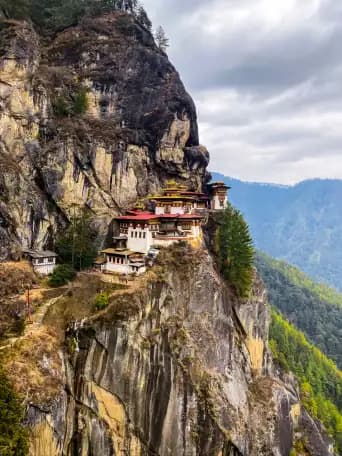
In July 2023 I hiked Tiger's Nest at 7am — before the afternoon rain. The mist from the night's rain was still in the valley below. The monastery appeared from the mist at the point where the trail turns to face the cliff directly — a sudden revelation. Paro Taktsang in the morning mist of July is the most specifically Bhutanese image I have experienced: it looks exactly like what the legend describes. I sat at the monastery for 45 minutes watching the mist move. By 11am the clouds had returned. By 2pm the rain came. The 7am window in July is the complete Tiger's Nest.
Key features of Bhutan
Top 8 Places in Bhutan 2026
 01 / Place
Paro Taktsang — Tiger's Nest Monastery
The monastery is suspended on the cliff face, 3,120m above the valley, 800m below the summit. I had seen hundreds of photographs of this building. None of them captured the specific vertigo of standing in front of it and understanding that humans built this on that cliff in the 17th century. The July morning mist makes Tiger's Nest even more extraordinary — the monastery appears and disappears as the clouds move. Paro Taktsang (Tiger's Nest) is a Buddhist monastery complex built on a sheer granite cliff face — the upper monastery sits 800m above the Paro Valley floor. The 2.5-hour hike (900m elevation gain) passes a viewpoint where the monastery is first visible and a waterfall near the final approach. The monastery contains 8 temples built around the cave where Guru Rinpoche meditated. The cave interior (the holiest space) requires removing shoes and is only accessible by crouching through a narrow passage. 02 / Place
Punakha Dzong — The Most Beautiful Fortress in Bhutan
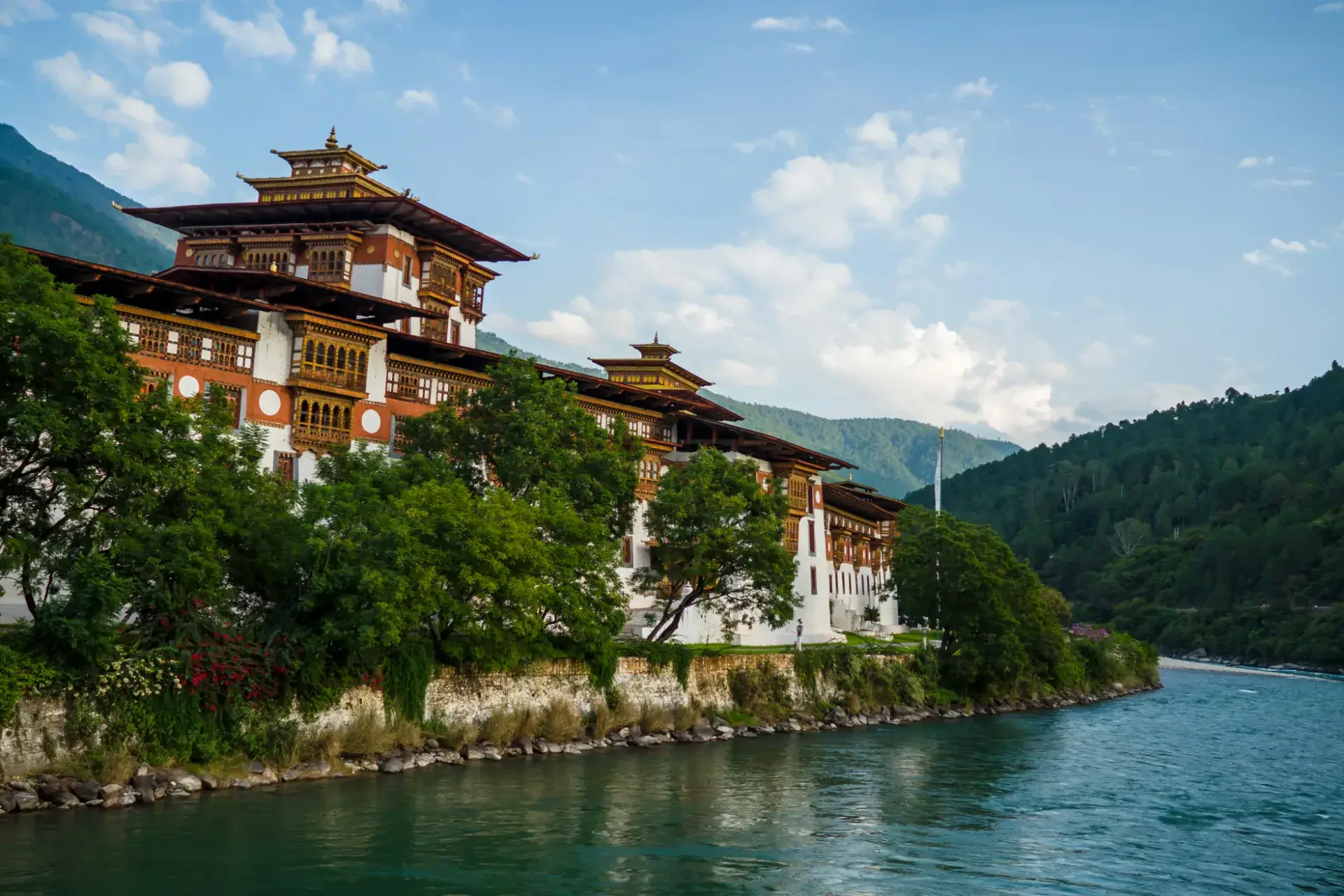
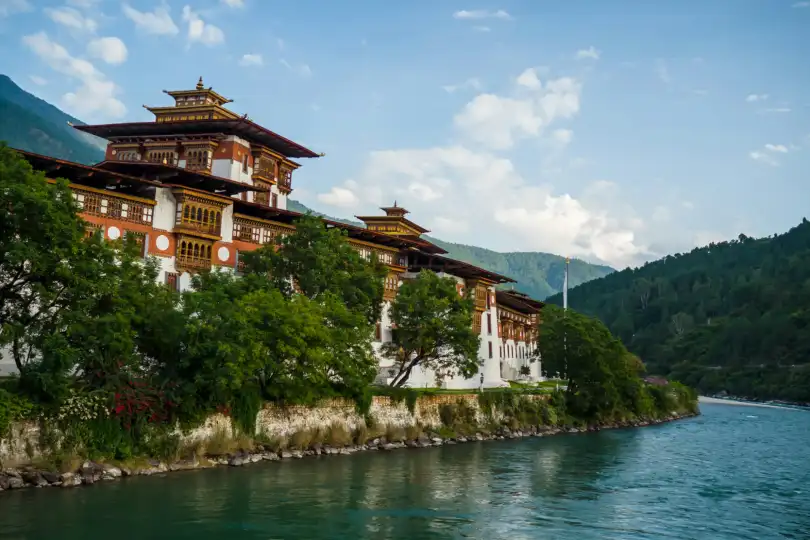
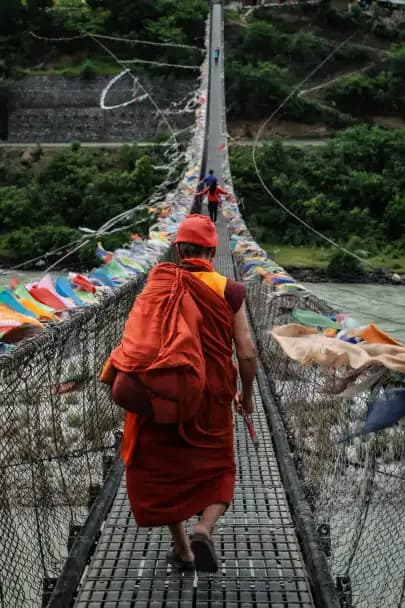
Punakha Dzong in monsoon flood, July 2023. The two rivers at maximum flow — the Mo Chhu and Pho Chhu, both roaring grey-green at the confluence. The dzong above the water, the suspension bridge (the longest in Bhutan at 160m) swaying over the flood. Inside: the interior courtyard, the 17th-century murals, and the caretaker monk who showed me the room where the King and Queen were married (2011). No other tourists for 45 minutes. Punakha Dzong (1637, Zhabdrung Ngawang Namgyal) sits at the confluence of the Mo Chhu and Pho Chhu rivers — this specific geographic position, with the dzong as the prow of a ship between two rivers, is the most photographed architectural image in Bhutan. It served as the capital of Bhutan until 1955 and remains the winter residence of Bhutan's Je Khenpo (Chief Abbot). The interior has the oldest and finest murals in any Bhutanese dzong.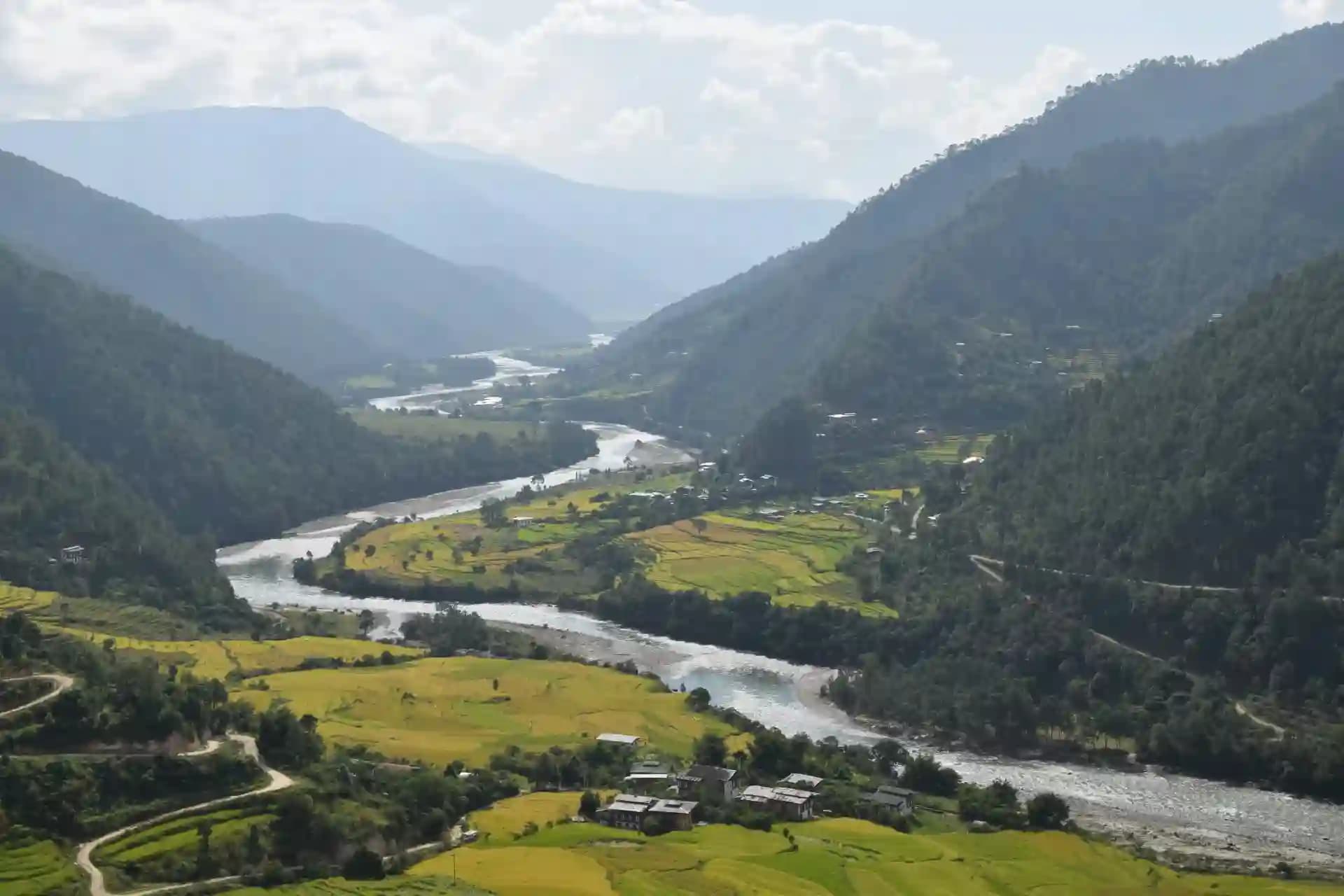 03 / Place
Haa Valley — The Bhutan Nobody Visits
Haa Valley in July 2023 — the road from Paro crosses Chele La pass (3,988m, one of the highest motorable passes in Bhutan) before descending to the valley. At the Chele La summit: June-blooming blue poppies (Meconopsis grandis — the national flower of Bhutan, found only above 3,500m) still flowering in the roadside grass. The valley below: three dzongs, traditional farmhouses, yak herders, and in July exactly zero other tourists. Haa Valley (2,670m, 65km from Paro) was opened to tourists only in 2002. The three dzongs (Lhakhang Karpo — the White Temple, Lhakhang Nagpo — the Black Temple, and Haa Dzong) are among the oldest in Bhutan. The valley has no significant tourist infrastructure — a handful of guesthouses, no luxury hotels — and the daily life of a traditional Bhutanese community is visible in a way that Paro and Thimphu no longer provide. July: the valley is at its greenest and emptiest. 04 / Place
Thimphu — The Capital With No Traffic Lights
Buddha Dordenma at 6:30 am — the 51m golden Buddha statue on the hilltop above Thimphu, visible from most of the valley. I drove there before the morning traffic (on the single main road from the city centre) and sat in front of the statue as the Thimphu valley emerged below in the July morning mist. The statue contains 125,000 smaller Buddha statues. The scale only registers when a person walks past. Thimphu (115,000 people) is the only Bhutanese city and the capital — simultaneously a functioning government city and a living museum of Bhutanese culture. The Tashichho Dzong (seat of government and Je Khenpo's summer residence — open only in evenings after office hours), Buddha Dordenma (51m, one of the largest Buddha statues in the world), the Motithang Takin Preserve (the takin — Bhutan's national animal, resembling a cross between a goat and a wildebeest — free-roaming in an enclosed forest preserve), and the weekend market (Thimphu Centenary Farmers' Market, Saturday–Sunday — the finest sampling of Bhutanese produce, dried meats, and handicrafts in one place).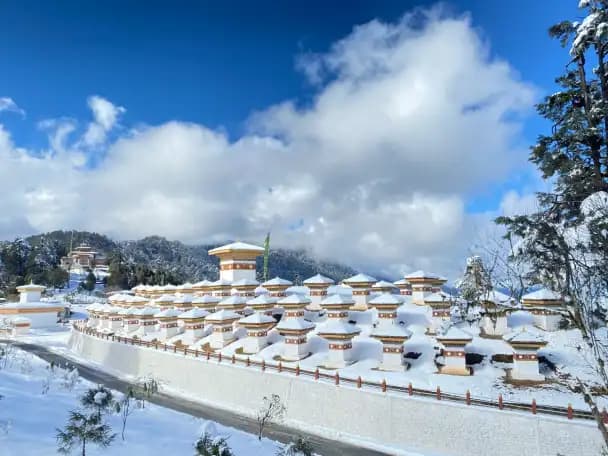 05 / Place
Dochula Pass — 108 Chortens on a Himalayan Ridgeline
Dochula Pass in July 2023 — the 108 white chortens in morning mist, the Himalayan range invisible behind cloud. By 8 am the cloud cleared for 20 minutes — the entire eastern Himalayan range visible behind the chortens, from Gangkhar Puensum (4,994m, the world's highest unclimbed peak) to the Chomolhari group. The mist closed again at 8:20 am. July Dochula is a waiting game — the 20-minute Himalayan revelation is the reward. Dochula Pass (3,116m) is on the road between Thimphu and Punakha — a mandatory stop. The 108 Druk Wangyal Chortens were built by the Queen Mother Ashi Dorji Wangmo Wangchuck to commemorate Bhutanese soldiers killed repelling an insurgency from Indian militants in 2003. The Druk Wangyal Lhakhang monastery (built for the 100th birth anniversary of the first King) is one of the finest contemporary monastery buildings in Bhutan. October–November: the most reliable Himalayan panorama window.The monastery is suspended on the cliff face, 3,120m above the valley, 800m below the summit. I had seen hundreds of photographs of this building. None of them captured the specific vertigo of standing in front of it and understanding that humans built this on that cliff in the 17th century. The July morning mist makes Tiger's Nest even more extraordinary — the monastery appears and disappears as the clouds move. Paro Taktsang (Tiger's Nest) is a Buddhist monastery complex built on a sheer granite cliff face — the upper monastery sits 800m above the Paro Valley floor. The 2.5-hour hike (900m elevation gain) passes a viewpoint where the monastery is first visible and a waterfall near the final approach. The monastery contains 8 temples built around the cave where Guru Rinpoche meditated. The cave interior (the holiest space) requires removing shoes and is only accessible by crouching through a narrow passage.
Punakha Dzong in monsoon flood, July 2023. The two rivers at maximum flow — the Mo Chhu and Pho Chhu, both roaring grey-green at the confluence. The dzong above the water, the suspension bridge (the longest in Bhutan at 160m) swaying over the flood. Inside: the interior courtyard, the 17th-century murals, and the caretaker monk who showed me the room where the King and Queen were married (2011). No other tourists for 45 minutes. Punakha Dzong (1637, Zhabdrung Ngawang Namgyal) sits at the confluence of the Mo Chhu and Pho Chhu rivers — this specific geographic position, with the dzong as the prow of a ship between two rivers, is the most photographed architectural image in Bhutan. It served as the capital of Bhutan until 1955 and remains the winter residence of Bhutan's Je Khenpo (Chief Abbot). The interior has the oldest and finest murals in any Bhutanese dzong.
Haa Valley in July 2023 — the road from Paro crosses Chele La pass (3,988m, one of the highest motorable passes in Bhutan) before descending to the valley. At the Chele La summit: June-blooming blue poppies (Meconopsis grandis — the national flower of Bhutan, found only above 3,500m) still flowering in the roadside grass. The valley below: three dzongs, traditional farmhouses, yak herders, and in July exactly zero other tourists. Haa Valley (2,670m, 65km from Paro) was opened to tourists only in 2002. The three dzongs (Lhakhang Karpo — the White Temple, Lhakhang Nagpo — the Black Temple, and Haa Dzong) are among the oldest in Bhutan. The valley has no significant tourist infrastructure — a handful of guesthouses, no luxury hotels — and the daily life of a traditional Bhutanese community is visible in a way that Paro and Thimphu no longer provide. July: the valley is at its greenest and emptiest.
Buddha Dordenma at 6:30 am — the 51m golden Buddha statue on the hilltop above Thimphu, visible from most of the valley. I drove there before the morning traffic (on the single main road from the city centre) and sat in front of the statue as the Thimphu valley emerged below in the July morning mist. The statue contains 125,000 smaller Buddha statues. The scale only registers when a person walks past. Thimphu (115,000 people) is the only Bhutanese city and the capital — simultaneously a functioning government city and a living museum of Bhutanese culture. The Tashichho Dzong (seat of government and Je Khenpo's summer residence — open only in evenings after office hours), Buddha Dordenma (51m, one of the largest Buddha statues in the world), the Motithang Takin Preserve (the takin — Bhutan's national animal, resembling a cross between a goat and a wildebeest — free-roaming in an enclosed forest preserve), and the weekend market (Thimphu Centenary Farmers' Market, Saturday–Sunday — the finest sampling of Bhutanese produce, dried meats, and handicrafts in one place).
Dochula Pass in July 2023 — the 108 white chortens in morning mist, the Himalayan range invisible behind cloud. By 8 am the cloud cleared for 20 minutes — the entire eastern Himalayan range visible behind the chortens, from Gangkhar Puensum (4,994m, the world's highest unclimbed peak) to the Chomolhari group. The mist closed again at 8:20 am. July Dochula is a waiting game — the 20-minute Himalayan revelation is the reward. Dochula Pass (3,116m) is on the road between Thimphu and Punakha — a mandatory stop. The 108 Druk Wangyal Chortens were built by the Queen Mother Ashi Dorji Wangmo Wangchuck to commemorate Bhutanese soldiers killed repelling an insurgency from Indian militants in 2003. The Druk Wangyal Lhakhang monastery (built for the 100th birth anniversary of the first King) is one of the finest contemporary monastery buildings in Bhutan. October–November: the most reliable Himalayan panorama window.
Membartsho (Burning Lake) in Tang Valley, Bumthang. A pool in the Tang River where the terton (treasure revealer) Pema Lingpa is said to have dived into the flames holding a lamp and emerged with hidden religious texts still burning. The pool is sacred — butter lamps are floated on the water by Bhutanese pilgrims. In July 2023: three Bhutanese families were performing a puja (prayer ceremony) at the water's edge when I arrived. The most specifically sacred Bhutan moment of the trip. Bumthang (2,600–3,300m, Chokor Valley + Tang Valley + Ura Valley + Chhume Valley) is the religious and cultural heartland of Bhutan — the oldest continuously inhabited region, with the highest density of sacred sites. Jakar Dzong (the fortress of the White Bird — largest dzong outside Thimphu), Jambay Lhakhang (7th century, one of 108 temples built simultaneously by Songtsen Gampo), Kurjey Lhakhang (three temples built around the rock where Guru Rinpoche's body imprint remains), and Membartsho are the four essential sites. Mistake to Avoid: Rushing Bumthang as a single day from Thimphu. Minimum 2-night stay.
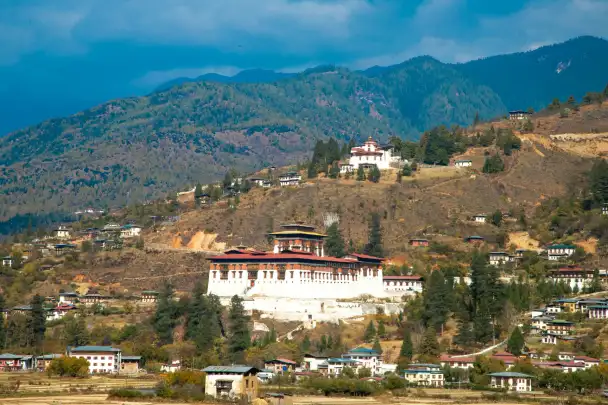
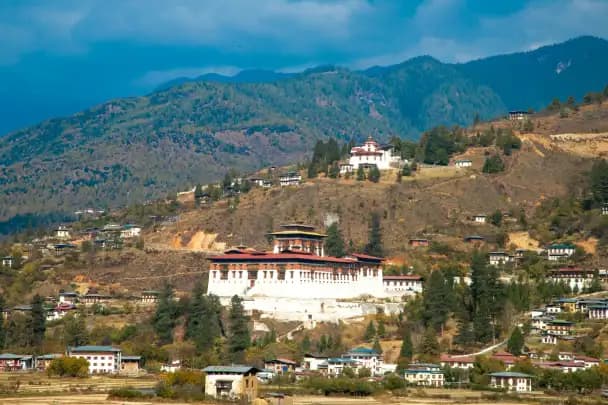
Rinpung Dzong at 8 am — the 15th-century fortress above the Paro River, the wooden covered bridge (Nyamai Zam) below it, the valley farmhouses on the opposite bank. Paro in July morning mist: the dzong reflected in the river when the water is calm before the afternoon rain agitates the surface. The most complete dzong-and-valley composition in Bhutan accessible without trekking. Paro (2,235m) is Bhutan's second city and the site of the international airport — the most architecturally complete traditional Bhutanese town remaining. Rinpung Dzong (1644, administrative and monastic centre of Paro) with its adjacent covered bridge, the National Museum (in the former watchtower above the dzong — the finest collection of Bhutanese art and artefacts, including a complete set of 17th-century thangka paintings), and the Paro town centre (traditional vernacular architecture maintained by heritage regulations) are the three Paro sites beyond Tiger's Nest.
Chimi Lhakhang (the fertility temple of the Divine Madman) approached through rice fields — the July rice paddies at full green, the temple on a small hillock in the middle of the Punakha farmland, and the walk through the working agricultural landscape with Bhutanese farmers. The temple is dedicated to Drukpa Kunley (the Divine Madman, a 15th-16th century Buddhist master known for unconventional teaching methods involving explicit sexuality — the phallus paintings visible on Bhutanese farmhouse walls throughout Punakha district are his legacy). The most unexpected and, specifically, Bhutanese cultural experience outside the dzongs. Chimi Lhakhang (1499, Punakha Valley) is one of the most visited small temples in Bhutan — the trek through rice fields to reach it is half the experience. Couples seeking children come from across Bhutan to receive a blessing from the resident monk using Drukpa Kunley's wooden phallus-shaped relics. The phallus symbols on the exterior walls are considered protective, not obscene — a specifically Bhutanese cultural expression.
Best Time to Visit: March-May or September-November (July if You Want it Empty)
January · Good Cold + Clear. Snow on passes. Thimphu cold (0–10°C). Punakha Drubchen prep.
February · Good Festival. Punakha Drubchen + Tsechu — most dramatic Bhutan festival. Cold. Book ahead.
March · Best Top Pick. Spring beginning. Rhododendrons starting. Paro Tsechu usually this month.
April · Best Peak Spring. Rhododendrons peak. Paro Tsechu (dates vary). Busiest spring month.
May · Good Good. Spring late. Warming. Pre-monsoon clarity. Good value.
June · Good Monsoon Start. Rain beginning. Green intensifying. Pre-July deals.
July · Good Vikas's Visit. Most intense green. Fewer tourists. Tiger's Nest in mist. Lower rates. Some pass closures.
August · Good Monsoon. Same as July. Haa Valley accessible (usually).
September · Best Top Pick. Post-monsoon. Clarity returning. Thimphu Tsechu (late Sep/Oct). Excellent.
October · Best Peak Autumn. Best mountain views. Busiest month. Thimphu Tsechu. Book 3+ months ahead.
November · Best Excellent. Post-peak. Quieter. Still clear. Good value.
December · Good Cold + Clear. Snow possible above 3,000m. Quiet. Low rates.
Bhutan trips,
ready to personalise.
 6D / 5N
Bhutan Cultural Discovery Tour Package
Thimphu, Punakha, Paro
Bhutan experiencesBest 10 Things to Do in Bhutan 2026
Tiger's Nest — 7 am Departure
Insider tip
The wooden bridge at the Tiger's Nest entrance (after the final steep descent and re-ascent over the waterfall gorge) is the most vertigo-inducing section — a 300m drop visible directly below.
Punakha Dzong Interior — 90 Minutes
Allow 90 minutes inside the dzong. Ask your guide to show: the main assembly hall (Tshogchem — 2 floors of 17th-century murals), the interior courtyard (the sacred fig tree is 400 years old), and the jacaranda tree at the entrance (the most photographed tree in Bhutan in April when in bloom).
Insider tip
The July monsoon dzong visit is the finest for the interior experience — no crowds, the interior is cool, and the murals are visible without obstruction from tour groups.
Haa Valley — At Least 2 Nights
Drive from Paro via Chele La pass to the Haa Valley. Two nights minimum — the White Temple at dawn, the traditional farmhouse lunch with a local family, and the Haa town evening market where Bhutanese food is sold at local prices.
Insider tip
The Chele La pass crossing (3,988m) requires no permits and offers the finest close-up views of Chomolhari (7,326m) and Jichu Drake (6,989m) on clear days. July: often in cloud but the blue poppies are in bloom. Add to Any Bhutan Circuit.
Dochula Pass — Wait for the Himalayan Window
Stop at Dochula Pass (30km from Thimphu) to see the 108 chortens, and wait for a clear weather window. October–November: reliable panorama. July: 20-minute windows between clouds. Druk Wangyal Lhakhang for 45 minutes, then the viewpoint. Hot tea from the café while waiting for the clouds to part.
Insider tip
Motithang Takin Preserve — Bhutan's National Animal
The takin (Budorcas taxicolor whitei — the national animal of Bhutan, an ungulate that appears to be a yak-goat hybrid) in the Motithang Mini Zoo above Thimphu. The takin is simultaneously a real animal and a mythological creation (legend: Drukpa Kunley assembled a cow's head and a goat's body). A small herd in a forested enclosure — the most unusual large mammal in South Asia.
Insider tip
Bhutanese Thangka Painting — Workshop Visit
Insider tip
Purchase a small genuine thangka painting directly from the Institute rather than from tourist shops — the quality is comparable, the artist receives fair payment, and the price is lower.
Ema Datshi — The National Dish
Ema datshi (chilli and cheese stew — literally "chilli" + "cheese") is Bhutan's national dish and the staple of every Bhutanese meal. Chunks of fresh or dried red and green chillies in a soft white cheese sauce, served with red rice (indigenous to Bhutan). Available at every restaurant in the country. The specific heat level of Bhutanese chilli (substantially hotter than most Indian chillies) is calibrated for local tolerance — request "less spicy" (kemi ema datshi) if needed.
Insider tip
The red rice of Bhutan is not found anywhere outside Bhutan at equivalent quality. It is served at every meal. The specific combination of ema datshi + red rice is the most authentic Bhutan food experience and costs ₹80–₹150 at any local restaurant. Every Meal.
Membartsho (Burning Lake) — Tang Valley, Bumthang
The sacred pool in the Tang River, where butter lamps are floated by Bhutanese pilgrims. The 5-minute boat ride to the middle of the pool gives a view of the cliff face where the treasure texts were concealed. July: the Tang River is in moderate flood, and the landscape around the lake is intensely green.
Insider tip
Hot Stone Bath — Traditional Bhutanese Spa
The traditional Bhutanese hot stone bath (menchu) — river stones heated in a fire, then lowered into a wooden bathtub to heat the water. Medicinal plants (artemisia, lemon grass, blue pine, and others) are added to the water.
Insider tip
Chele La Pass — Bhutan's Highest Motorable Road
Insider tip
The blue poppies bloom for approximately 6 weeks (mid-June to late July) above 3,500m. The Chele La roadside is one of the most accessible locations for blue poppies in the Himalayas. Ask your driver to stop for 20 minutes on both ascent and descent. On the Paro-Haa Route. Don't drive through without stopping for the blue poppies in July.
Three Itinerary Options — 5/8/12 Days
See how each trip is paced, from arrival to departure. These are sample day-by-day plans; we tailor the dates and details.
Bhutan Essential — 5 Days.
- Day 1Arrive ParoRinpung Dzong + National Museum · Paro town walk · Hot stone bath.
Advice
Paro Airport (2,235m altitude) is one of the world's most challenging airports — surrounded by 5,500m peaks, only 8 certified pilots in the world can land here. The approach (visible from Paro town as the plane banks between mountains) is extraordinary to witness from the ground. - Day 2Tiger's Nest7am departure · Summit 9:30am · Return afternoon · Paro evening.
- Day 3Paro → Thimphu (via Dochula)Dochula Pass 108 chortens · Buddha Dordenma · Thimphu market.
- Day 4Thimphu → PunakhaTashichho Dzong · Drive Punakha · Dzong + suspension bridge + Chimi Lhakhang.
- Day 5Return Paro + DepartDrive back Punakha → Paro · Airport departure.
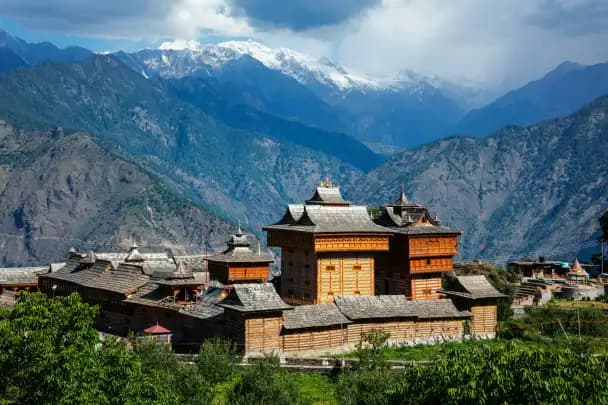
Bhutan Popular — 8 Days
- Day 1Arrive ParoRinpung Dzong + National Museum · Paro town.
Advice
Haa Valley are the highlight of this circuit for those who want the Bhutan that most tourists don't see. The drive over Chele La twice (going and returning to Thimphu) is an advantage — the light and cloud conditions differ and the second crossing often gives a clearer Himalayan view.
- Day 2Tiger's Nest7am hike · Summit · Return · Hot stone bath evening.
- Day 3Chele La + Haa ValleyChele La pass (blue poppies July) · Haa Valley arrival · White Temple.
- Day 4Haa ValleyBlack Temple · Traditional farmhouse lunch · Valley walk · Overnight.
- Day 5Haa → ThimphuDrive via Chele La (clear morning view) · Buddha Dordenma · Takin.
- Day 6ThimphuTashichho Dzong evening · Weekend market (if Sat/Sun) · Zorig Chusum.
- Day 7PunakhaDochula Pass · Punakha Dzong · Suspension bridge · Chimi Lhakhang.
- Day 8Return Paro + DepartMorning drive · Departure.
Bhutan Complete — 12 Days (Including Bumthang).
- Day 1ParoRinpung Dzong + National Museum + Paro town walk.
Advice
Trongsa Dzong (Day 11 en route return) is the spiritual seat of the Bhutanese monarchy — every King of Bhutan has served as the Trongsa Penlop before coronation. The dzong controls the only road between east and west Bhutan from a ridgeline above the Mangde Chhu gorge. The 10-minute stop-and-photograph does not do justice — allow 1 hour. - Day 2Paro — Tiger's Nest7am hike to Tiger's Nest · Summit + cave · Return.
- Day 3Chele La + Haa ValleyBlue poppies + White + Black Temples.
- Day 4Haa → ThimphuChele La return + Thimphu afternoon.
- Day 5ThimphuBuddha Dordenma + Tashichho Dzong + Takin + Market.
- Day 6PunakhaDochula + Punakha Dzong + Chimi Lhakhang.
- Day 7Punakha → Bumthang (6 hrs via Pelela Pass)Pelela Pass 3,390m · Arrive Bumthang.
- Day 8Bumthang Chokor ValleyJakar Dzong + Jambay Lhakhang + Kurjey Lhakhang.
- Day 9Tang ValleyMembartsho (Burning Lake) + Ogyen Choling Palace Museum.
- Day 10Ura ValleyUra Village (most intact traditional village in Bhutan) · Ura Festival (if timing aligns).
- Day 11Return toward ParoScenic drive via Trongsa Dzong (one of the finest dzongs in central Bhutan).
- Day 12Paro + DepartureMorning Paro market · Airport.
Where to Stay: Key Zones
Paro
Thimphu
Punakha
Haa Valley
Bumthang
4-Tier Daily Cost (Per Person · INR · Including SDF · Excluding Flights)
Budget
₹5,000 – ₹8,000 (incl SDF)Money-saving travel- Stay
- SDF + guesthouse,Basic Bhutanese family-run lodges · Shared bathroom common in Haa Valley + Bumthang remote areas
- Food
- Local Bhutanese restaurants
- Getting around
- Shared cab + walking + tour operator's basic vehicle.
Mid-range
₹9,000 – ₹15,000 (incl SDF)Comfortable everyday travel- Stay
- SDF + 3-star hotel,Comfortable Bhutanese chain hotels in Paro/Thimphu/Punakha ·
- Food
- Mix of hotel restaurants + local Bhutanese restaurants.
- Getting around
- Private car + driver throughout + licensed Bhutanese guide.
PREMIUM
₹20,000 – ₹35,000 (incl SDF)per person, per day- Stay
- SDF + boutique hotel, Zhiwa Ling Heritage (Paro), Le Meridien Thimphu/Paro, Six Senses Bhutan circuit (Paro/Thimphu/Punakha/Gangtey/Bumthang)
- Food
- Hotel fine dining + traditional Bhutanese tasting menus + farmhouse experiences with cultural performances + Bumthang Swiss farm wine tasting.
- Getting around
- Private SUV + experienced senior guide + dedicated driver. Helicopter transfers Paro-Bumthang available.
Luxury
₹60,000 – ₹2,00,000+ (incl SDF)Premium comfort- Stay
- Amankora Bhutan (5 lodges: Paro, Thimphu, Punakha, Gangtey, Bumthang — the Aman flagship in the Himalayas, ₹80,000–₹2,00,000/night), Uma by COMO Punakha + Paro , Taj Tashi Thimphu
- Food
- Private chef dining at Amankora + Six Senses · Wine pairing with Bhutanese specialities · In-villa dining with traditional Bhutanese musicians.
- Getting around
- Private SUV + helicopter circuit (Paro → Bumthang via helicopter saves 6 hours) · Personal cultural curator (not just guide) · Dedicated photographer arrangement.
How to Reach Bhutan and Getting Around
How to reach Bhutan and how to get around once you are there: the routes, how long they take and what they cost.
Plan your route ↗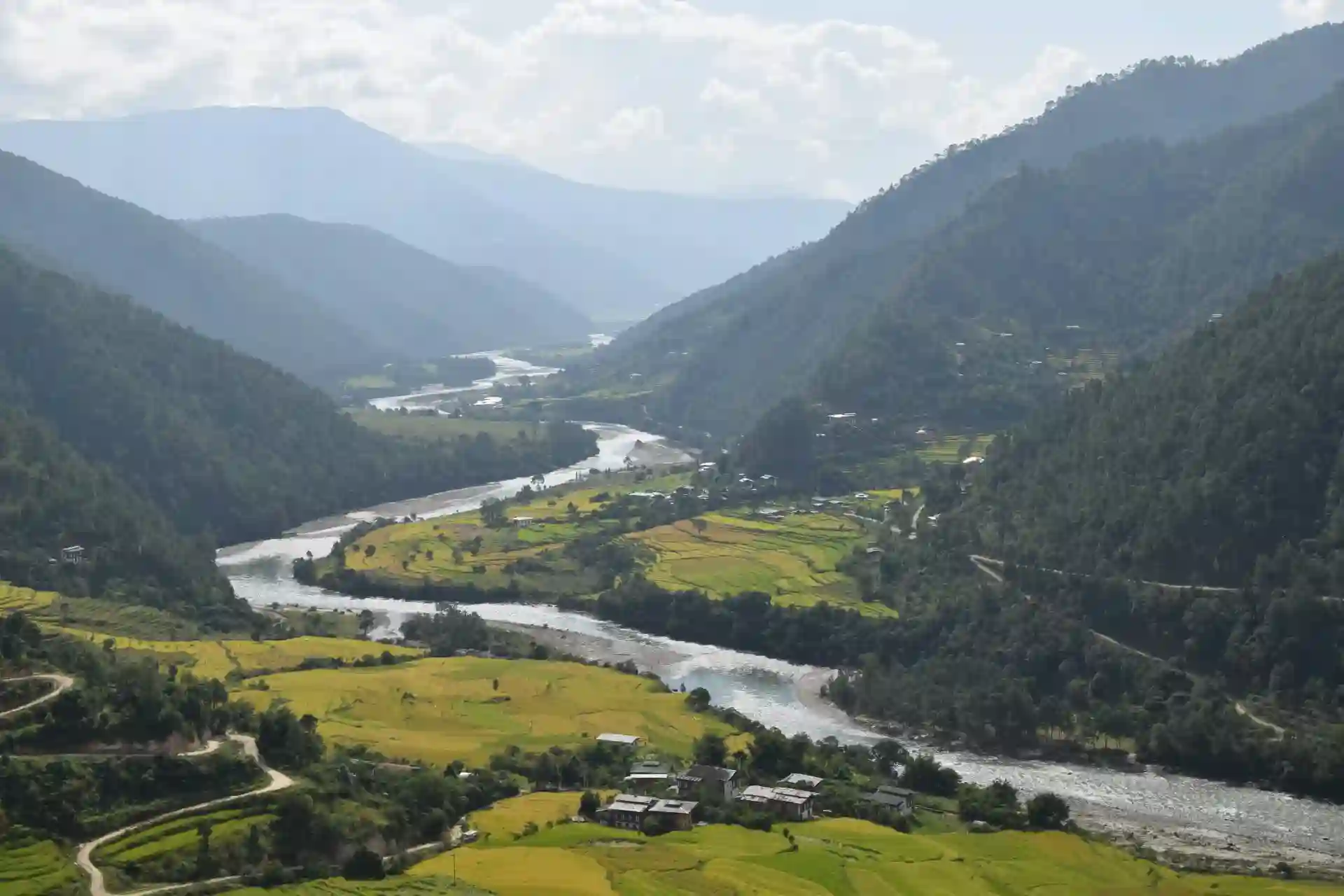 10 ways to travel
Delhi → Paro
Druk Air (Royal Bhutan Airlines ), Bhutan Airlines · 2.5 hrs. Paro Airport (2,235m) is one of the world's most challenging — only 8 certified pilots can land here.
Mumbai → Paro
Druk Air (via Kolkata/Delhi usually) · 4–5 hrs.
Kolkata → Paro
Druk Air, Bhutan Airlines · 1.5 hrs. Shortest direct India route.
Bagdogra → Paro
Druk Air (seasonal) · 45 min. Useful for Northeast India travellers.
Land entry — Phuentsholing
Land entry — Gelephu
Land entry — Samdrup Jongkhar
Private car + driver (within Bhutan)
Arranged by Bhutanese tour operator · Only practical mode for inter-valley travel. Toyota Hilux or similar.
Shared taxis (within Thimphu)
Available at taxi stands · Bhutanese taxi drivers speak some Hindi/English.
Walking
Free. Most dzong and monastery exploration is on foot. Tiger's Nest 2.5 hours each way on foot. Paro town centre and Thimphu Old Town are entirely walkable.
11 Travel Tips
What is worth it,
and what to avoid.
Last reviewed 2026-05-11.
- Tiger's Nest 7am departureMost extraordinary monastery in the Himalayas. July mist makes it more atmospheric. 7am window essential.
- Haa Valley 2 nightsMost unspoilt valley in accessible Bhutan.
- Punakha Dzong in monsoon90 minutes inside (300 BTN ≈ ₹300) — Most beautiful dzong in Bhutan above monsoon-flood rivers. 17th-century murals. No crowds.
- Chimi Lhakhang through rice fieldsMost unexpected and authentic Bhutan temple experience. 30-minute walk through working farmland.
- Hot stone bath at a farmhouseMost specifically Bhutanese spa. River stones + medicinal herbs + cool July evening air contrast.
- Ema datshi + red rice at a local restaurantNational dish of the happiest country in Asia. Red rice exists nowhere else at this quality.
- Dochula Passwait for the Himalayan window (Free) — 108 chortens and (on clear days) the entire eastern Himalayan range. Free. 30km from Thimphu.
- Membartsho Burning Lake— Most sacred Bhutanese site outside the dzongs. Bhutanese pilgrims performing their own ceremony at dawn.
- Chele La Pass blue poppies in July (Free)Bhutan's national flower (Meconopsis grandis) blooming above 3,500m in June-July. 3,988m pass on Paro-Haa road.
- Buddha Dordenma at 6:30am Thimphu (Free)51m golden Buddha on Thimphu hilltop. Contains 125,000 smaller Buddhas inside. Scale registers only when person walks past.
- Tiger's Nest after 9am in JulyJuly weather window is 7–10:30am. Afternoon clouds + rain arrive by 1pm. Not a guideline — actual July weather pattern.
- Not engaging a licensed Bhutanese tour operatorIndependent travel not permitted beyond border towns. Operator processes permits, SDF, guide, accommodation. Structure of Bhutan tourism.
- Skipping Haa Valley because of the ₹500 permitMost unspoilt valley accessible by road in Bhutan. Almost no tourists. Blue poppies in July. ₹500. Do not skip.
- Not budgeting for the SDF₹1,200/person/night adds up — 7 nights = ₹8,400/person. Fixed cost regardless of accommodation. Include upfront in trip budget.
- Bhutan in October without booking 3+ months aheadOctober is peak season (Thimphu Tsechu). Hotels in Paro/Thimphu fill completely. Amankora + Uma book out 6+ months ahead.
- Rushing Punakha Dzong as a 30-minute photo stop17th-century murals, sacred fig tree, monsoon dzong experience all require 90 minutes. Exterior photo is not Punakha.
- Requesting Indian food at every mealBhutanese cuisine (ema datshi, red rice, shakam, phaksha paa) is extraordinary and specifically Bhutanese. Eating only Indian food is complete waste.
- July Bhutan without accepting the rainJuly monsoon brings afternoon rain reliably. Morning (6am–12pm) typically clear. Morning activities + afternoon dzong interiors + evening hot stone bath is correct rhythm.
- Driving through Dochula Pass without stoppingEvery Paro-Punakha circuit passes this point. Allow 30 minutes minimum, 1 hour in clear weather. 108 chortens + Druk Wangyal Lhakhang.
- Flying into Paro and immediately driving to Thimphu on Day 1Paro deserves its own day. Rinpung Dzong + National Museum + Tiger's Nest are each a separate morning or afternoon.
Seeking Himalayan Peace?
Hassle-Free Entry Permit & Curated Bhutan Heritage Deals
Start Planning Your Bhutan Trip ↗Common questions
about Bhutan.
Visas, costs, safety and the practical questions travellers ask us most.
Bhutan Visa for Indians 2026?
What is the SDF and How Much is it for Indians?
Bhutan Trip Cost from India 2026 — 7 Days?
Best Time to Visit Bhutan 2026?
How Hard is the Tiger's Nest Hike?
Do I Need a Guide for Bhutan?
India to Paro Flight Cost 2026?
Bhutan Mein Kitne Din Chahiye?


Have a Bhutan trip
in mind?
Choose a package, or tell us the dates, hotels and experiences you want. We check the details and send you a clear quote. Pay in BTC, ETH, USDT, USDC and 90+ other coins, with other methods confirmed on request.