South Korea
Gyeongbokgung Heritage, Seoul Night Markets & Volcanic Jeju Nature
- Culture
- Nature
- Adventure
- K-Pop
- Solo
South Korea, your way.
With time for what matters.
South Korea (Republic of Korea, 100,210 sq km, 52 million people) occupies the southern half of the Korean Peninsula — a mountainous country (70% forested mountains) with a coastline on three sides (Yellow Sea west, Korea Strait south, East Sea east), 5 UNESCO World Heritage Sites, and globally disproportionate cultural-technological output. Divides into the capital metropolitan area (Seoul + Incheon, 25M people), southeastern coast (Busan, 3.4M), Jeju Island (subtropical volcanic island, 15M annual visitors), and mountain provinces (Gangwon-do — Korean Alps, ski resorts, 2018 Winter Olympics).
Is South Korea Worth Visiting in 2026?
Why Visit South Korea
South Korea transitions from winter to spring — the Jeju cherry blossoms open in the first week, Vivaldi Park is still open for skiing in the final weeks, and Seoul has the distinct pre-spring clarity before the April yellow dust. The shoulder-season pricing (20-30% below the April cherry blossom peak) offers the same palaces, temples, and food at lower prices with smaller crowds.
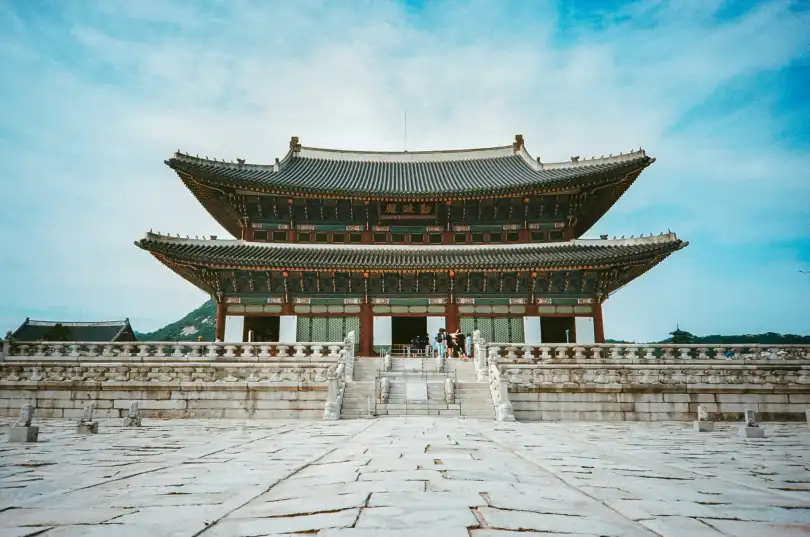
I arrived at Gyeongbokgung Palace at 8 am on March 6, 2024, in a rented hanbok from the shop on Gyeongbokgung-ro (the road adjacent to the east gate, open at 8 am, 15 minutes before the palace itself). The hanbok: the jeogori (the upper jacket, with its distinctive curved collar), the chima (the full-length skirt), and the nubi jacket over everything, because it was 4°C at 8 am in March in Seoul. The palace in the March early morning, in the hanbok, with the Bugaksan mountain visible above the throne hall gate, and approximately 30 other visitors on the entire palace grounds (vs the 3,000 of the April cherry blossom peak, the same palace at the same hanbok cost): the specific Gyeongbokgung quality that the photographs only manage on the quietest of mornings.
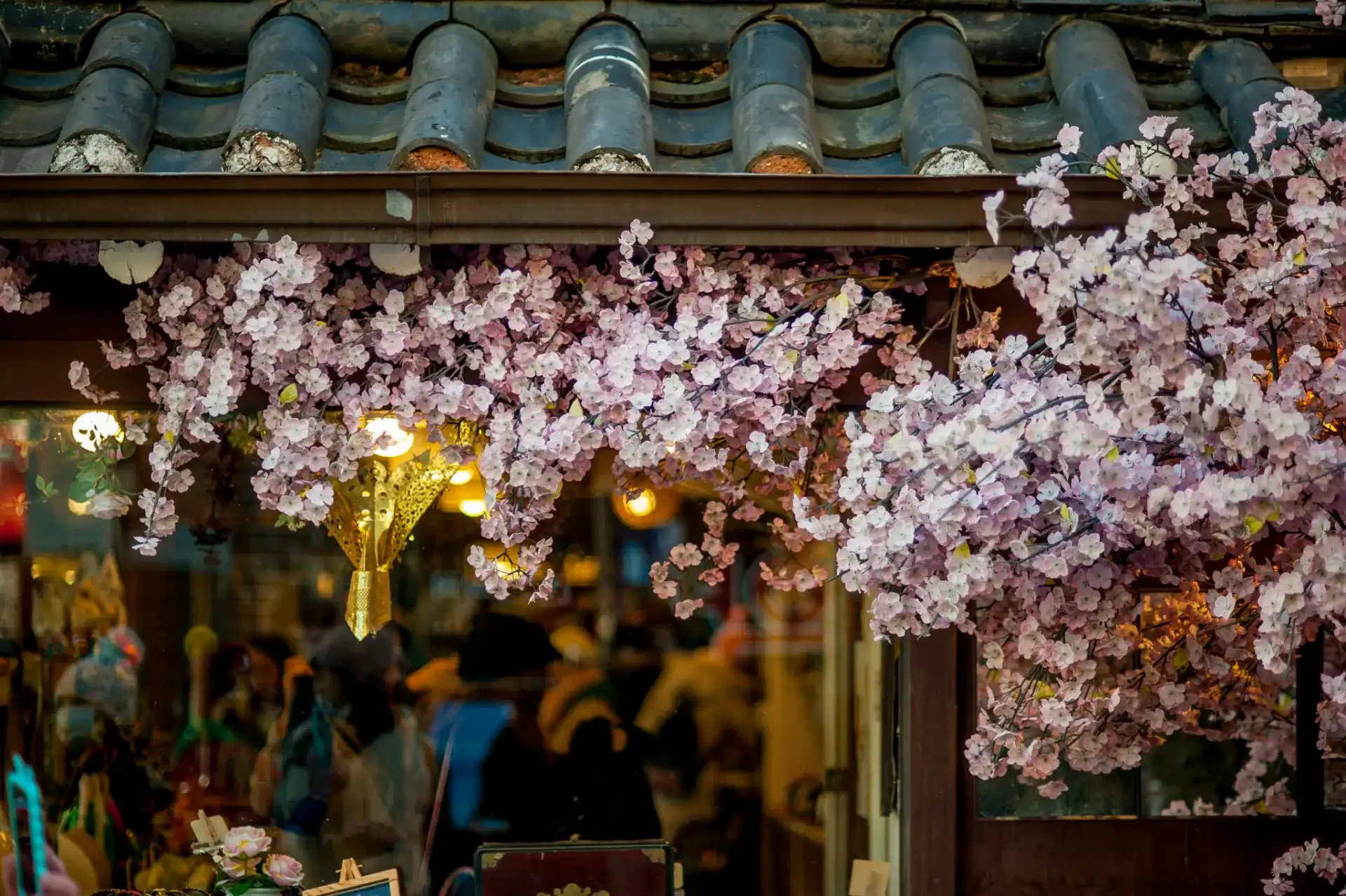
The Jeju cherry blossoms on March 8: the Jeju King Cherry (larger flowers, more densely packed on the branch than the Yoshino of the mainland) on the road from Jeju Airport to the Hallasan approach — the trees forming an arch over the road, the blossoms at the first-full-bloom stage (the Japanese term: mankai), the specific March morning quality of the earliest cherry blossom in Korea. I was in Korea at the right time.
Key Features of South Korea"
Best places to visit in South Korea
 01 / Place
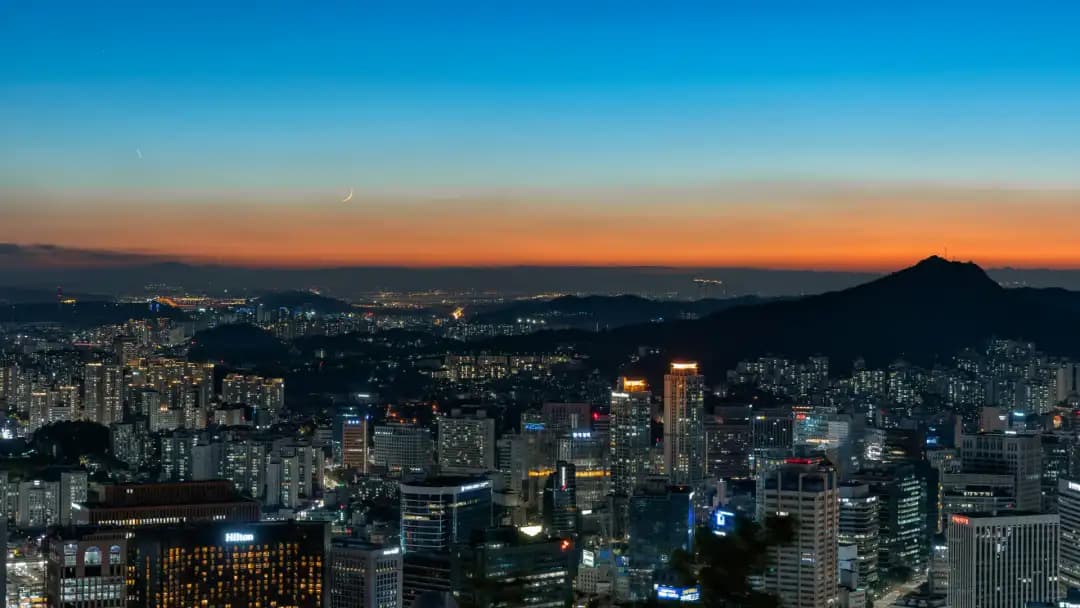
Seoul — The City That Never Slept and Never Stopped
Seoul is the most productively dense city in Asia — Joseon-era palaces (Gyeongbokgung, Changdeokgung, Deoksugung) visible from the glass towers of the financial district, street-food alleys of Gwangjang Market accessible in 10 minutes from the National Museum of Korea, and the Han River bisecting the city with 12 bridges and 11 riverside parks. Specific Seoul March experience: Gyeongbokgung in hanbok at 8 am (Bugaksan mountain above throne hall, morning cold, palace in near-solitude), Bukchon Hanok Village at 7 am (traditional Korean residential quarter of 900 hanok houses on ridge between Gyeongbokgung and Changdeokgung — at 7 am narrow lanes empty, tiled rooflines visible against sky, distant Seoul tower visible between ridgeline buildings), Insadong (antique and traditional craft street, Ssamziegil courtyard — most specific traditional Seoul shopping experience), and Hongdae (K-Pop and street performance district, 24-hour energy of university entertainment area that has been at maximum since 10 pm and is still at capacity at 2 am). 02 / Place
Gyeongbokgung Palace — 8 am Hanbok Strategy
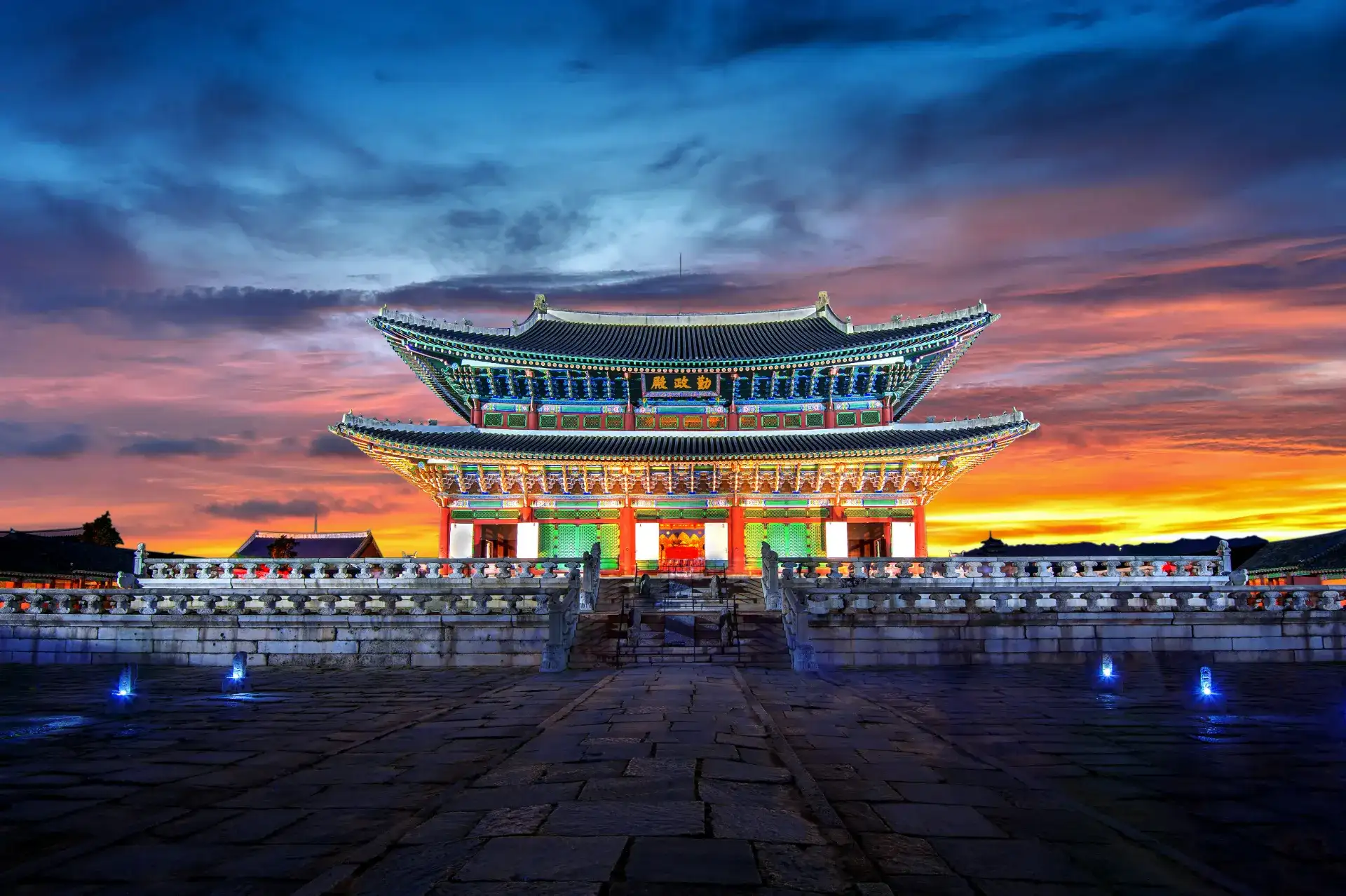
The Gyeongbokgung Palace (Jongno-gu, Seoul — 3-minute walk from Gyeongbokgung subway station, Line 3) is the primary Joseon palace and the most visited historical monument in South Korea. The 590,000 sq m complex contains the Geunjeongjeon (throne hall, ceremonial centre of the Joseon kingdom), Gyeonghoeru Pavilion (floating banquet hall in the centre of a rectangular pond — iconic Gyeongbokgung reflection photograph), National Folk Museum (open-air traditional Korean folk life museum within palace grounds), and National Palace Museum. The hanbok strategy: rent from any of the shops on Gyeongbokgung-ro (the road along the east wall) or Samcheong-ro (the road to the north). Most shops open at 8-8:30 am — 30 minutes before the palace gate. Entrance gate for hanbok-wearing visitors is the side entrance (Heungnyemun gate, second gate) — hanbok is FREE palace entry, confirmed at the ticket booth with a rental receipt. 8-9am window: light on Geunjeongjeon is dawn light (northeast-facing, March sun angle giving warm orange on the eaves), crowd smallest of the day.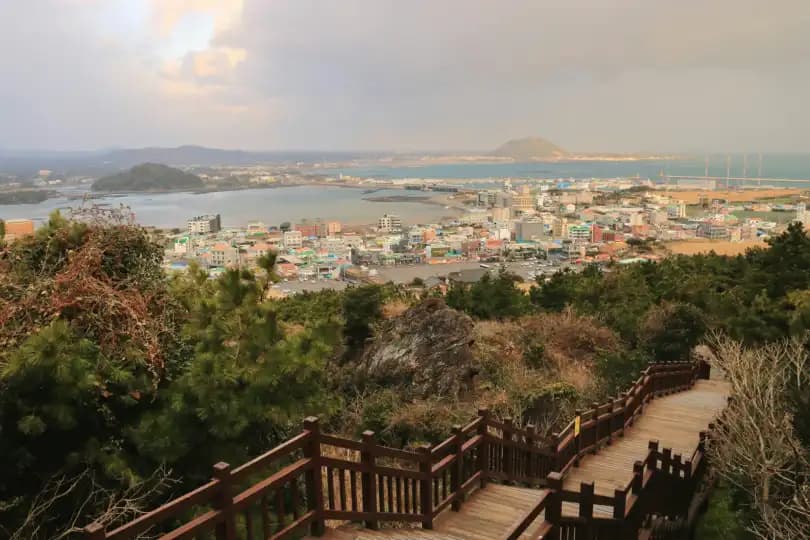 03 / Place
Jeju Island — Seongsan Ilchulbong at Sunrise
Jeju Island is the only UNESCO Triple Crown destination in Korea (UNESCO World Heritage + UNESCO Global Geopark + UNESCO Biosphere Reserve). Seongsan Ilchulbong (Sunrise Peak) — an 182m tuff cone formed by a submarine volcanic eruption 100,000 years ago, with a caldera that forms a perfect bowl at the summit and the East Sea visible on three sides from the rim — is the most photographed landscape in Jeju. Seongsan sunrise (the reason for the name): arrive at the base of the tuff cone by 5:30 am (20-minute climb to the summit) for a 6:20 am March sunrise. Caldera fills with pink pre-dawn light before the sun clears the sea horizon. 04 / Place
Busan — Korea's Second City on the Sea
Busan is the most specifically coastal Korean city — mountains come directly to the sea, residential districts climb the hillsides above the port, and the city's major attractions are all in direct relationship with the water. Gamcheon Culture Village (pastel hillside settlement, art installations in alleyways, rooftop view of Busan port from highest point), Haedong Yonggungsa Temple (seaside cliff temple — only coastal Buddhist temple in Korea, built in 1376, sea audible inside main hall), Jagalchi Fish Market (largest seafood market in Korea, haenyeo women divers selling live seafood from market stalls — most specifically Busan food experience), and Haeundae Beach (1.5km beach, Korea's most famous, Busan high-rises behind it, beach in March cold and very few people, March sea wind strong from east). Gamcheon Village: most visited Busan attraction (1.5 million visitors per year) and worth every visitor — alleyway art installations, view from Haneul Mauri observation point (full Gamcheon colour map visible).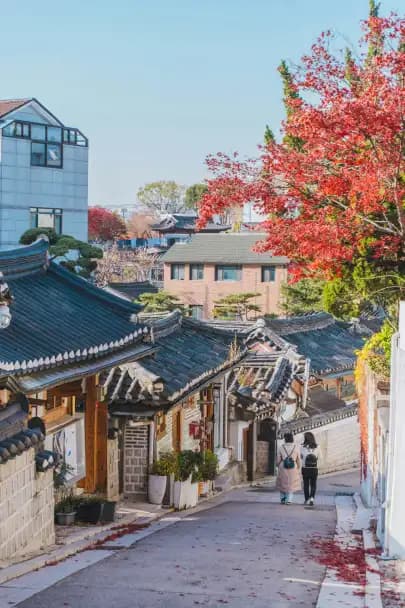 05 / Place
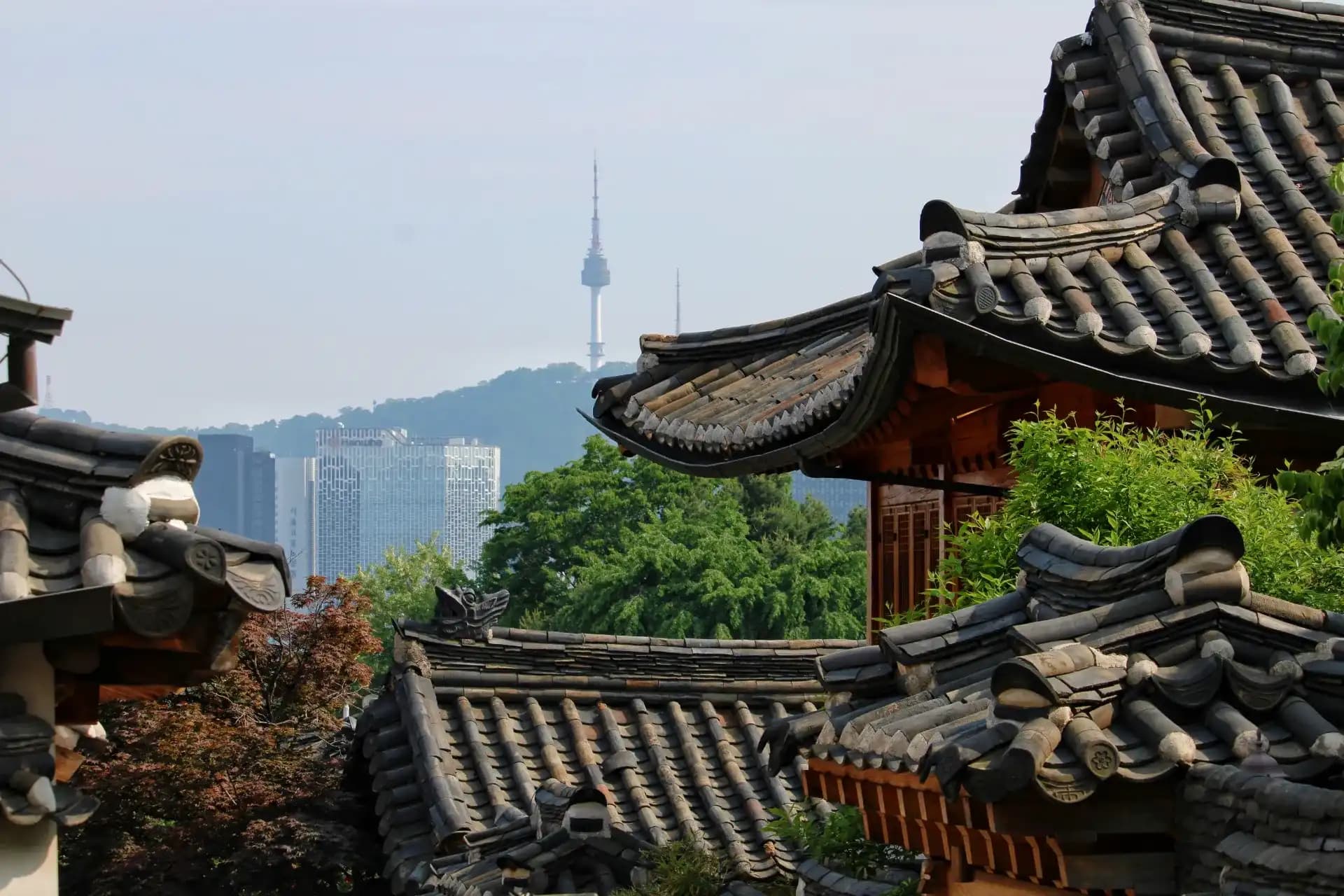
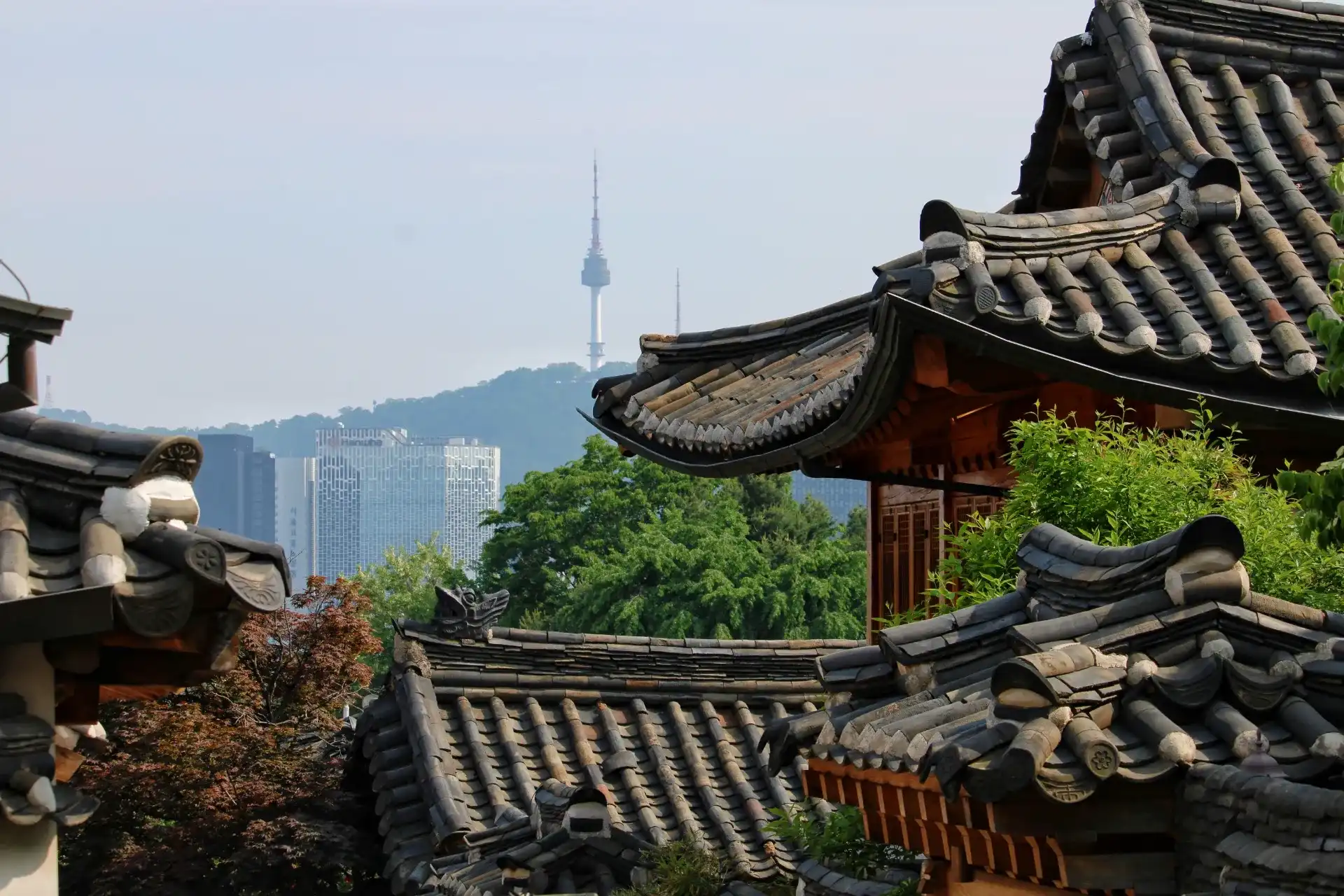
Bukchon Hanok Village — 7 am Empty Lanes
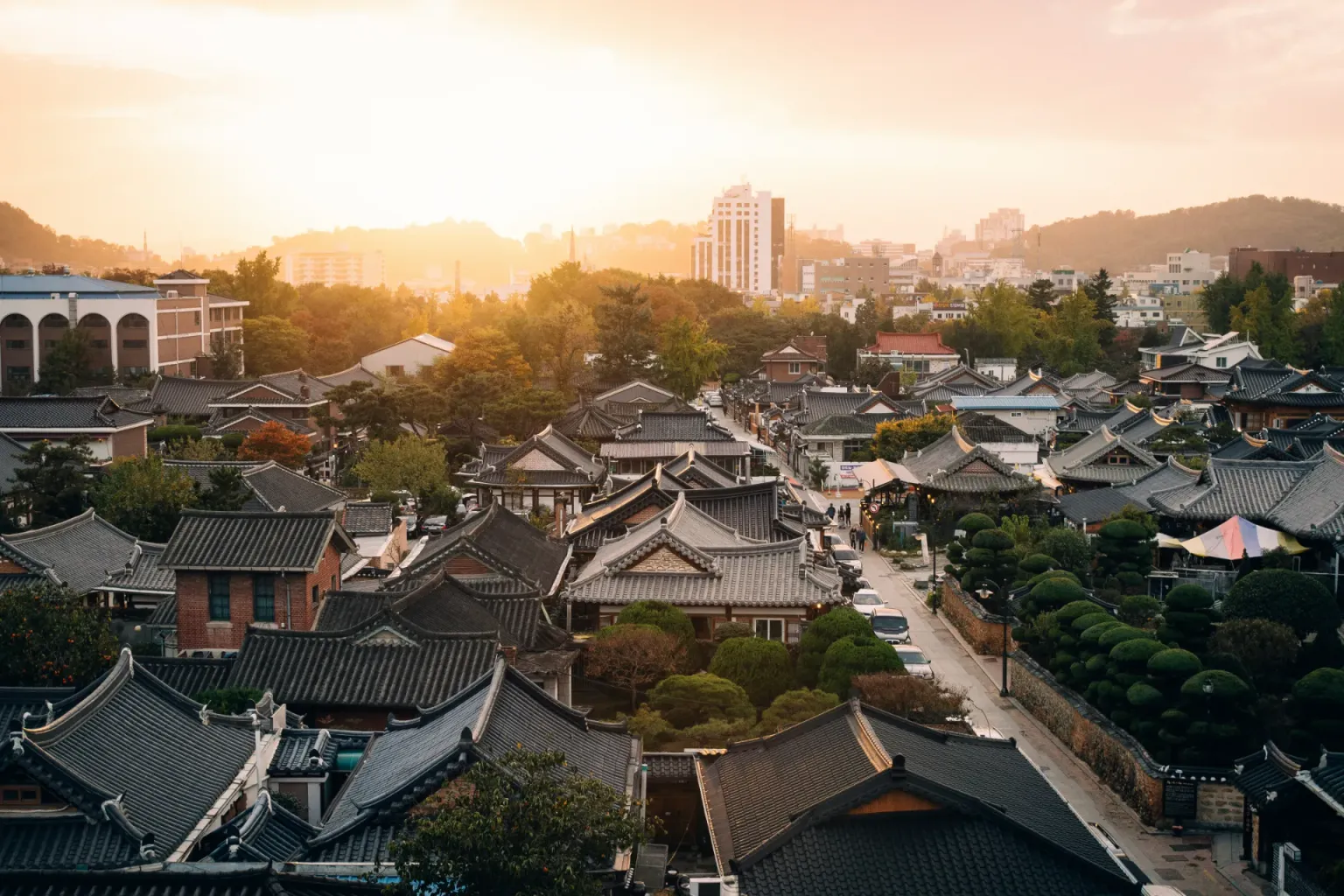
The Bukchon Hanok Village is a residential quarter of 900 traditional Korean hanok houses — with curved tiled rooflines, exposed timber framing, stone walls, and narrow lanes that have been here since the Joseon period. The village became one of the most visited tourist attractions in Seoul in the 2010s and has been managing overtourism since 2018 — authorities now charge an entry fee to the most sensitive viewpoint (Bukchon-ro 11-gil, the stepped lane with the rooflines visible below) after 10 am. The 7 am Bukchon: the lanes empty (residents are still inside — this is an actively inhabited residential area, not a heritage park), the rooflines in the pre-dawn light, the N Seoul Tower visible on the ridge to the south between the hanok rooftops. The free morning window (before tourist groups from Gyeongbokgung arrive at 9 am) gives the most genuine Bukchon — lanes as they have been for centuries rather than the tourist circuit they become by 10 am.Seoul is the most productively dense city in Asia — Joseon-era palaces (Gyeongbokgung, Changdeokgung, Deoksugung) visible from the glass towers of the financial district, street-food alleys of Gwangjang Market accessible in 10 minutes from the National Museum of Korea, and the Han River bisecting the city with 12 bridges and 11 riverside parks. Specific Seoul March experience: Gyeongbokgung in hanbok at 8 am (Bugaksan mountain above throne hall, morning cold, palace in near-solitude), Bukchon Hanok Village at 7 am (traditional Korean residential quarter of 900 hanok houses on ridge between Gyeongbokgung and Changdeokgung — at 7 am narrow lanes empty, tiled rooflines visible against sky, distant Seoul tower visible between ridgeline buildings), Insadong (antique and traditional craft street, Ssamziegil courtyard — most specific traditional Seoul shopping experience), and Hongdae (K-Pop and street performance district, 24-hour energy of university entertainment area that has been at maximum since 10 pm and is still at capacity at 2 am).
The Gyeongbokgung Palace (Jongno-gu, Seoul — 3-minute walk from Gyeongbokgung subway station, Line 3) is the primary Joseon palace and the most visited historical monument in South Korea. The 590,000 sq m complex contains the Geunjeongjeon (throne hall, ceremonial centre of the Joseon kingdom), Gyeonghoeru Pavilion (floating banquet hall in the centre of a rectangular pond — iconic Gyeongbokgung reflection photograph), National Folk Museum (open-air traditional Korean folk life museum within palace grounds), and National Palace Museum. The hanbok strategy: rent from any of the shops on Gyeongbokgung-ro (the road along the east wall) or Samcheong-ro (the road to the north). Most shops open at 8-8:30 am — 30 minutes before the palace gate. Entrance gate for hanbok-wearing visitors is the side entrance (Heungnyemun gate, second gate) — hanbok is FREE palace entry, confirmed at the ticket booth with a rental receipt. 8-9am window: light on Geunjeongjeon is dawn light (northeast-facing, March sun angle giving warm orange on the eaves), crowd smallest of the day.
Jeju Island is the only UNESCO Triple Crown destination in Korea (UNESCO World Heritage + UNESCO Global Geopark + UNESCO Biosphere Reserve). Seongsan Ilchulbong (Sunrise Peak) — an 182m tuff cone formed by a submarine volcanic eruption 100,000 years ago, with a caldera that forms a perfect bowl at the summit and the East Sea visible on three sides from the rim — is the most photographed landscape in Jeju. Seongsan sunrise (the reason for the name): arrive at the base of the tuff cone by 5:30 am (20-minute climb to the summit) for a 6:20 am March sunrise. Caldera fills with pink pre-dawn light before the sun clears the sea horizon.
Busan is the most specifically coastal Korean city — mountains come directly to the sea, residential districts climb the hillsides above the port, and the city's major attractions are all in direct relationship with the water. Gamcheon Culture Village (pastel hillside settlement, art installations in alleyways, rooftop view of Busan port from highest point), Haedong Yonggungsa Temple (seaside cliff temple — only coastal Buddhist temple in Korea, built in 1376, sea audible inside main hall), Jagalchi Fish Market (largest seafood market in Korea, haenyeo women divers selling live seafood from market stalls — most specifically Busan food experience), and Haeundae Beach (1.5km beach, Korea's most famous, Busan high-rises behind it, beach in March cold and very few people, March sea wind strong from east). Gamcheon Village: most visited Busan attraction (1.5 million visitors per year) and worth every visitor — alleyway art installations, view from Haneul Mauri observation point (full Gamcheon colour map visible).
The Bukchon Hanok Village is a residential quarter of 900 traditional Korean hanok houses — with curved tiled rooflines, exposed timber framing, stone walls, and narrow lanes that have been here since the Joseon period. The village became one of the most visited tourist attractions in Seoul in the 2010s and has been managing overtourism since 2018 — authorities now charge an entry fee to the most sensitive viewpoint (Bukchon-ro 11-gil, the stepped lane with the rooflines visible below) after 10 am. The 7 am Bukchon: the lanes empty (residents are still inside — this is an actively inhabited residential area, not a heritage park), the rooflines in the pre-dawn light, the N Seoul Tower visible on the ridge to the south between the hanok rooftops. The free morning window (before tourist groups from Gyeongbokgung arrive at 9 am) gives the most genuine Bukchon — lanes as they have been for centuries rather than the tourist circuit they become by 10 am.
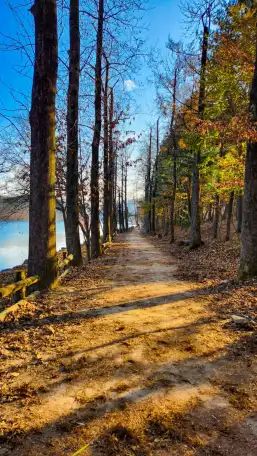
Nami Island (Chuncheon, Gangwon-do — 2 hours from Seoul by ITX Cheongchun train from Yongsan Station to Gapyeong, then a 5-minute ferry) became the most internationally known Korean tourist attraction after the 2002 K-drama 'Winter Sonata' filmed the scene of the two leads walking the ginkgo avenue in autumn. The island since has become a specific destination in its own right: the ginkgo avenue (the 300m path lined with 30m ginkgo trees, the trees changing through 4 seasons — spring green, summer deep green, autumn gold, winter bare, March first-bud), the Italian poplar avenue (straight-line poplar path that functions in snow, in green, and in the March bare-branch season as an architectural path), and the general island aesthetic (no cars, bicycle rentals, nuri art installations throughout the island).
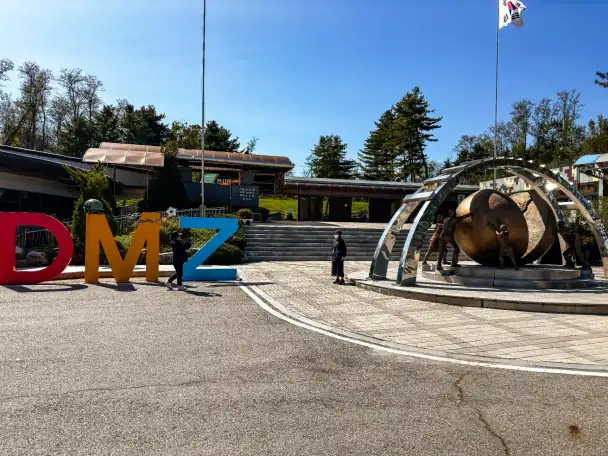
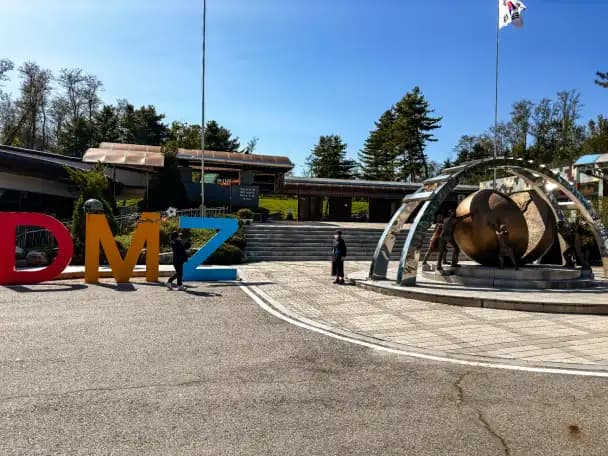
The Korean Demilitarised Zone (DMZ, the 4km-wide buffer zone between North and South Korea, established by the 1953 armistice) is 55km north of Seoul — the most specific Korean experience for international visitors and the single geopolitical landscape that makes Korea unlike any other country in the world. DMZ tour from Seoul (all major hotels and Hongdae/Myeongdong tourist districts have daily departures, covers Imjingak Peace Park (northern terminus of Seoul Metro at civilian checkpoint), 3rd Infiltration Tunnel (underground tunnel dug by North Korea toward Seoul, discovered in 1978 — only one of 4 discovered tunnels where visitors walk to observation point inside tunnel itself), Dora Observatory (panoramic observation deck with view into North Korea — city of Kaesong visible on clear days), and Dorasan Station (unused southernmost station of Trans-Korean Railway — station built in 2002 during brief Sunshine Policy era, destination board still showing 'Pyongyang' on departures screen).
Best Time to Visit South Korea
January · Good Winter. Ski season. Ice festivals (Hwacheon). Cold (-7 to 3°C Seoul). Fewest tourists. Lowest accommodation prices.
February · Good Winter. Same conditions. Lunar New Year (Seollal) — some sites closed, unique cultural experience. Snow trekking conditions.
March · Best Praveen's Visit. Jeju cherry blossoms early March. Seoul cherry blossoms late March. Vivaldi Park final ski weeks. Pre-peak pricing.
April · Best Cherry Blossom Peak. Seoul Yeouido cherry blossoms (most famous mainland event). Most crowded spring month. Book ahead.
May · Best Post-cherry blossom. Pleasant temperatures. Buddha's Birthday Lotus Lantern Festival Seoul. Excellent for all activities.
June · Good Pre-Monsoon. Warming temperatures. Monsoon approaching late June. Still good for travel. Buddhist temple festivals.
July · Avoid Monsoon (Jangma). Hot and humid. Indoor activities dominant. Trekking trails muddy. Many outdoor sites affected.
August · Avoid Peak Summer. Hot and humid. Beaches (Busan Haeundae, Jeju) peak season. Most expensive. Yellow dust + monsoon transition.
September · Good Post-monsoon clearing. Cooler. Good for hiking (Hallasan, Seoraksan). Mid-Autumn festival (Chuseok).
October · Best Top Pick. Autumn foliage beginning. Naejangsan National Park (finest maple colour in Korea). Cool, clear weather.
November · Best Top Pick. Full foliage. Ginkgo yellow in Seoul streets. Fewer tourists than spring. Finest photography window.
December · Good Winter. Ski season opening. Christmas lights (Seoul Myeongdong). Cold. Lower mid-week prices.
South Korea trips,
ready to personalise.
 7D / 6N
South Korea Romantic Discovery Package
Seoul, Jeju
 8D / 7N
South Korea Discovery Tour Package
Seoul, Jeju, Busan
 7D / 6N
South Korea Ski Adventure Tour Package
Seoul, Vivaldi Park, Busan
 8D / 7N
South Korea Autumn Discovery Tour Package
Seoul, Nami Island, Jeju
South Korea experiencesTop Things to Do in South Korea
Gyeongbokgung Hanbok — 8 am Opening
Rent a hanbok at 8 am from any Gyeongbokgung-ro shop. Enter the palace through Heungnyemun at 8:30 am with free hanbok entry. Go directly to Gyeonghoeru Pavilion (floating banquet hall reflection) before the first tour groups arrive at 9:30 am.
Insider tip
Gyeongbokgung-ro hanbok shops negotiate on price. Nicer patterns (deep blue and burgundy jeogori, full-length silk chima) available at (≈ ₹1,240-1,550). Bring a jacket for underneath in March — hanbok is not warm.
Seongsan Ilchulbong Sunrise — 5:30 am Climb
Insider tip
The descent is by a different path (circular route) that gives a view of tuff cone from the coastal path — specific image of crater rim above sea, East Sea visible on 270°. Descent in post-sunrise light (golden hour immediately after the sun rises) gives the finest exterior Seongsan photographs.
Gamcheon Culture Village — 8am Opening
Insider tip
The Gamcheon circuit map (available at the information centre) marks 12 key art installations — the Little Prince figure, the fish installation, the mosaic walls, and 3 viewpoints. Haneul Mauri observation point (the highest point on the circuit) offers a full village panorama at 9 am in the morning light before the afternoon haze. Walk COUNTERCLOCKWISE from the information centre (circuit map shows clockwise — counterclockwise gives the best viewpoint order for morning light).
Nami Island — 10am ITX from Yongsan
ITX Cheongchun train from Yongsan Station at 8 am → Gapyeong at 9:30 am → Ferry to Nami Island (5 min, KRW 16,000 return including island entrance) → Island at 10 am.
Insider tip
Nami Island prohibits cars — rent a bicycle on the island for the Ginkgo Avenue and Poplar Avenue circuits. The island is 0.46 sq km — completely cyclable in 2 hours. Bicycle gives avenue circuits at speed, which produces a different sensory quality than walking (trees passing at cycling speed in the Ginkgo Avenue creates a specific motion-blur visual that Instagram photographers prefer).
Vivaldi Park — Weekday, Final March Weeks
Seoul Express Bus Terminal (Express Bus Terminal subway station, Line 3/7/9) to Vivaldi Park: 1.5 hours.
Insider tip
Vivaldi Park ski rental includes everything — ski boots, skis, poles, and helmet (MANDATORY at Korean ski resorts). Beginner slopes (green and blue runs) at Vivaldi are most crowded — book a 2-hour lesson to get access to intermediate red runs where crowds are lower.
DMZ Tour — Book in Seoul
Book through any Seoul hotel concierge, Klook, or USO Camp Kim (American military-organised tour — offers the most detailed Panmunjom access; requires passports 2 days in advance).
Insider tip
The 3rd Infiltration Tunnel at the DMZ is the single most specific Korea-only experience available to any visitor — a tunnel dug by North Korea under the DMZ (discovered in 1978) intended to allow 30,000 troops per hour to pass beneath the border. Walking into a tunnel (ceiling 1.8m — short adults specifically) and standing in a specific geopolitical geography of a tunnel connecting two countries technically still at war: this is not available anywhere else.
Korean Food Circuit — The 5 Essential Meals
5 Korean meals that define cuisine: (1) Samgyeopsal grilled pork belly (2) Bibimbap at Gwangjang Market · (3) Haemul Pajeon seafood pancake at Insadong makgeolli bar .(4) Jagalchi Market raw seafood platter, Busan. (5) 7-Eleven ramyeon at a convenience store
Insider tip
Gwangjang Market (Jongno, Seoul — 10 minutes from Insadong on foot) is the oldest and most intact traditional Korean market — mung bean pancakes (bindaetteok) and mayak gimbap (tiny rice rolls, called 'narcotic gimbap' for their addictiveness) at market stalls are two of the most distinctive Gwangjang foods. Arrive at 10 am — market is full 10 am-8 pm, but food preparation is most visible in the morning.
Hongdae + K-Pop Street Experience — 8pm Onwards
Insider tip
HYBE INSIGHT museum (Yongsan-gu — near the Han River, 20 minutes from Hongdae by subway) is a BTS/HYBE fan-experience museum — featuring interactive exhibitions, unreleased video content, and the most concentrated K-Pop cultural archive in Seoul. Tickets KRW 22,000-33,000 (≈ ₹1,364-2,046, book at hybe-insight.com, slots fill weeks ahead for peak season).
Hallasan Volcano Hike — Eorimok Trail
Insider tip
Changdeokgung Secret Garden — Advance Ticket Only
Insider tip
Huwon entry is limited to specific group sizes and tour times — book at cdg.go.kr at least 2 WEEKS in advance for the March period. English-guided tours: 10:30 am and 2:30 pm daily (weather permitting). Secret Garden closes in rain and heavy snow — check on the morning of the visit.
Three Itinerary Options — 7/10/14 Days
See how each trip is paced, from arrival to departure. These are sample day-by-day plans; we tailor the dates and details.
South Korea Quick — 7 Days (Seoul + Jeju).
- Day 1Arrive SeoulMyeongdong street food · N Seoul Tower.
Advice
AREX from Incheon to Seoul 43 min. Buy T-Money card at airport 7-Eleven. - Day 2SeoulGyeongbokgung hanbok 8am · Bukchon 10am · Insadong.
Advice
Hanbok rental before palace opening at 8am. - Day 3SeoulDMZ tour morning · Hongdae evening · Samgyeopsal dinner.
Advice
DMZ departs 7:30am — book day before. - Day 4Fly Seoul → Jeju (55 min)Arrive · Seongsan Ilchulbong (afternoon approach).
Advice
Seongsan sunset — different from famous sunrise. - Day 5JejuSeongsan sunrise 5:30am · Hallasan Eorimok trail 8am · Cherry blossoms.
Advice
Jeju cherry blossom road drive post-hike (March 5-15 peak). - Day 6Jeju → SeoulManjanggul Cave · Jeju black pork lunch · Fly back.
Advice
Manjanggul Cave: 7.4km lava tube, 200m accessible. - Day 7Seoul + DepartGwangjang Market morning · Departure afternoon.
Advice
Market at 10am before flight afternoon.
South Korea Popular — 10 Days
- Day 1Arrive Seoul (Incheon)AREX to Seoul · Myeongdong · Convenience store ramyeon 11pm.
Advice
Day 5 Vivaldi Park and Day 3 Nami Island are best done on weekdays — both significantly less crowded midweek. If 10-day trip spans a weekend, assign weekend days to Seoul (where energy of weekend crowd at Gyeongbokgung, Hongdae, and Myeongdong is part of experience) and weekdays to Nami and Vivaldi. - Day 2SeoulGyeongbokgung hanbok 8am · Bukchon 7am (before hanbok).
Advice
7am Bukchon → hanbok 8am → palace 8:30am sequence. - Day 3Seoul + Nami IslandITX 8am Yongsan → Nami Island → bicycle circuit → return Seoul.
Advice
Full day trip, return by 5pm. - Day 4SeoulDMZ tour morning · HYBE INSIGHT 2pm · Hongdae evening.
Advice
HYBE INSIGHT: book weeks ahead at hybe-insight.com. - Day 5Vivaldi Park (day trip)Bus 8am · Skiing · Return Seoul 5pm.
Advice
Check closing date at vivaldipark.co.kr before planning. - Day 6Fly Seoul → JejuArrive · Jeju city orientation · Haenyeo culture centre.
Advice
Book Jeju accommodation with car rental (IDP required). - Day 7JejuSeongsan sunrise 5:30am · Hallasan trek · Cherry blossom road.
Advice
March 5-15: cherry blossoms at peak Jeju. - Day 8KTX Seoul → Busan (2.5 hrs)Return Seoul then KTX to Busan · Arrive Busan afternoon.
Advice
KTX from Seoul Station, pre-book at korail.go.kr. - Day 9BusanHaedong Yonggungsa 7:30am · Gamcheon 9am · Jagalchi lunch · Haeundae.
Advice
Full Busan day. - Day 10Busan → Incheon → DepartKTX or flight · Depart from Incheon.
Advice
Busan → Incheon flight: 1 hr, KRW 40,000-80,000.
South Korea Complete — 14 Days
- Day 1SeoulArrival · Myeongdong · N Seoul Tower.
Advice
Day 8 Gyeongju (the 'museum without walls' — ancient capital of Silla Kingdom, 57 BC-935 AD, with 55 UNESCO-listed monuments in and around the city) is the most historically significant single-city addition to any South Korea circuit. Bulguksa Temple (finest Buddhist temple architecture in Korea) and Seokguram Grotto (hilltop stone Buddha, finest Buddhist sculpture in Korea, both UNESCO) take a full day. Tumuli Park (royal burial mounds, some as large as 25m tall, covering old city centre like green hills) is most specifically Gyeongju experience. - Day 2SeoulGyeongbokgung hanbok + Bukchon.
- Day 3SeoulDMZ tour + HYBE INSIGHT.
- Day 4SeoulChangdeokgung Secret Garden + Insadong.
- Day 5SeoulHan River + Gangnam + Hongdae.
- Day 6Nami Island + Petite FranceITX day trip from Seoul.
- Day 7Vivaldi Park skiingBus day trip from Seoul.
- Day 8KTX → Gyeongju (2 hrs from Seoul)Bulguksa Temple (UNESCO) + Tumuli Park (royal burial mounds).
- Day 9Gyeongju → Busan (1 hr KTX)Arrive · Gamcheon · Haeundae.
- Day 10BusanHaedong Yonggungsa dawn · Jagalchi · Busan Tower.
- Day 11Fly Busan → JejuArrive · Cherry blossoms · Seongsan afternoon.
- Day 12JejuSeongsan sunrise · Hallasan · Jeju black pork.
- Day 13JejuManjanggul Cave · Cheonjiyeon Falls · Jeongbang Waterfall.
- Day 14Fly Jeju → Incheon → DepartDeparture.
Where to Stay: Key Zones
Seoul — Myeongdong/Jung-gu
Seoul — Hongdae
Seoul — Insadong/Bukchon
Busan — Haeundae
Jeju — Jeju City
4-Tier Daily Cost (Per Person · INR · Excluding Flights)
Budget
₹4,000 – ₹7,500 (excl flights)Money-saving travel- Stay
- Guesthouses Hongdae (₹2,480-4,960) · Myeongdong budget (₹3,100-6,200) · Jeju City budget (₹3,100-6,820) · Busan Haeundae budget (₹3,100-6,200) · Hostels (Zostel Seoul, Lee&No Hostel) · Capsule hotels
- Food
- Convenience store ramyeon (₹93-186) · Gwangjang Market (₹310-620) · Street food Myeongdong (₹150-400) · Samgyeopsal at local BBQ joints (₹930-1,116) · Doenjang jjigae cafeteria (₹558)
- Getting around
- Subway T-Money (₹87-112/ride) · ITX Nami Island (₹868 return) · Vivaldi Park bus (₹868 return) · Jeju local bus · Walking within districts
Mid-range
₹9,000 – ₹16,000 (excl flights)Comfortable everyday travel- Stay
- 3-star hotels Myeongdong (₹7,440-18,600) · 3-star Hongdae (₹6,200-14,880) · Hanok guesthouse Insadong/Bukchon (₹6,200-18,600) · Mid-range Busan (₹7,440-18,600) · Jeju 3-star (₹7,440-18,600)
- Food
- Korean BBQ restaurants · Samgyeopsal with full sides (₹1,200-1,800) · Bibimbap restaurants · Jeju black pork (₹1,240-1,860) · Insadong makgeolli bars · Specialty restaurants in Jongno
- Getting around
- AREX to Seoul (₹589) · KTX Seoul-Busan (₹1,302-3,658) · Kakao Taxi within Seoul · Jeju car rental (₹3,100-4,960/day) · Domestic flight Seoul-Jeju (₹2,480-7,440 one-way)
PREMIUM
₹20,000 – ₹38,000 (excl flights)per person, per day- Stay
- Boutique hotels Seoul (Hotel 28 Myeongdong, RYSE Hongdae) · Hyatt Regency Jeju · Park Hyatt Seoul · Conrad Seoul · Premium hanok stays · L'Escape Hotel · Lotte Hotel Seoul
- Food
- Fine dining (Mingles, Jungsik 2-Michelin star) · Specialty Korean chef tastings · Wine pairings · Private cooking classes · Premium Korean BBQ (Wagyu beef alternatives)
- Getting around
- Private chauffeur · Premium KTX (1st class) · Private DMZ tour with historian guide · Private Jeju driver-guide with car · Helicopter Han River sightseeing tour
Luxury
₹50,000 – ₹2,00,000+ (excl flights)Premium comfort- Stay
- Shilla Seoul (₹50,000+/night, presidential heritage) · Lotte World Tower Signiel (₹60,000+, world's 5th tallest building) · Four Seasons Seoul · Aman Seoul · Lotte Hotel Jeju · Anantara Jeju · Private villa rentals
- Food
- Private chef arrangements · Specialty 3-Michelin star dining · Wine cellars · Private temple cuisine experience · Curated cherry blossom dinner on Han River yacht
- Getting around
- Private helicopter Seoul-Jeju · Private chauffeur · Private cherry blossom photography tour · Private K-Pop industry insider tour · Private Panmunjom JSA access with high-level briefing
How to Reach South Korea and Getting Around
How to reach South Korea and how to get around once you are there: the routes, how long they take and what they cost.
Plan your route ↗ 6 ways to travel
By Air — Incheon International Airport (ICN) Flights from India
Delhi → ICN (7h 30m, Air India / Korean Air / Asiana)
Mumbai → ICN (8h, Korean Air)
Bengaluru → ICN (via Singapore, 10h)
Chennai → ICN (6h 30m)
By Sea — Fukuoka or Osaka to Busan Key Sea / Ferry Routes
Fukuoka Hakata Port → Busan (JR Beetle hydrofoil, 3h)
Osaka → Busan (New Camellia overnight ferry, 18h)
Shimonoseki → Busan (Camellia Line, 12h overnight) The Japan–Korea sea connection is the most used maritime crossing in Northeast Asia — the Fukuoka–Busan JR Beetle (3h) gives the Korea entry by sea from Japan's closest city in 3h. Overnight ferries give more comfortable accommodation-integrated crossings.
By Air — Gimpo (GMP) for Tokyo or Shanghai Direct Flights from India
Seoul Gimpo (GMP) → Tokyo Haneda (HND, 2h 30m, Korean Air shuttle)
Shanghai Hongqiao (SHA, 2h, frequent)
Osaka Itami (2h 20m) Seoul's second airport
By Rail — KTX from Busan Key Train Routes
Busan (Busan Station) → Seoul (KTX, 2h 40m)
Seoul → Gyeongju (KTX 2h, UNESCO ancient capital)
Seoul → Jeonju (KTX 1h 30m, hanok village)
Busan → Gwangju (KTX 1h 15m)
By Bus — Express Bus Terminal (Seoul) Key Bus Routes
Seoul Express Bus Terminal (Gangnam) → Gyeongju (3h 30m)
Seoul → Jeonju (2h)
Seoul → Suwon (1h)
Busan → Andong (2h 30m)
By Seoul Metro
Line 1 (Incheon ↔ Seongbuk, covers Seoul Station, City Hall, Dongdaemun) .
Line 2 (circular, covers Hongik University, Gangnam, Sinchon) .
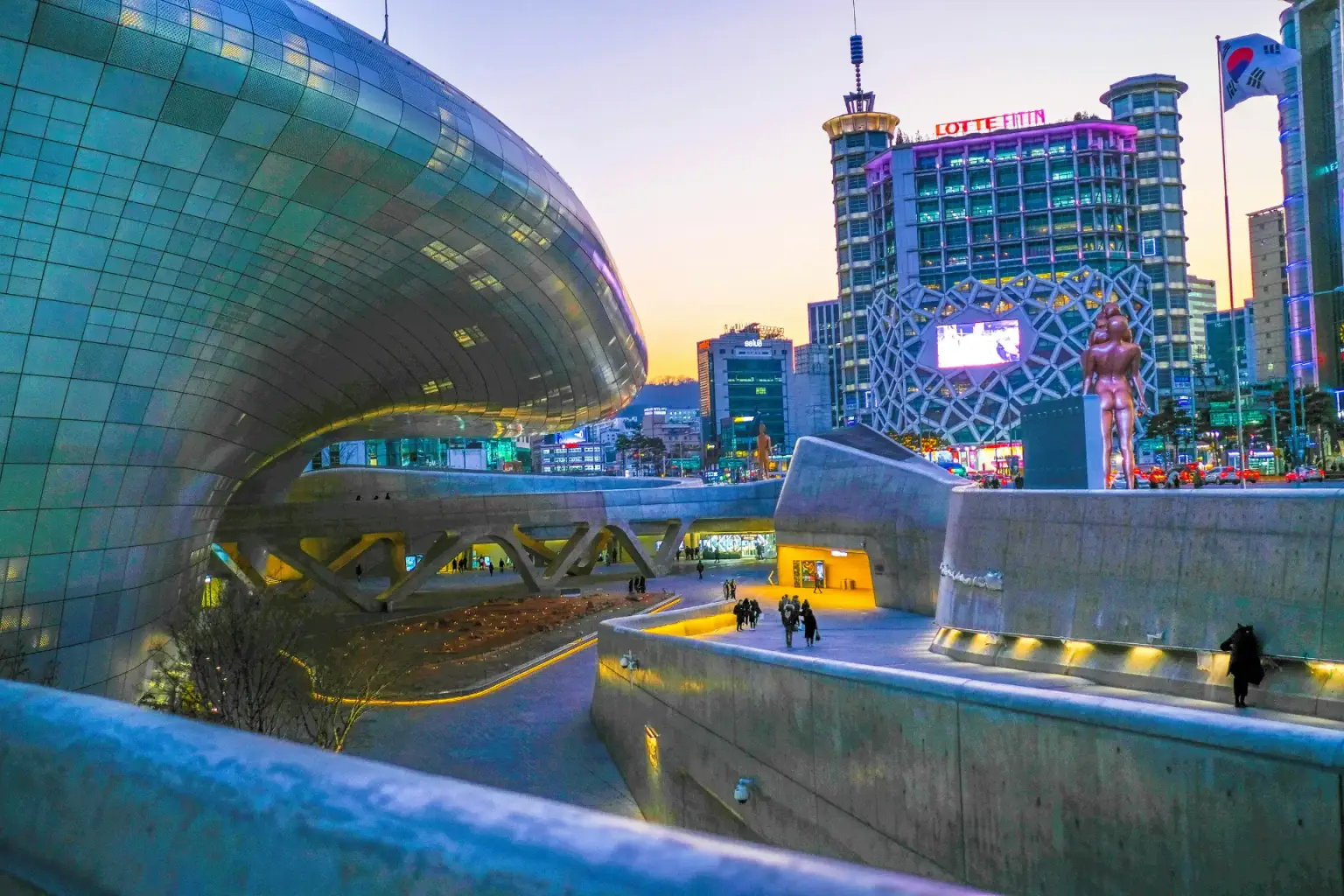
Line 4 (Danggogae ↔ Oido, covers Myeongdong, Itaewon, Dongdaemun Design Plaza)
South Korea Travel Tips
T-Money Card (stored-value transit card) works on all Seoul Metro, bus, and some taxis — also accepted at GS25 and CU convenience stores; load at any subway top-up machine with KRW; a significant daily saving on transport.
Dongdaemun Market and Namdaemun Market in Seoul and Gukje Market in Busan are wholesale-level price points for clothing, accessories, and electronics — dramatically cheaper than Myeongdong's branded retail strip.
North Korea's missile tests and military exercises occur periodically and cause temporary media alarm — they do not historically affect tourist movement within South Korea; follow Korean Emergency Broadcast System guidance at 119 if you need information.
South Korea has one of the highest road fatality rates among OECD nations — pedestrian crossings are frequently run through by turning vehicles; look both ways even at green pedestrian signals.
Pour drinks for others before pouring for yourself in Korean drinking culture — accepting a drink poured by an elder with both hands is required; offering to refill others' glasses is part of the meal ritual.
Do not write names in red ink in Korea — red ink for names is associated with death notices and funerals; use any other colour when signing Korean souvenirs, guest books, or writing cards.
Myeongdong cosmetics shops offer "free samples" that evolve into prolonged selling sessions — cosmetics are genuinely good value in Korea but the hard-sell environments are exhausting; decide your budget before entering.
Counterfeit branded goods in Itaewon and some Dongdaemun stalls — Korean customs enforcement at Incheon Airport scans outgoing bags for counterfeit items; purchasing and attempting to export fakes risks confiscation and a fine.
"Taxi karaoke" in Itaewon — a driver asks if you'd like to stop at a "karaoke" on the way; this is a bar that charges per-song rates of KRW 10,000–30,000 with mandatory drink purchases.
What is worth it,
and what to avoid.
Last reviewed 2026-05-11.
- Gyeongbokgung hanbok 8amPalace at 30 visitors, throne hall in morning light, Bugaksan mountain above. Same palace at 12pm has 2,000 visitors. Hanbok gives FREE palace entry.
- Seongsan Ilchulbong sunriseCaldera filling with pink light before sun clears sea horizon. 40 people at 5:30am vs 400 at 8am. Finest sunrise in South Korea.
- DMZ 3rd Infiltration Tunnel (— North Korean tunnel under DMZ. Specific geopolitical geography that exists nowhere else on Earth. Most Korea-only experience available.
- Haedong Yonggungsa 7:30am (FREE entry)Seaside Buddhist temple at dawn, 15 local worshippers, East Sea audible inside main hall. By 10:30am: 300 visitors. Completely free.
- Nami Island bicycle circuit (— Ginkgo avenue at cycling speed. Poplar avenue. Car-free island in March early spring.
- Changdeokgung Secret Garden78-acre wooded garden accessible only by guided tour. 300-year-old paulownia trees. Most specifically Korean garden experience.
- Samgyeopsal dinner— Grilled pork belly at table in cloud of charcoal smoke, wrapped in perilla leaf. Most common Korean dinner and the correct one.
- Jeju black pork barbecueJeju black pig, local Jeju-specific breed with different fat distribution and flavour from mainland white pork. Specifically Jeju.
- Bukchon Hanok Village 7am (FREE)900 traditional Korean hanok houses on ridge between Gyeongbokgung and Changdeokgung. 7am: empty lanes, residents still inside, rooflines in pre-dawn light, N Seoul Tower visible between hanok rooftops. Most genuine Bukchon — before tourist groups arrive at 9-10am.
- Gwangjang Market 10am bindaetteok + mayak gimbap (KRW 5,000-10,000 ≈ ₹310-620)Oldest intact traditional Korean market (Jongno, 10 min walk from Insadong). Mung bean pancake + 'narcotic gimbap' tiny rice rolls. Food preparation most visible in morning. Most specifically Gwangjang food experience.
- Gyeongbokgung without hanbok after 10amWithout hanbok, palace after 10am is crowded heritage site. With hanbok before 9am, it is empty throne room in palace. Hanbok is the access mechanism to better Gyeongbokgung. Rent before palace opens.
- Vivaldi Park on weekend in January-FebruaryKorean ski weekends specifically crowded — 2-hour lift queues normal. March weekdays: 15-minute queue maximum. If doing Vivaldi Park, do it on weekday.
- Arriving in Seoul expecting to walk everywhereSeoul is 600 sq km city. Subway (9 lines, 300+ stations) is correct Seoul transport. Buy T-Money card at airport IMMEDIATELY and use subway for all inter-district movement. Walking works within single districts.
- Jeju without car or scooter rentalJeju bus system exists but gives limited flexibility. Major sites (Seongsan, Hallasan, Manjanggul, Cheonjiyeon) spread across island. Car rental KRW 50,000-80,000/day (₹3,100-4,960). International Driving Permit REQUIRED.
- DMZ tour without passportPanmunjom Joint Security Area tour (actual border crossing, most detailed DMZ experience) requires passport registration 48 hours ahead AND physical passport on day. Standard DMZ tours (Imjingak + 3rd Tunnel only) just need ID. Confirm before day.
- Eating at Myeongdong restaurant rowMyeongdong main street restaurants target tourists, charge 30-50% more than identical restaurants 2 streets behind main drag. Street food on Myeongdong-gil correctly priced. Main Myeongdong-daero sit-down restaurants: tourist pricing.
- Missing convenience store food cultureKorean convenience store (7-Eleven, CU, GS25, Emart24) is genuine food destination: hot food corner (oden fish cake, steamed buns, corn dogs), kimbap rolls (₹93-186), ramyeon station (24hr hot water). Not a budget compromise — it IS the correct Korean 11pm experience.
- Bukchon Hanok Village after 10am without knowing contextInhabited residential area (900 families live in hanok houses). From 10am: tourist volume causes residents significant disruption. Code of conduct enforced (no shouting, no tripods, no photos through windows). Visit at 7am (empty) or behave accordingly.
- Booking April cherry blossom peak when March Jeju gives same blossomsJeju cherry blossoms open first week of March (3-4 weeks before Seoul). March pricing 20-30% below April Seoul cherry peak. Same Jeju King Cherry trees, smaller crowds, lower flights. Strategic alternative for budget-conscious cherry blossom seekers.
- Underestimating yellow dust (hwangsa) season impactMarch-May brings yellow dust from China and Mongolia across Korean peninsula. Check AQI at airkorea.or.kr before outdoor days. Wear KF94 mask (Korean N95 equivalent, KRW 1,500-3,000 at any pharmacy) on high-dust days. Specifically affects outdoor sightseeing comfort.
Experience K-Culture & Jeju Island!
Gyeongbokgung Palace & Jeju Nature Resort Combos
Plan K-Trip Now ↗South Korea FAQ
Visas, costs, safety and the practical questions travellers ask us most.
South Korea Visa for Indians 2026 — How to Apply?
South Korea Trip Cost from India 2026 — 10 Days?
Best Time to Visit South Korea for Cherry Blossoms 2026?
Is Vivaldi Park Worth It for Non-Skiers?
How to Get from Seoul to Nami Island?
India to Seoul Flight Cost 2026?
Is Korean Food Vegetarian-Friendly?
South Korea Mein Kitne Din Chahiye?


Have a South Korea trip
in mind?
Choose a package, or tell us the dates, hotels and experiences you want. We check the details and send you a clear quote. Pay in BTC, ETH, USDT, USDC and 90+ other coins, with other methods confirmed on request.