Sikkim
Gangtok Cable Cars, Tsomgo Glacial Lake & Nathula Border Pass
- Family
- Honeymoon
- Culture
Sikkim, your way.
With time for what matters.
Sikkim became part of India in 1975 after a referendum that ended the Chogyal monarchy. The state borders Nepal to the west, Tibet (China) to the north and east, Bhutan to the east, and West Bengal to the south. Four districts: East (Gangtok capital), North (most remote, most dramatic — Gurudongmar Lake, Lachen and Lachung valleys), West (Pelling, Yuksom, Kangchenjunga views, Goecha La trek base), and South (Namchi, Ravangla).
Is Sikkim Worth Visiting in 2026?
Why visit Sikkim.
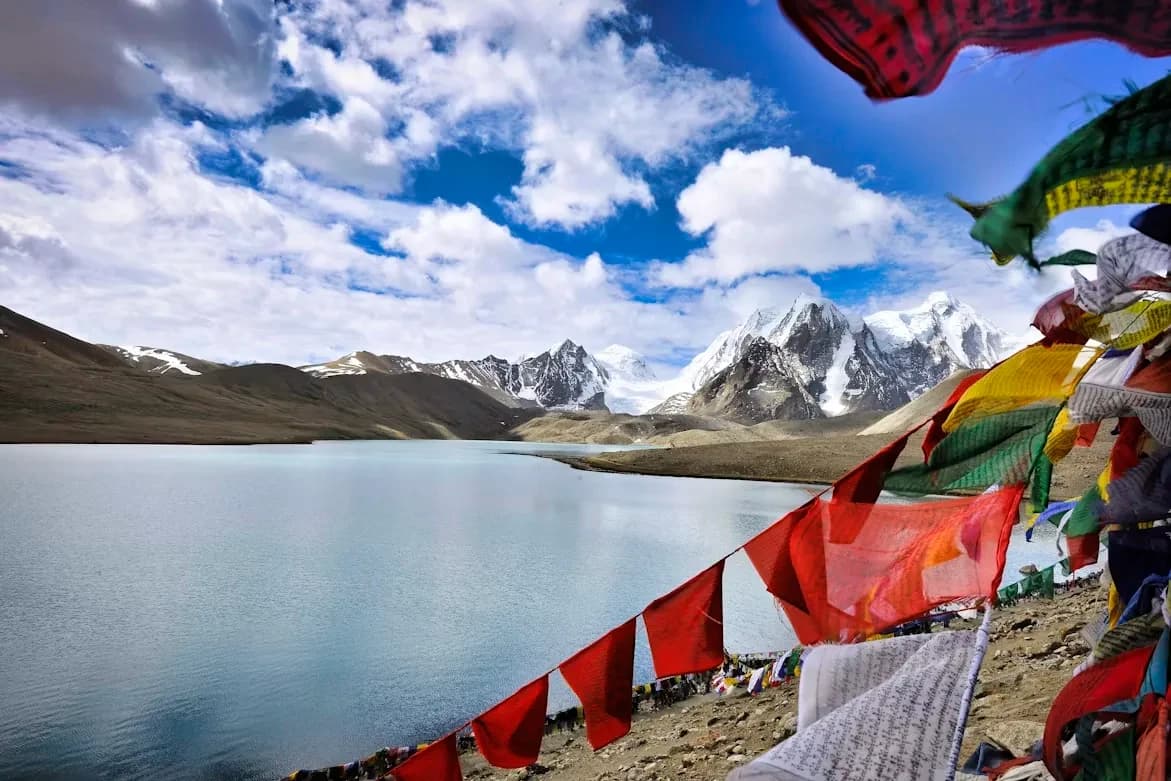
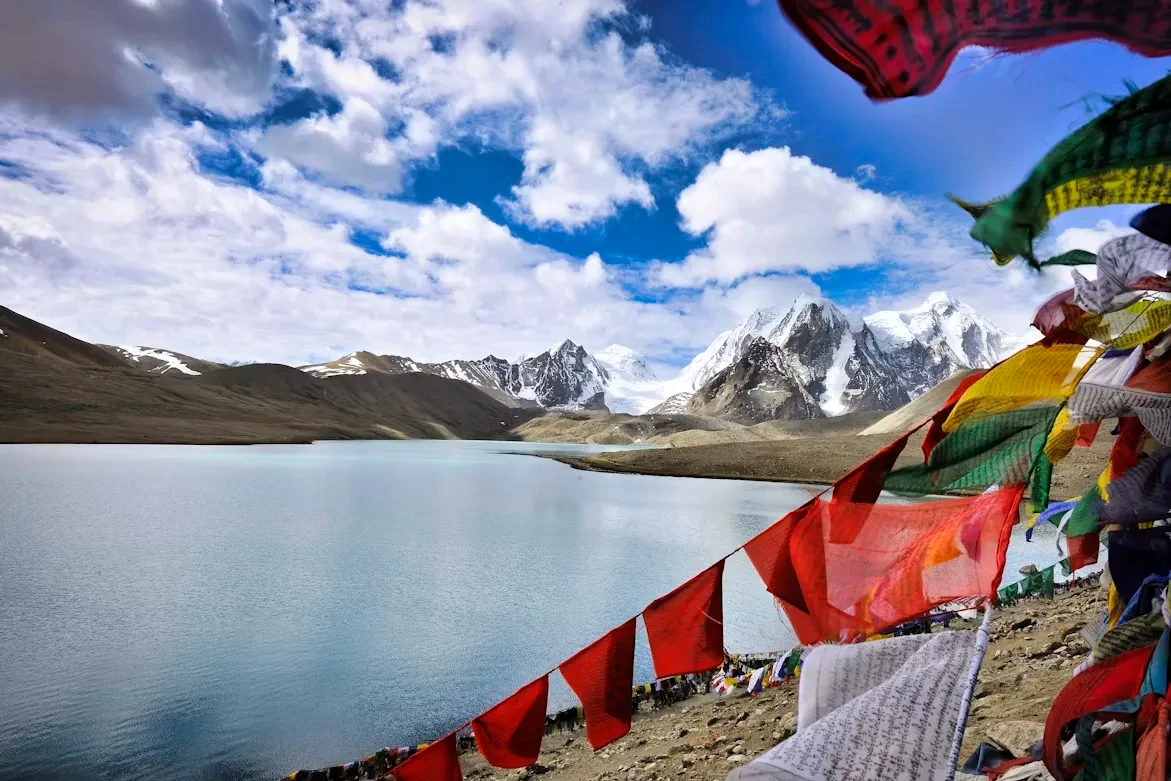
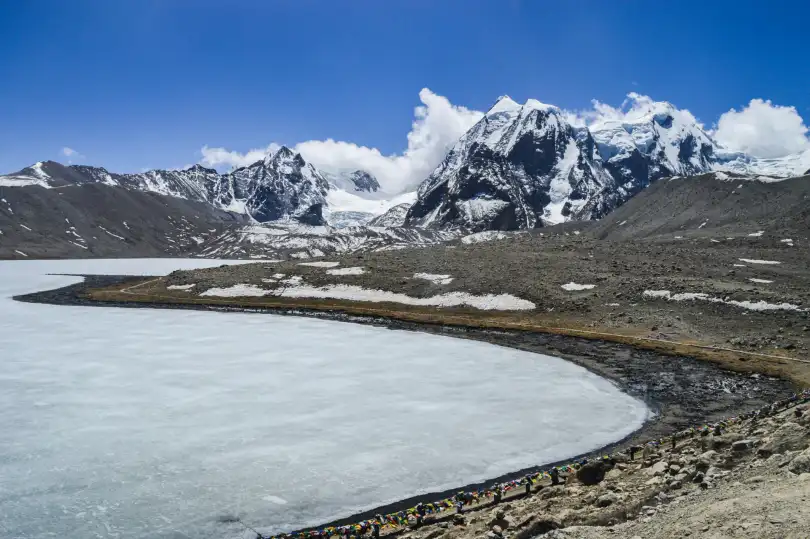
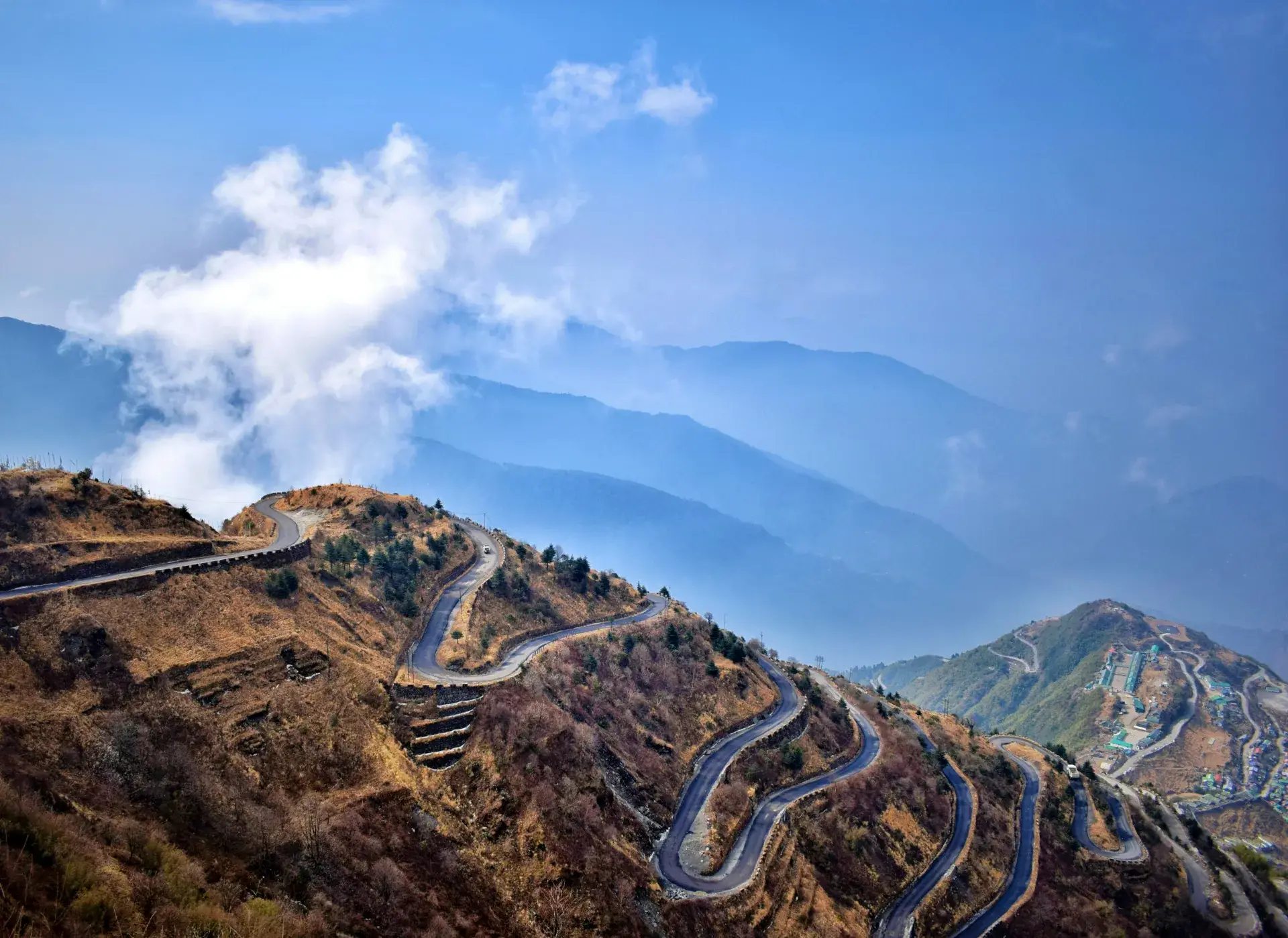
Sikkim is India's smallest state and its most ecologically extraordinary — sharing borders with Nepal, Tibet, and Bhutan, with Kangchenjunga (8,586m, world's third-highest peak) dominating the western horizon. The state is India's only fully organic-certified region since 2016. Rumtek Monastery is the seat-in-exile of the Karmapa lineage of Tibetan Buddhism. Gurudongmar Lake at 5,430m is one of the highest accessible lakes in the world. The Zuluk Zigzag road ascends 32 hairpins to the Silk Road plateau above 4,000m. Yumthang Valley's rhododendron bloom in April covers the valley in red, pink, and white. No passport needed. Fly to Bagdogra, then drive. Permit required for restricted zones. The Barsey Rhododendron Sanctuary in West Sikkim blooms across 100+ species in April — the most densely flowering high-altitude rhododendron forest accessible by road anywhere in India. Best time: March–May and September–November.
Key Features of Unwind in Peaceful Sikkim
Best Places To Visit In Sikkim
 01 / Place
East Sikkim (Gangtok + Tsomgo + Nathula)
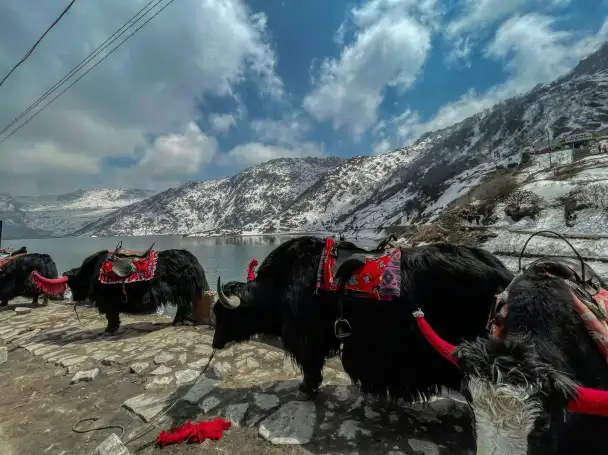
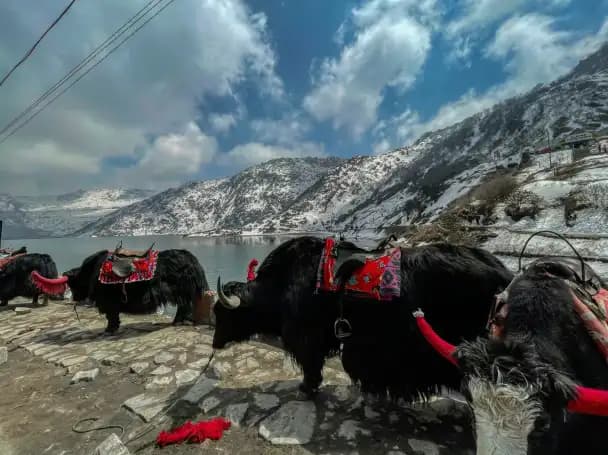
Gangtok (capital, MG Marg car-free pedestrian street, Rumtek Monastery (24km), Namgyal Institute of Tibetology (60,000 manuscripts), Enchey Monastery (200 years), ropeway). Tsomgo Lake ( 40km from Gangtok, 2.5 hrs by road, yak rides ₹200, rhododendron slopes). Nathula Pass (54km, India-China border, INDIANS ONLY, ₹200 permit, open Thu-Sun typically). Baba Mandir (Indian soldier shrine on Nathula road).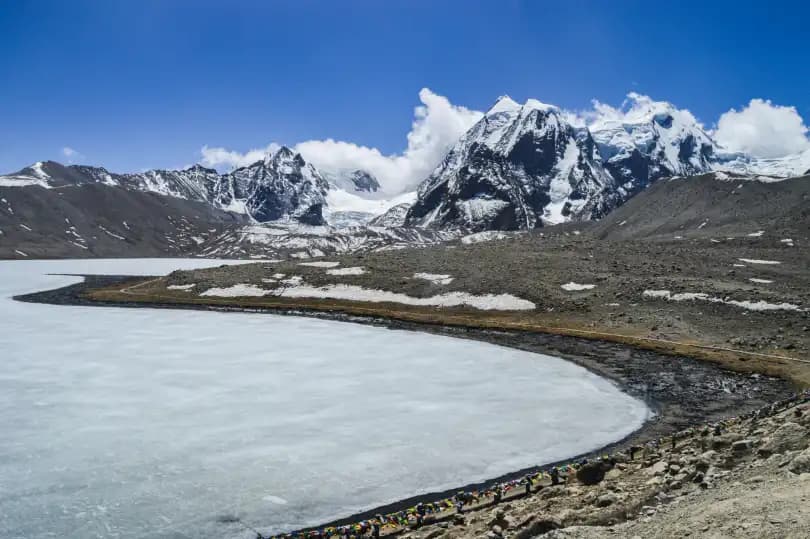 02 / Place
North Sikkim (Lachung + Lachen + Yumthang + Gurudongmar)
Lachung (2,750m, 125km from Gangtok, base for Yumthang and Zero Point) and Lachen (2,750m, base for Gurudongmar Lake). Yumthang Valley (3,564m, 24km alpine valley with Teesta River, 24 rhododendron species, hot springs at entrance 40-50°C). Zero Point/Yumesamdong (4,428m, end of civilian road, snow plateau, high-altitude rhododendrons). Gurudongmar Lake (5,183m, sacred to Buddhism + Hinduism + Sikhism, 4:30am Lachen convoy departure, mandatory return before 1pm). Permit free for Indians from Gangtok.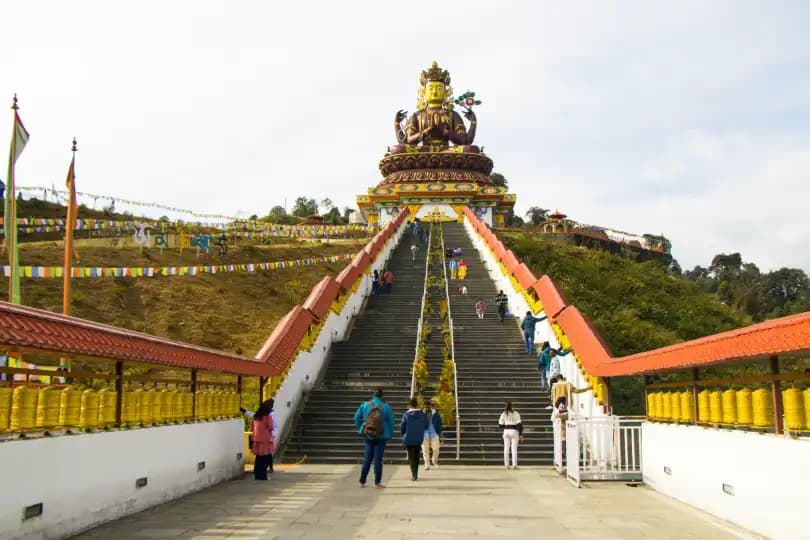 03 / Place
West Sikkim (Pelling + Pemayangste + Rabdentse + Yuksom)
Pelling (2,150m, 130km from Gangtok, 4 hrs, the Kangchenjunga 8,586m dawn view from northwest-facing hotel terraces 5am). Pemayangste Monastery (3,900m, 6km from Pelling, oldest and most important Nyingmapa monastery in Sikkim 1705, Zangdopelri 7-level Guru Rinpoche celestial palace wooden model). Rabdentse Ruins (the 2nd capital of Sikkim, Chogyal palace ruins, 4 chortens ridge, Kangchenjunga views from ridge). Yuksom (Goecha La trek starting point, Dubdi Monastery 1701 oldest in Sikkim, Khecheopalri Lake). 04 / Place
South Sikkim (Namchi + Ravangla)
Namchi (the South Sikkim district headquarters, Char Dham complex with replica Hindu temples, Sai Mandir, Samdruptse Monument with 41m statue of Guru Padmasambhava — the second-tallest statue in Sikkim). Ravangla (the Buddha Park with 41m Buddha statue, the highest Buddha statue in Sikkim, established 2013 for the 2,550th anniversary of Buddha's birth). South Sikkim is the most accessible and most underused Sikkim district.Gangtok (capital, MG Marg car-free pedestrian street, Rumtek Monastery (24km), Namgyal Institute of Tibetology (60,000 manuscripts), Enchey Monastery (200 years), ropeway). Tsomgo Lake ( 40km from Gangtok, 2.5 hrs by road, yak rides ₹200, rhododendron slopes). Nathula Pass (54km, India-China border, INDIANS ONLY, ₹200 permit, open Thu-Sun typically). Baba Mandir (Indian soldier shrine on Nathula road).
Best Time To Visit Sikkim
January · Avoid Winter. Gangtok sometimes snow. North Sikkim challenging. Fewest tourists but Gurudongmar access often limited.
February · Good Pre-spring. Rhododendrons beginning at lower altitudes. Quiet. Good value.
March · Best Rhododendron peak at 1,500-2,500m. All sites accessible. Clear skies.
April · Best Peak rhododendrons at mid-altitude (2,500-3,500m). Best overall for flowers.
May · Best Vikas's visit. Higher altitude rhododendrons. All North Sikkim open. Pre-monsoon clarity. Last clear window before monsoon.
June · Avoid Monsoon begins. Heavy rain. Some North Sikkim road disruption.
July · Avoid Peak monsoon. Maximum rain. Cloud cover. Landslide risk significant.
August · Avoid Monsoon. Gurudongmar possible on clear days but unpredictable.
September · Good Monsoon ending. Clearing. Cooler. Pre-Durga Puja shoulder season.
October · Best Post-monsoon = finest Kangchenjunga views of year. All sites. Maximum clarity. Sikkim at its absolute photographic best.
November · Best Post-monsoon clarity continues. Good weather. Some higher altitude snow beginning.
December · Good Winter beginning. Cold. Snow at altitude. Quiet. Cheapest pricing.
Sikkim trips,
ready to personalise.
 7D / 6N
Sikkim & Darjeeling Scenic Discovery Tour Package
Gangtok, Pelling, Darjeeling
Sikkim experiencesTop Things To Do
Gurudongmar Lake — 9 am Arrival After 4:30am Convoy
Depart Lachen at 4:30am (tourist vehicle convoy system — all vehicles must depart together at 4:30am to ensure a 9am arrival and a return by 1pm to avoid altitude sickness at 5,183m). The 5-hour drive: ascent from Lachen (2,750m) to the lake (5,183m) through altitude zones. At Thangu, brief stop; warm tea at army canteen. Final 2 hours on military road above 4,000m, landscape transitioning from juniper scrub to high-altitude plateau (above 4,500m: no vegetation, pure rock and frozen soil). The 5,183m arrival: shortness of breath at first step from Sumo, cold 4°C in May at 9:30 am, then the lake.
Insider tip
The 4:30 am Lachen departure is non-negotiable — army-enforced convoy time (military road is controlled). Do NOT run or exert yourself on arrival — walk slowly from vehicle to lake. Mandatory return before 1 pm. Lachen 4 pm rest day.
Nathula Pass — India-China Border at 4,310m
Book a Sumo from Gangtok for a Nathula + Tsomgo Lake day trip. Permits arranged by the Sumo driver or through the Gangtok tourist association at the SNT stand. The Nathula road is one of the finest mountain drives in East Sikkim — Baba Mandir (shrine to Baba Harbhajan Singh, an Indian soldier believed to still perform border patrol duties in spirit, visited by thousands of soldiers + tourists annually), Memencho Lake (small glacial lake on Nathula road), Tsomgo Lake (descent from Nathula on return) all on the same road. Nathula Pass parking area: Indian Army checkpost, gate, Chinese gate 5m beyond. Standing at the actual India-China boundary with both armies visible.
Insider tip
Yumthang Valley + Zero Point — 6am from Lachung
Insider tip
Kangchenjunga Dawn — 5am Pelling Hotel Terrace
Insider tip
Rumtek Monastery — 6am Morning Prayer
Insider tip
Tsomgo Lake — Yak Ride + Rhododendron Slopes
Insider tip
Pemayangste Monastery + Rabdentse Ruins — West Sikkim Heritage
Insider tip
Namgyal Institute of Tibetology — The Manuscript Library
Insider tip
Sikkimese Food + Black Cardamom Circuit
Insider tip
Sample Itineraries
See how each trip is paced, from arrival to departure. These are sample day-by-day plans; we tailor the dates and details.
Sikkim Quick — 6 Days (Gangtok + East + North)
- Day 1Bagdogra/NJP → GangtokReach Gangtok by 5pm from Bagdogra (4 hrs by shared Sumo ₹200/seat or private cab ₹2,500). MG Marg evening walk (car-free pedestrian street, café culture). Tibetan bread + butter tea breakfast/snack at any MG Marg café (₹60-80). Initial Gangtok orientation. Permits planning for North Sikkim + Nathula through tour operator (₹300-500 service charge, saves DC office time).
Advice
Arrange ALL permits on Day 1 through tour operator: North Sikkim permit (free, covers Lachung + Lachen + Yumthang + Gurudongmar) + Nathula permit (₹200, covers East Sikkim border day). The North Sikkim permit must be organised 1 day before departure — checked at Mangan checkpoint 65km from Gangtok. - Day 2Gangtok localRumtek Monastery 6am morning prayer (24km from Gangtok, the Kagyu prayer with ritual horns + drums + cymbals, 30-40 monks in main hall). Return Gangtok. Namgyal Institute of Tibetology 11am (60,000 Tibetan manuscripts, the Kangyur in 108 silk-bound volumes, ₹20 entry). MG Marg lunch. Gangtok ropeway 3pm (₹100 return, 10-min aerial city view). Enchey Monastery 4pm afternoon prayer. Government Emporium for organic Sikkim products.
Advice
Rumtek 6am is the correct timing — by 9am tourist coaches arrive. The morning prayer in empty hall with 30-40 monks and 3-4 early visitors is the most acoustically complete Tibetan Buddhist ritual in Sikkim. Walk clockwise at all stupas and chortens. Remove shoes at all prayer halls. - Day 3Gangtok → Tsomgo → Baba Mandir → Nathula → Return GangtokSNT stand 6:45am shared Sumo (₹500/seat). Tsomgo Lake 9:30am (3,753m glacial lake, yak rides ₹200, rhododendron slopes in May). Baba Mandir 10:30am (Indian soldier shrine — Baba Harbhajan Singh, the soldier believed to still perform border patrol duties in spirit). Nathula Pass 11am (4,310m India-China border, Indian + Chinese soldiers 5m apart at the gate, 45 min at the pass). Return Gangtok 4pm via Tsomgo.
Advice
Nathula open Thursday-Sunday typically (subject to change for security reasons). Confirm at SNT stand on day before. Foreigners specifically excluded — Indians ONLY. Carry warm clothing for Nathula (4,310m, 4-8°C in May even in sunshine). Photography of soldiers/military equipment not permitted at Nathula — only the viewing platform photography allowed. - Day 4Gangtok → Mangan checkpoint → LachungDepart Gangtok 8am. Mangan checkpoint 10:30am (North Sikkim permit check). Chungthang confluence 12pm (the Lachen Chu + Lachung Chu rivers join to form the Teesta River — the geographic origin of the river that becomes 5,000km long). Arrive Lachung 4pm (2,750m). Rest. Acclimatisation for next-day Gurudongmar. Light dinner. Early sleep.
Advice
The Gangtok → Lachung drive is one of the finest mountain drives in India — the Teesta River gorge for 100km, the road carved into vertical cliff faces, multiple waterfalls visible along the route. Acclimatisation at Lachung 2,750m is essential before Gurudongmar 5,183m — do NOT skip the night at Lachung/Lachen. - Day 5Lachung/Lachen → Gurudongmar → Lachung4:30am Lachen departure (mandatory army convoy). Thangu 7am (3,914m, warm tea at army canteen). Gurudongmar 9:30am (5,183m, 45 min at the lake — western thawed section, eastern ice, 6,000m+ peaks reflected, silence of high plateau). Mandatory return before 1pm. Lachung/Lachen 4pm rest. Dinner. Sleep.
Advice
The single most significant day of the Sikkim circuit. Diamox if altitude-sensitive (consult doctor before trip). Warm layers essential (4°C at 5,183m in May even in sunshine). Carry hot water in thermos + light food. Do NOT run or exert yourself on arrival at lake — walk slowly. Symptoms of severe altitude sickness (severe headache, nausea, confusion): descend immediately. Best to stay in Lachen (closer to Gurudongmar) the night before, not Lachung. - Day 6Lachung → Yumthang → Zero Point → GangtokLachung 6am. Yumthang hot springs 7:30am (40-50°C geothermal water at 3,500m, 15 min soak). Yumthang valley viewpoint 8am (3,564m alpine valley + Teesta River + rhododendron slopes). Zero Point 9:30am (4,428m, end of civilian road, snowfields + high-altitude rhododendrons + 6,000m peaks on all sides). Return Yumthang 11am. Lachung lunch. Depart Gangtok 2pm. Arrive Gangtok 8pm.
Advice
Zero Point temperature drop from Yumthang significant — carry thermal layers + wind jacket + gloves + warm hat. The Yumthang-to-Zero-Point drive is the most specifically spectacular 25km of road in North Sikkim. The road is narrow — the Sumo driver is the essential navigator. The 7-hour return day Lachung → Gangtok is long but necessary.
Sikkim Popular — 8 Days
- Day 1Bagdogra/NJP → GangtokReach Gangtok by 5pm. MG Marg + Flower Exhibition Centre (532 orchid species, free entry) + Enchey Monastery evening. Arrange all permits through tour operator.
Advice
Arrange North Sikkim permit + Nathula permit on Day 1 through a tour operator. Saves DC office time and ensures permits are ready for departure days.
- Day 2Gangtok → Rumtek → GangtokRumtek Monastery 6am morning prayer (24km from Gangtok, the Kagyu prayer hall with 30-40 monks). Namgyal Institute 11am (60,000 manuscripts). Gangtok ropeway 3pm. Government Emporium for cardamom + Sikkim tea + honey.
Advice
Rumtek 6am: the prayer in empty hall is the reason to go at 6am. By 9am: tourist coaches arrive and atmosphere transforms. Walk clockwise at all stupas and chortens. - Day 3Gangtok → Tsomgo → Nathula → GangtokShared Sumo 7am. Tsomgo Lake 9:30am. Baba Mandir 10:30am. Nathula 11am (India-China border, Indians only, ₹200 permit). Return Gangtok 4pm.
Advice
Nathula: Indians only. Permit ₹200 from SNT stand or tour operator. Open Thursday-Sunday typically — confirm current schedule. Photography of soldiers/military equipment not permitted. - Day 4Gangtok → Mangan → Chungthang → LachungDepart Gangtok 8am. Mangan permit checkpoint. Chungthang confluence (Teesta River origin). Arrive Lachung 4pm. Rest at 2,750m.
Advice
Teesta River gorge drive: one of finest mountain drives in India. Acclimatisation at Lachung 2,750m before Gurudongmar 5,183m. - Day 5Lachen → Gurudongmar → Lachen4:30am convoy departure. Thangu 7am. Gurudongmar 9:30am (5,183m, 45 min at lake). Return Lachen by 1pm mandatory. Rest.
Advice
Build everything around protecting Day 5. Stay in Lachen (not Lachung) night before — closer to Gurudongmar. Confirm permit evening before. Carry warm clothing regardless of forecast (4°C at 5,183m in May sunshine is cold when wind comes off ice). - Day 6Lachung → Yumthang → Zero Point → GangtokLachung 6am. Yumthang hot springs 7:30am. Zero Point 9:30am (4,428m). Return Gangtok 8pm.
Advice
Zero Point temperature drop significant — carry thermal layers + wind jacket + gloves + warm hat. The 7-hour return day is long. - Day 7Gangtok → PellingDrive Gangtok → Pelling (130km, 4 hrs). Check into northwest-facing hotel room for Kangchenjunga view. Local Pelling market evening. Pre-sleep prep for 5am alarm.
Advice
Confirm hotel room faces northwest with unobstructed Kangchenjunga view — ask which floor and which room number specifically. Set 5am alarm. Pre-position warm clothing for terrace at 5am. - Day 8Pelling → Pemayangste → Rabdentse → Bagdogra5am Kangchenjunga dawn (45-min window 5:15-6am, the 8,586m summit in first light, orange-pink on glacier face, valley cloud rising by 6am). Pemayangste Monastery 9am (Zangdopelri 7-level wooden model). Rabdentse Ruins 11am (Chogyal palace ruins, ridge walk). Return Bagdogra 4 hrs by shared Sumo.
Advice
The Kangchenjunga window is 45 minutes — 5:15am to 5:45-6am. Set alarm 4:55am. Pre-position hot tea, warm jacket, camera. The summit in first light is the reason to be in Pelling. The Zangdopelri model at Pemayangste (3m high, hand-carved by single monk over decades) is the most extraordinary single object in any Sikkim monastery.
Sikkim Complete — 12 Days (+ Yuksom + Goecha La Base)
- Day 1Bagdogra → GangtokReach Gangtok. MG Marg orientation. Permits arrangement through operator.
Advice
All permits Day 1 through operator. - Day 2Gangtok localRumtek 6am + Namgyal Institute + Flower Exhibition + ropeway + Government Emporium.
Advice
Rumtek 6am for morning prayer is the correct timing. - Day 3East Sikkim border daySumo 7am · Tsomgo · Baba Mandir · Nathula · Return 4pm.
Advice
Indians only. ₹200 permit. Open Thursday-Sunday typically. - Day 4Gangtok → LachungTeesta River gorge drive. Lachung arrival 4pm. Acclimatisation.
Advice
Acclimatise at 2,750m before Gurudongmar 5,183m. - Day 5Lachen → Gurudongmar4:30am convoy. 5,183m lake at 9:30am. Mandatory return 1pm.
Advice
Diamox if altitude-sensitive. Warm clothing. Don't exert at altitude. - Day 6Lachung → Yumthang → Zero Point → GangtokYumthang 7:30am + Zero Point 4,428m + return Gangtok.
Advice
Zero Point: thermal layers + wind jacket + gloves essential. - Day 7Gangtok → Pelling4-hour drive. Pelling check-in. Kangchenjunga dawn planning.
Advice
Northwest-facing hotel room critical. - Day 8Pelling local5am Kangchenjunga · Pemayangste 9am · Rabdentse 11am.
Advice
The 45-minute Kangchenjunga window is non-negotiable. - Day 9Pelling → Yuksom (30km)Yuksom (the starting point of Goecha La trek, the first capital of Sikkim 1641). Dubdi Monastery (oldest in Sikkim, 1701). Khecheopalri Lake (sacred Buddhist lake — the holy footprint lake, floating leaves removed by birds before sinking, believed divine).
Advice
Yuksom is the most historically dense single Sikkim village — first capital + oldest monastery + sacred lake. Khecheopalri is the most specifically Buddhist sacred lake in Sikkim. - Day 10Yuksom → Sachen → TshokaTrek start. Yuksom 1,780m → Sachen 2,250m → Tshoka 2,990m. 14km, 7-8 hours. Forest trail through rhododendron + magnolia.
Advice
Goecha La trek requires registered guide + porter + permit. Book through Yuksom operator. Pre-monsoon May is correct window. - Day 11Tshoka → DzongriTshoka 2,990m → Dzongri 4,020m. 7km, 6 hours. First Kangchenjunga panorama from Dzongri Hill above camp (sunrise next morning gives full Kangchenjunga range).
Advice
Dzongri is the turnaround for non-Goecha-La trekkers. The Dzongri viewpoint sunrise gives Kangchenjunga + Pandim + Kabru massif in one frame. - Day 12Yuksom → BagdograTrek return to Yuksom (faster on descent). Drive Yuksom → Bagdogra (6 hrs).
Advice
The complete Sikkim circuit including trek is the deepest 12-day Sikkim experience available. Goecha La requires 8-day trek minimum — Dzongri 2-day return is the shorter Kangchenjunga-base option.
Where to Stay In Sikkim
Gangtok City Centre (East Sikkim)
Lachung Valley (North Sikkim)
Lachen Valley (North Sikkim)
Pelling Ridge (West Sikkim)
South Sikkim Highlands
Travel Costs for Sikkim
Budget
₹1,500–3,000Money-saving travel- Stay
- Gangtok guesthouse (₹1,000-2,500/night) · Lachung/Lachen basic guesthouse (₹800-1,500/night) · Pelling budget hotel (₹1,000-2,500/night). Shared Sumo for all transport.
- Food
- Local dhabas: Thukpa + rice/dal meals (₹100-250/meal) · MG Marg café breakfasts (₹60-80 Tibetan bread + butter tea) · Chhurpi snacks · Free Sikkimese food at any roadside dhaba
Mid-range
₹4,000–7,500Comfortable everyday travel- Stay
- Gangtok 3-star (₹3,500-8,000/night) · Lachung/Lachen mid-range (₹2,000-5,000/night) · Pelling Kangchenjunga-view hotel (₹3,500-9,000/night). Private cab Gangtok local + shared transport for North Sikkim.
- Food
- Nimtho Sikkimese restaurant complete thali (₹250-350/person) · Hotel restaurant dinners · Tongba bamboo beer experience (₹80-150)
PREMIUM
₹9,000–18,000per person, per day- Stay
- Boutique hotels Gangtok + Pelling (Elgin Mount Pandim Pelling, ₹12,000-22,000/night) · Better North Sikkim properties · Private cab for full circuit.
- Food
- Hotel restaurants premium dining · Private guide for all monastery + heritage sites · Helicopter Gurudongmar option (₹35,000-50,000 per person)
Luxury
₹25,000+Premium comfort- Stay
- Mayfair Spa Resort Gangtok + Elgin Pandim Pelling premium suites + helicopter transfers + private chef-prepared Sikkimese tasting menus
- Food
- Private helicopter Gurudongmar (avoids 5-hour road journey) · Mayfair Spa Resort dining · Pelling Kangchenjunga suite breakfast on private terrace · Custom Sikkimese tasting dinner
How to Get to Sikkim Travel Guide & Get Around
How to reach Sikkim and how to get around once you are there: the routes, how long they take and what they cost.
Plan your route ↗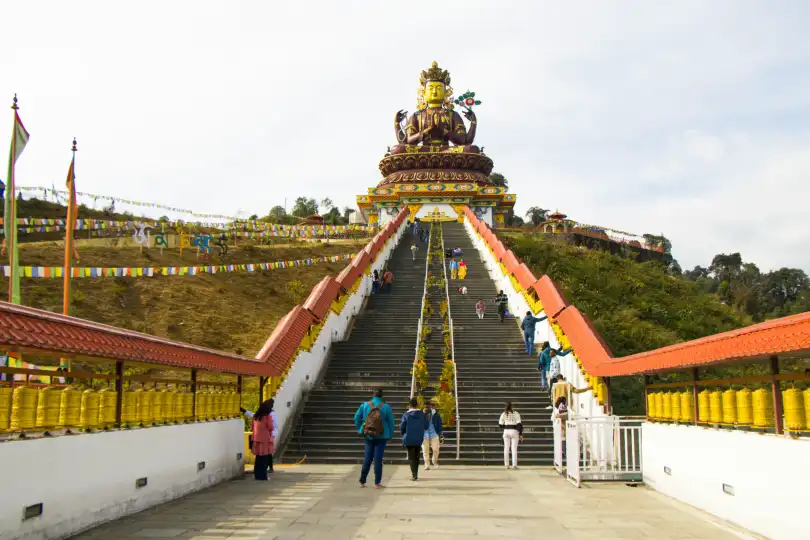 5 ways to travel
Pakyong Airport (PYG) or Bagdogra (IXB)
Flights from India:
- Delhi → PYG (2h 30m, IndiGo/Air India direct)
- Delhi → Bagdogra IXB (2h) + road to Gangtok (125km, 4h)
- Kolkata → IXB (1h)
- Mumbai → IXB (2h 30m)
Pakyong Airport (PYG, 30km from Gangtok) opened in 2018 — India's highest airport at 4,593m above Gangtok's approach road. Bagdogra (Siliguri) is the alternative gateway with more flights and more reliable service — 4 hours by road to Gangtok via NH10. For most routes, Bagdogra gives better flight availability.
Siliguri to Gangtok (NH10)
Key Road Routes:
- Siliguri (NJP Railway Station) → Gangtok (NH10, 125km, 4h via Teesta River gorge)
- Darjeeling → Gangtok (90km, 3h 30m via Peshok)
- NJP → Namchi South Sikkim (130km, 4h)
NH10 (the Teesta River Highway) is the primary Sikkim approach — the Teesta gorge section from Sevoke to Rangpo (the Sikkim border) offers one of India's most spectacular single-river gorge drives. The border town of Rangpo requires verification of an Inner Line Permit for entry to protected areas (Nathu La and Gurudongmar in North Sikkim).
New Jalpaiguri (NJP) Junction
Key Train Routes:
- Delhi → NJP (Darjeeling Mail overnight, 17h)
- Kolkata Howrah → NJP (Kanchankanya Express, 9h)
- Chennai → NJP (25h, Guwahati-connecting service)
New Jalpaiguri (NJP, Siliguri) is Sikkim's rail gateway — the station is 125km from Gangtok, covered by shared taxi (3h 30m, Sikkim Nationalised Transport or private jeep). The Kanchankanya Express from Kolkata (9 hours overnight, arriving NJP at 6am) gives a morning departure for Gangtok by shared jeep.
Bagdogra to Gangtok
Key Routes:
- Bagdogra (IXB) → Gangtok Helipad (15 min, Pawan Hans helicopter)
Pawan Hans operates the Bagdogra–Gangtok helicopter service — 15 minutes versus 4 hours by road. Most practical for business visitors or pilgrimage connections. Operational on fair-weather days only; book at pawanhans.co.in well ahead.
NJP or Siliguri to Gangtok
Key Road Routes:
- NJP Junction → Gangtok (shared jeep, 3h 30m, departs when full from NJP taxi stand)
- Siliguri Tenzing Norgay Bus Terminal → Gangtok (SNT bus, 4h)
Shared jeeps from NJP taxi stand (departing 7am–2pm, fill rapidly) are the primary budget transport into Sikkim — the most authentic and most local single approach to Gangtok, through the Teesta Valley with local Sikkim residents.
Good to know
before you go.
What is worth it,
and what to avoid.
- Gurudongmar Lake 9:30am at 5,183m (Free, permit required). One of highest lakes in world, sacred to 3 religions, accessible by road. The specific navy blue at high altitude with 6,000m peaks reflected. The silence of the high plateau. The single most significant Sikkim experience.
- Nathula Pass border gate ₹200 permit. Standing at the actual India-China border with soldiers from both sides visible 5m apart. Available only to Indian nationals. The only geopolitical experience of this specificity available to Indian citizens anywhere.
- Kangchenjunga 5am from Pelling (Free with northwest-facing hotel). World's 3rd highest peak in first light, 45 minutes before valley cloud covers it. Set the alarm. The window is narrow. It is correct.
- Rumtek Monastery 6am morning prayer (Free). The Karmapa's monastery, the Kagyu prayer at 6am, 3 other visitors in the hall. The ritual instruments. The golden throne. The most specifically Tibetan Buddhist living monastery experience in Sikkim.
- Yumthang hot springs (Free). 40-50°C geothermal water emerging from the ground at 3,500m in the May mountain cold. The most warming specific thing in the North Sikkim cold morning.
- Zangdopelri model at Pemayangste (₹30 monastery entry). The 7-level hand-carved and painted wooden model of Guru Rinpoche's celestial palacethe most extraordinary single crafted object in any Sikkim monastery, by a single monk, 3m high.
- Namgyal Institute of Tibetology (₹20). Largest Tibetan manuscript collection in India (60,000+ manuscripts). The Kangyur in 108 silk-bound volumes. The most intellectually specific ₹20 spent in any Indian state.
- Organic Sikkim black cardamom from Government Emporium (₹800-₩1,200/100g). 70% of world supply grown in Sikkim. Source pricing significantly below Delhi organic market. The most specifically Sikkimese edible souvenir.
- Zero Point at 4,428m (Free with North Sikkim permit). End of civilian road in North Sikkim. May: snow-covered plateau + high-altitude rhododendrons in bloom + 6,000m peaks visible on all sides. The civilian end of the road.
- Tsomgo Lake yak ride (₹200-300). Decorated yaks at lake edge at 3,753m for 15-min lakeside circuit. Closest specific Sikkim Tibetan-Buddhist herding tradition experience accessible from Gangtok day trip.
- Not acclimatising before Gurudongmarthe single most dangerous Sikkim mistake. Arriving in Gangtok and driving directly to Gurudongmar (5,183m) without 2 nights at Gangtok (1,650m) and 1 night at Lachen (2,750m) produces severe altitude sickness. HACE at 5,183m is life-threatening. 2+1 night acclimatisation is non-negotiable.
- Nathula on a weekday (Monday, Tuesday, Wednesday). Nathula Pass is typically closed on Mon-Wed. Check current schedule at SNT Bus Stand Gangtok on day of permit purchase. Standard open days are Thursday-Sunday. Arriving on closed day wastes the entire Nathula day.
- North Sikkim without permits organised the day before. The North Sikkim permit checkpoint at Mangan (65km from Gangtok) will turn back vehicles without correct permit. Must be organised in GangtokDC office (morning hours) or registered tour operator (more efficient). Don't assume permit available at checkpoint.
- Pelling hotel without checking the Kangchenjunga view. Not all Pelling hotels face northwest. East-facing or south-facing rooms give no Kangchenjunga view regardless of 'mountain view' marketing. Ask specifically which direction rooms face, which rooms have Kangchenjunga views, from which floor.
- Only Gangtok and East Sikkim. The Tsomgo-Nathula day trip from Gangtok is standard tourist circuit and misses 80% of Sikkim. Gurudongmar (North), Pelling Kangchenjunga (West), Pemayangste Monastery (West) are the experiences that make Sikkim more than a pleasant hill station.
- Underestimating Zero Point temperature. Zero Point at 4,428m in May: 2-8°C with wind. Temperature drop from Yumthang (8-15°C) to Zero Point is significant and faster than expected. Carry: thermal layers, wind jacket, gloves, warm hat for Zero Point regardless of Yumthang temperature.
- ATM dependency in North Sikkim. No reliable ATMs beyond Gangtok in North Sikkim circuit. Lachung has one ATM frequently not operational. Lachen has none. Withdraw ₹5,000-8,000 per person in Gangtok before North Sikkim 3-4 day circuit.
- Plastic in Sikkim. India's first state to ban plastic bags (2016 order). Carrying single-use plastic bags in Sikkim can result in fines at checkpoints and markets. Carry reusable cloth bags from homestate is specifically serious about plastic enforcement.
- 'Zero Point' vs Zero Point confusion. Some tour operators include a viewpoint near Yumthang called 'Zero Point' that is NOT the actual Zero Point/Yumesamdong at 4,428m. Confirm with operator that 'Zero Point' on itinerary is Yumesamdong (4,428m) at end of civilian road.
- Yak ride price at Tsomgo. Yak ride at Tsomgo Lake has fixed government price (₹200-300 for 15-min). Some handlers quote ₹500+ to first-time visitors. Confirm rate before mounting. Government-displayed rates posted at lake parking area.
View Majestic Kanchenjunga!
Nathula Pass Permits & Gangtok Lake Packages
Plan Sikkim Trip ↗Common questions
about Sikkim.
Visas, costs, safety and the practical questions travellers ask us most.
Do Indians Need a Permit for Sikkim 2026?
Sikkim Trip Cost — 8 Days 2026?
How to Reach Gurudongmar Lake from Gangtok?
Is Nathula Pass Open to Foreign Tourists?
Best Time to Visit Sikkim 2026?
What is the Best View of Kangchenjunga in Sikkim?
Is Altitude Sickness a Risk in Sikkim?
Sikkim Mein Kitne Din Chahiye?


Have a Sikkim trip
in mind?
Choose a package, or tell us the dates, hotels and experiences you want. We check the details and send you a clear quote. Pay in BTC, ETH, USDT, USDC and 90+ other coins, with other methods confirmed on request.