Nepal
Kathmandu UNESCO Temples, Pokhara Lakeside Boating & Mountain Flights
- Nature
- Culture
- Adventure
- Solo
- Family
Nepal, your way.
With time for what matters.
Nepal is a landlocked Himalayan country between India and China — home to 8 of the world's 14 peaks above 8,000m (including Everest at 8,849m), 11 UNESCO World Heritage Sites, and a landscape that changes from Terai plains (sub-tropical, wildlife-rich) through Middle Hills (terraced farming, rhododendron forests, trekking valleys) to high Himalayan zone (glaciers, Sherpa villages above treeline). Indians visit Nepal without visa (no fee, no application — only valid Indian photo ID), using Indian Rupees directly, flying Delhi/Mumbai to Kathmandu in 1.5-2 hours.
Is Nepal Worth Visiting in 2026?
Why Visit Nepal
Eight of the world's ten highest mountains are in Nepal, including Everest at 8,849m. The Everest Base Camp trek is achievable by any fit adult with adequate preparation — no technical climbing skills needed. Annapurna Circuit crosses a 5,416m pass with views of 7,000m+ peaks on both sides. Kathmandu's Boudhanath is among the largest Buddhist stupas in the world; Pashupatinath is one of Hinduism's most sacred sites. Pokhara sits at 820m with Fishtail Mountain visible from the lakeside. Chitwan National Park offers one-horned rhinoceros and Bengal tiger safaris. No visa required for Indians. Direct flights from Delhi, Mumbai, Kolkata, Bengaluru to Kathmandu. Lumbini, in the Terai plains near the Indian border, is the verified birthplace of Siddhartha Gautama — a UNESCO World Heritage Site and one of the most significant pilgrimage destinations in Asia.
I have been to Leh Ladakh and Spiti Valley multiple times. The mountains there approach you from inside — you drive up, the altitude increases, the landscape empties and elevates simultaneously. Nepal approaches differently. The Poon Hill trek from Nayapul to Ghorepani follows a trail through sub-tropical forest that transitions to oak forest to rhododendron forest — the elevation gain happening through successive forest zones rather than through the empty altitude of the Ladakhi plateau. The April rhododendrons at 3,000m: the forest is red. Not the autumn red of the Shimla oaks, but the specific spring red of the Rhododendron arboreum in bloom — the large-leafed trees with their fist-sized flower clusters in every shade from white to pink to crimson. The trail from Ulleri to Ghorepani in April passes through 12km of this forest. I have not seen the equivalent anywhere in the Indian Himalaya.
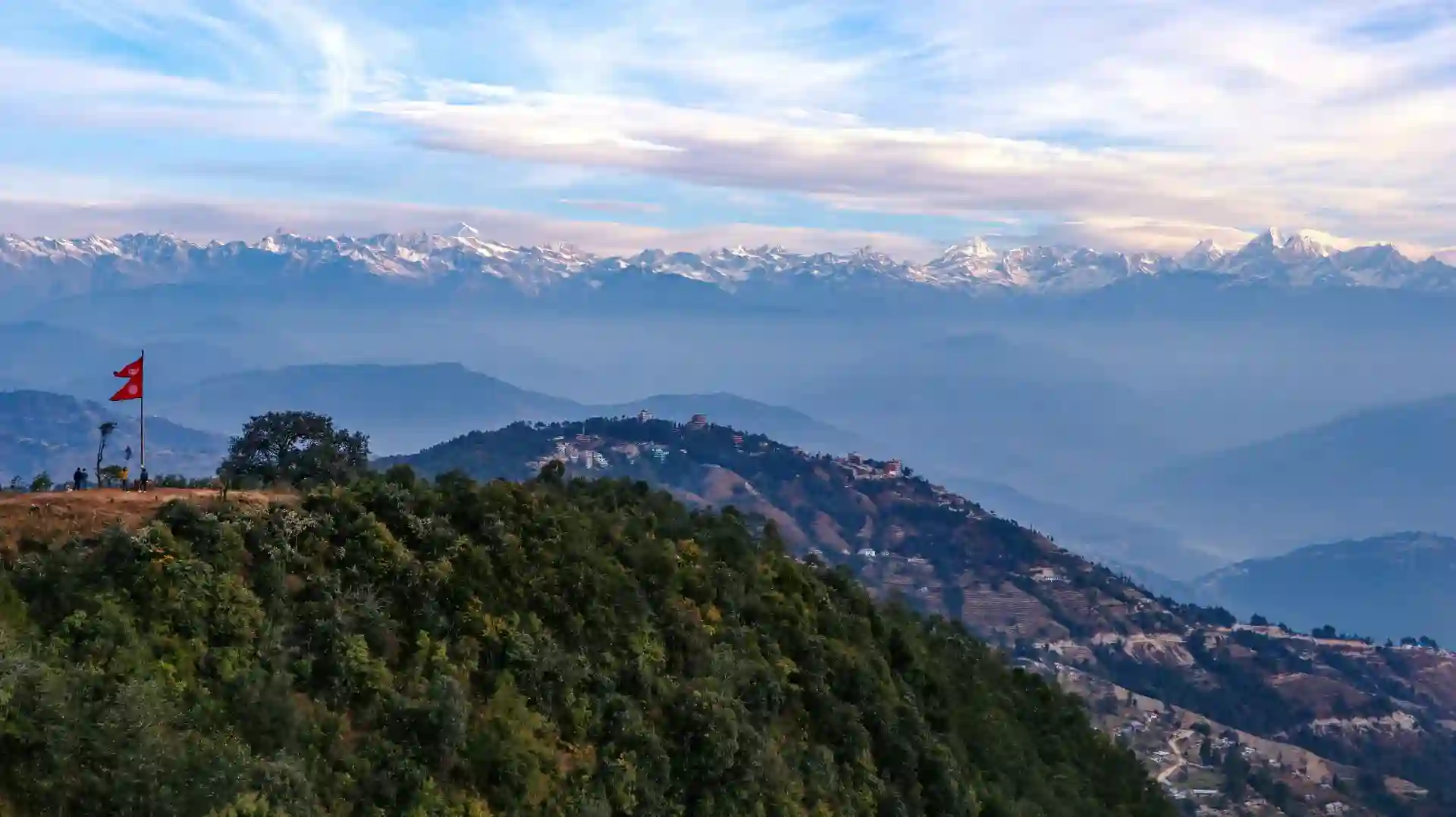
Key Features of Nepal
Best places to visit in Nepal
 01 / Place
Sarangkot Sunrise — The Annapurna Range at First Light
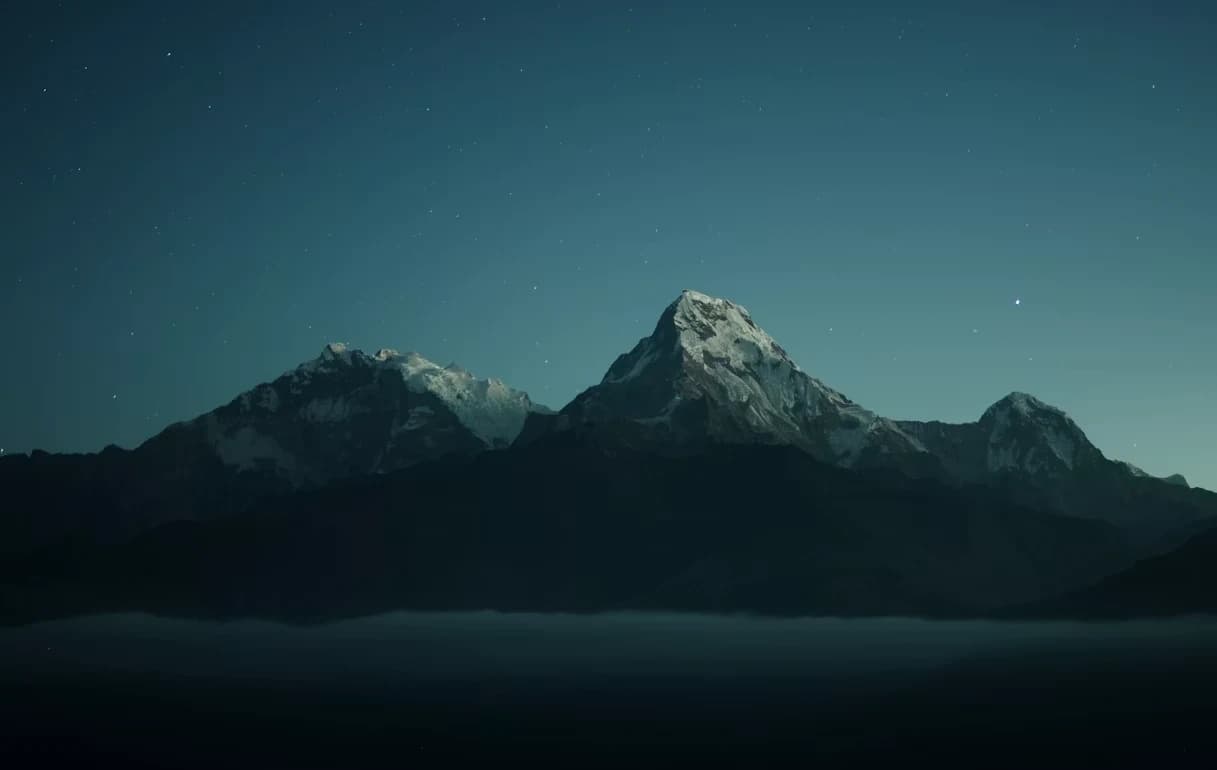
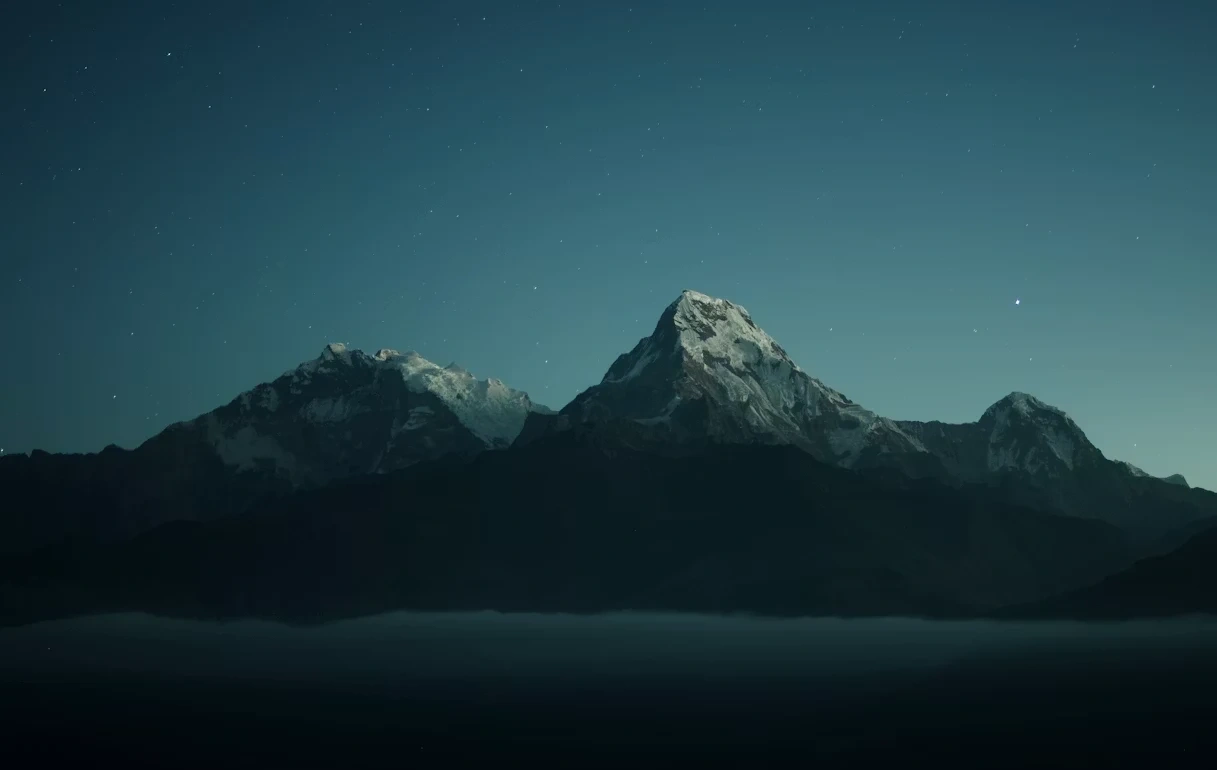
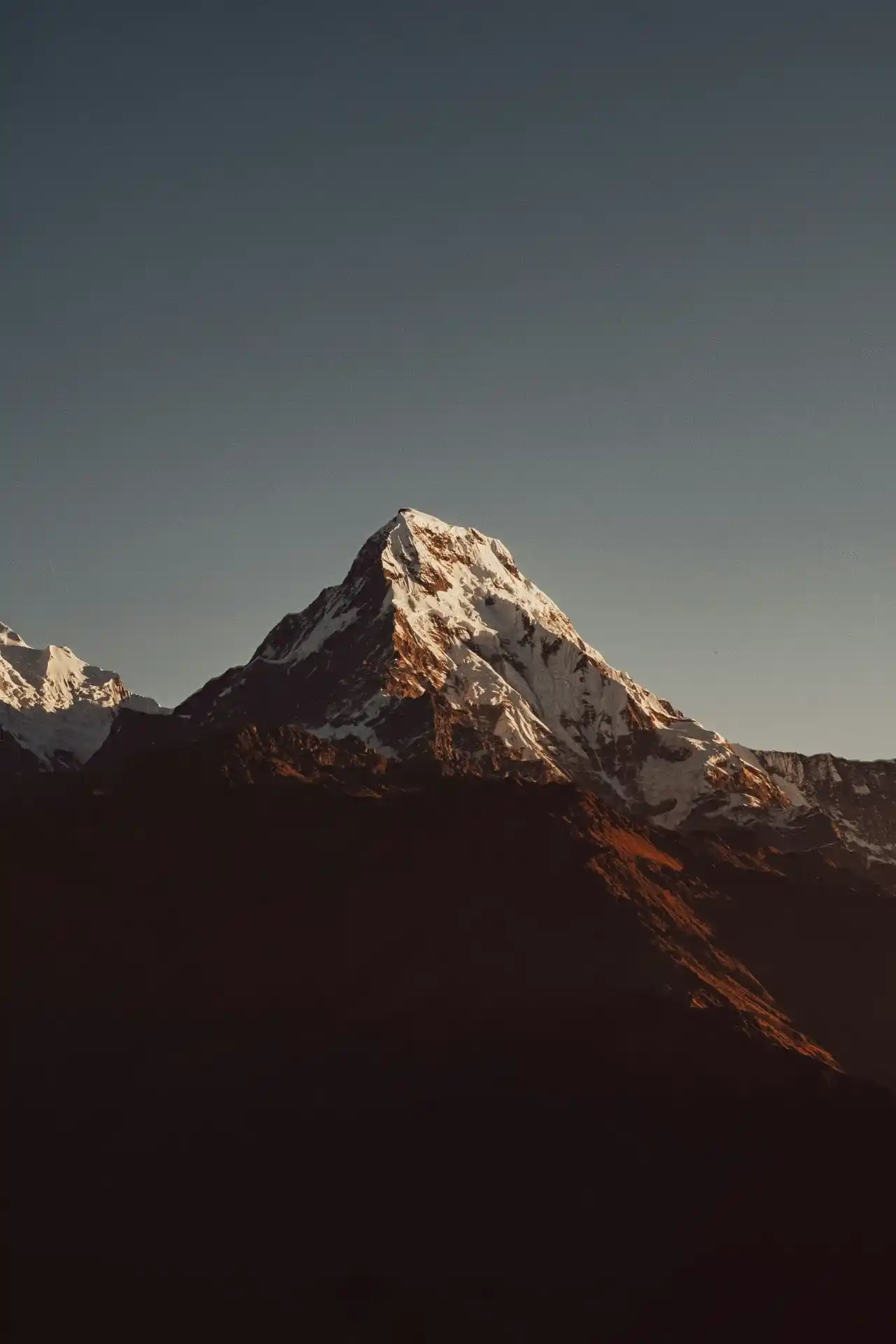
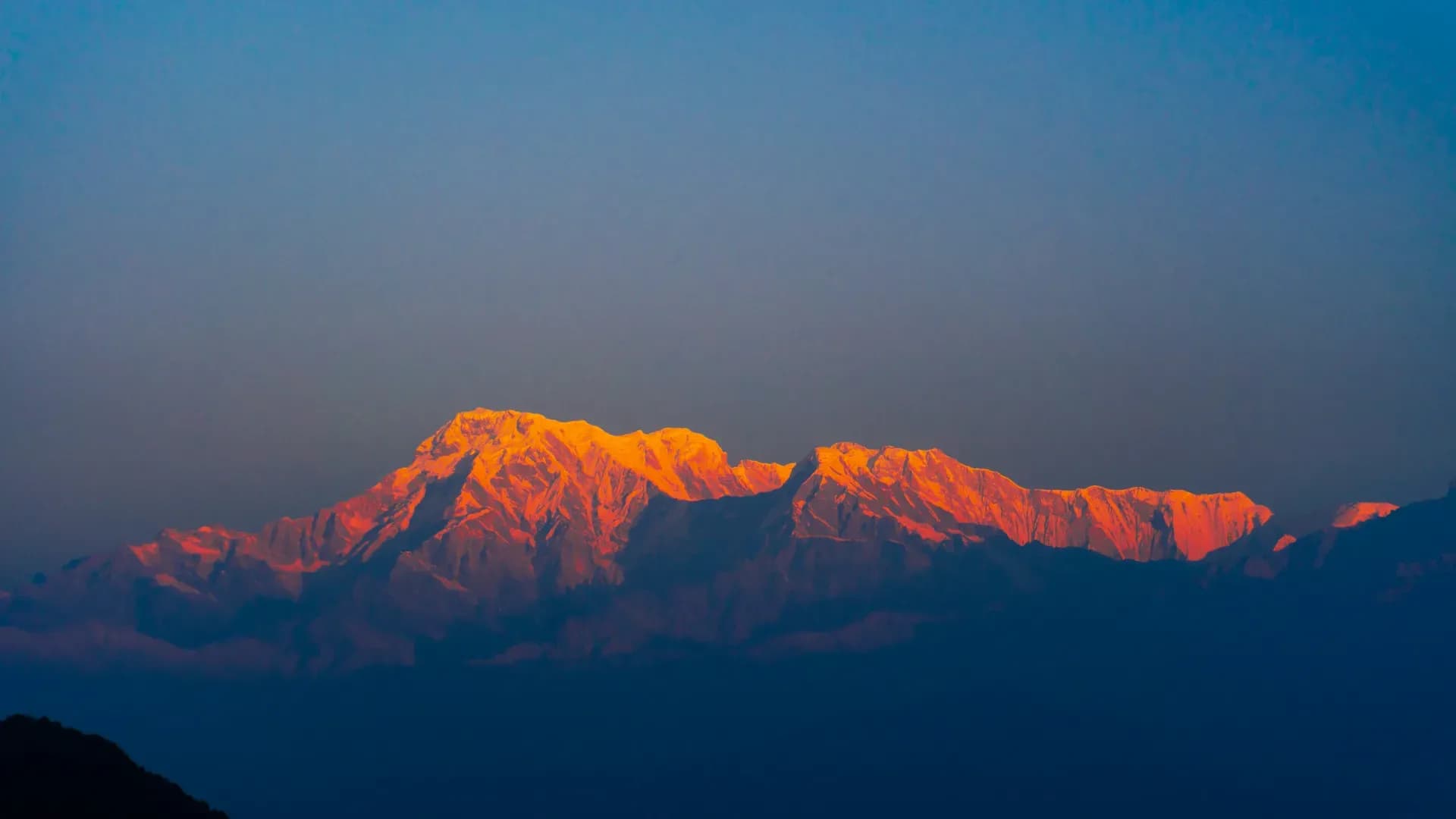
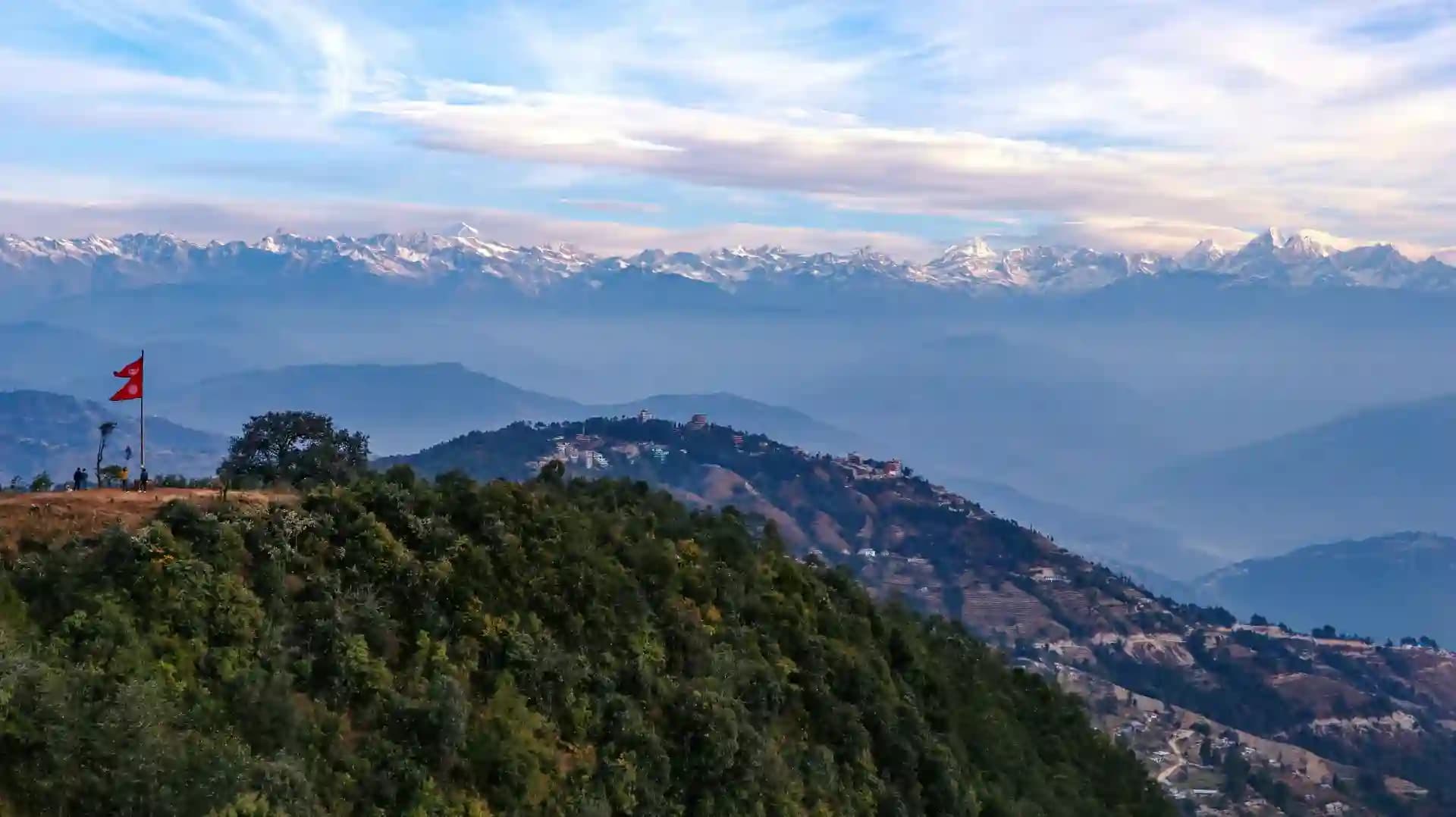
The Sarangkot viewpoint is reached by jeep from Pokhara Lakeside in 15 minutes along a switchback road — at 1,592m above Pokhara, at a point where the ridge that separates the Pokhara Valley from the Modi Khola Valley opens the view northwest to the full Annapurna range. The mathematics of this view: Dhaulagiri (8,167m) at 65km distance, Annapurna I (8,091m) at 45km, Annapurna South (7,219m) at 30km, Machhapuchhre (6,993m) at 25km — the entire south face of the Annapurna massif visible in a single sweep of the horizon. At 5:30am in April, the peaks materialise from the darkness in the specific sequence of their height above the horizon — the tallest first, each successive peak appearing as the sky lightens, the full panorama complete by 6am when the sun touches the highest points. Standing at Sarangkot on April 5, 2024 at 5:30am — I have seen the Himalaya from altitude multiple times, from Leh and from Kaza and from Rohtang Pass. The Sarangkot view is not a diminished version of those mountain views. It is a different kind of mountain view: tropical sub-Himalayan landscape between viewpoint and peaks gives Annapurna range a scale that high-altitude approaches do not produce. 02 / Place
Poon Hill — Rhododendron Forest
The Poon Hill sunrise (3-4 day trek from Nayapul) gives the most complete single Annapurna range pan The Poon Hill sunrise (3-4 day trek from Nayapul) gives the most complete single Annapurna range panorama accessible in 3 days of trekking — Dhaulagiri (8,167m), Annapurna I–IV, Annapurna South, Machhapuchhre, and Hiunchuli all visible in a single frame from the viewpoint. The October–November post-monsoon clarity gives the sharpest mountain profile.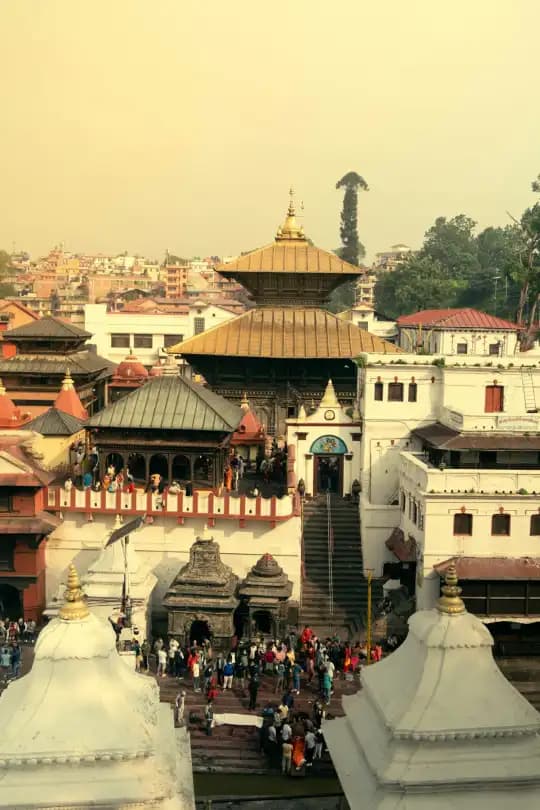 03 / Place
Pashupatinath — The Living Temple of the Dead
The Pashupatinath Temple complex (UNESCO, on the Bagmati River, Deopatan area of Kathmandu) is the most sacred Hindu temple in Nepal and one of the most important Shiva temples in Asia — a national shrine of Nepal where the Bagmati River (considered sacred, flowing east to join eventually with the Ganges system) receives the bodies of the dead at the riverside cremation ghats. The temple complex covers 264 hectares and contains 518 miniature temples, pavilions, and religious structures. The outer precincts are open to non-Hindu visitors (inner courtyard and main lingam sanctum restricted to Hindus). The riverside ghats (visible from opposite bank, from Arya Ghat pathway) have cremation fires burning from 5am — bodies carried from adjacent mortuary on bamboo stretchers, specific Bagmati-side cremation ritual performed by Mala priests. In April 2024 at 5:30am: fires burning, priests at water's edge performing dawn puja, sadhus (Hindu ascetics) at ghat-side meditation spots, Bagmati flowing below — smaller than Ganga, April water still clear before monsoon silt arrives, marigold offerings floating south. 04 / Place
Boudhanath — The Stupa That Breathes
The Boudhanath Stupa (UNESCO, 11km from Thamel, Kathmandu) is the largest stupa in South Asia and the spiritual centre of Tibetan Buddhism in Nepal. The 36m stupa (dome, square base with all-seeing eyes on four faces, 13 tiered spire) is surrounded by a circular pathway (the kora) on which pilgrims and residents walk clockwise at all hours — butter-lamp sellers at entrance, monastery monks in maroon robes, Tibetan traders selling prayer beads, international Buddhist visitors from Japan, Korea, and the West. Circumambulation path is 200m in circumference — each complete circuit takes 5 minutes. The devout complete 108 circuits (a sacred number in Buddhism). April dawn at Boudhanath (arriving at 5:30 am): butter-lamp sellers lighting first lamps of day at altar niches around stupa base, kora just beginning with first circumambulants, and specific quality of stupa in pre-dawn — all-seeing eyes on spire lit from below by butter lamps, monastic buildings around perimeter opening shutters. By 8am: full circumambulation crowd. By 10am: international tourists with cameras. The 5:30 am Boudhanath is the stupa at its most specifically Buddhist.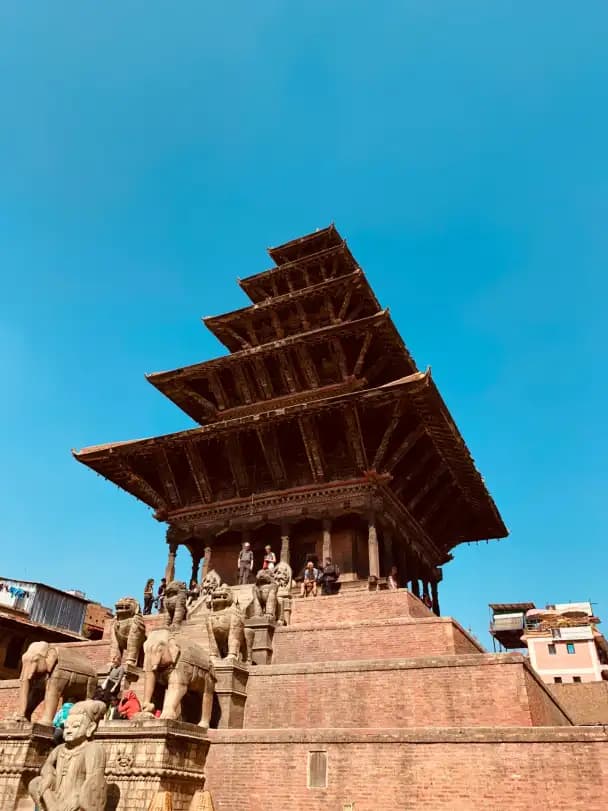 05 / Place
Bhaktapur — The Medieval City Preserved
Bhaktapur is the best-preserved medieval city in Nepal — a 9th-15th century urban fabric of brick streets, woodcarved temples, palace courtyards, and living craft traditions that has survived in the Kathmandu Valley because its insularity protected it from the modernisation that altered Kathmandu and Patan. The Nyatapola Temple (55 Steps Temple, the tallest temple in Nepal — 5 tiers of diminishing platforms, each platform flanked by guardian figures twice as powerful as the ones below, the entire temple visible from the Taumadhi Square), the Dattatreya Temple (the oldest temple in Bhaktapur, facing a square that has changed minimally in 500 years), and the pottery square (the Suryamadhi Square, where the Bhaktapur pottery tradition — black fired clay, wheel-thrown — is practised in the open square daily). April Bhaktapur: the pottery square in the warmth of the spring sun, the pots drying in the courtyard, the woodcarving workshops open, and the Durbar Square with the minimal April tourist crowd (Bhaktapur receives 20% of the Kathmandu tourist footfall — one of the most genuinely undervisited UNESCO sites in South Asia).The Poon Hill sunrise (3-4 day trek from Nayapul) gives the most complete single Annapurna range pan The Poon Hill sunrise (3-4 day trek from Nayapul) gives the most complete single Annapurna range panorama accessible in 3 days of trekking — Dhaulagiri (8,167m), Annapurna I–IV, Annapurna South, Machhapuchhre, and Hiunchuli all visible in a single frame from the viewpoint. The October–November post-monsoon clarity gives the sharpest mountain profile.
The Boudhanath Stupa (UNESCO, 11km from Thamel, Kathmandu) is the largest stupa in South Asia and the spiritual centre of Tibetan Buddhism in Nepal. The 36m stupa (dome, square base with all-seeing eyes on four faces, 13 tiered spire) is surrounded by a circular pathway (the kora) on which pilgrims and residents walk clockwise at all hours — butter-lamp sellers at entrance, monastery monks in maroon robes, Tibetan traders selling prayer beads, international Buddhist visitors from Japan, Korea, and the West. Circumambulation path is 200m in circumference — each complete circuit takes 5 minutes. The devout complete 108 circuits (a sacred number in Buddhism). April dawn at Boudhanath (arriving at 5:30 am): butter-lamp sellers lighting first lamps of day at altar niches around stupa base, kora just beginning with first circumambulants, and specific quality of stupa in pre-dawn — all-seeing eyes on spire lit from below by butter lamps, monastic buildings around perimeter opening shutters. By 8am: full circumambulation crowd. By 10am: international tourists with cameras. The 5:30 am Boudhanath is the stupa at its most specifically Buddhist.
Bhaktapur is the best-preserved medieval city in Nepal — a 9th-15th century urban fabric of brick streets, woodcarved temples, palace courtyards, and living craft traditions that has survived in the Kathmandu Valley because its insularity protected it from the modernisation that altered Kathmandu and Patan. The Nyatapola Temple (55 Steps Temple, the tallest temple in Nepal — 5 tiers of diminishing platforms, each platform flanked by guardian figures twice as powerful as the ones below, the entire temple visible from the Taumadhi Square), the Dattatreya Temple (the oldest temple in Bhaktapur, facing a square that has changed minimally in 500 years), and the pottery square (the Suryamadhi Square, where the Bhaktapur pottery tradition — black fired clay, wheel-thrown — is practised in the open square daily). April Bhaktapur: the pottery square in the warmth of the spring sun, the pots drying in the courtyard, the woodcarving workshops open, and the Durbar Square with the minimal April tourist crowd (Bhaktapur receives 20% of the Kathmandu tourist footfall — one of the most genuinely undervisited UNESCO sites in South Asia).
Best Time to Visit Nepal
15-28°C · Rhododendrons · Clear views · Peak trekking. April is the finest month. Rhododendrons peak mid-March to mid-April (2,000m to 3,500m altitude band). All treks fully open including Poon Hill, ABC, Everest Base Camp. Clear Himalayan views before pre-monsoon haze. Temperatures comfortable for trekking. Peak tourist season — book teahouses 2-3 weeks ahead for popular routes. March: Holi (Indian Hindu tourists active). May: late spring rhododendrons above 3,500m.
10-25°C · Post-monsoon clarity · Finest Himalayan views · No flowers. The second peak season, equally crowded as spring. October is the finest for mountain photography — the post-monsoon air has the clearest visibility of the year, with the pre-monsoon haze months away. November: same conditions, winter approaching above 4,000m. Dashain (October, Nepal's biggest Hindu festival) and Tihar (November, festival of lights) add cultural depth. Book accommodation 4-6 weeks ahead for October-November.
0-18°C · Cold · Clear · Very few trekkers · Low prices. Everest region: very cold (mornings -10 to -15°C above Namche). Annapurna region manageable for Poon Hill (max 3,210m). Cheapest season. Snow possible above 3,000m, especially January-February. Suitable for travellers wanting solitude, prepared with cold-weather gear. Kathmandu and Pokhara fine year-round. Lukla flights more weather-cancellation prone.
January · Good Cold + Clear. Winter trekking (lower altitude). Annapurna region manageable. Very few trekkers. Low prices.
February · Good Warming. Rhododendrons beginning below 2,000m. Pre-spring. Quieter than spring peak.
March · Best Top Pick. Rhododendrons beginning 2,000m+. Trekking season opening. Holi (Indian tourists active).
April · Best Yeeshu's Visit. Rhododendrons peak. Clear views. Finest Poon Hill month. All treks open.
May · Best Excellent. Late spring. Rhododendrons above 3,500m. Pre-monsoon warming. Good trekking.
June · Avoid Monsoon begins. Heavy rain. Leeches on trails. Mountain views often obscured. Chitwan excellent (wildlife).
July · Avoid Peak Monsoon. Trekking trails difficult. Landslide risk on mountain roads.
August · Avoid Peak Monsoon continuing. Same conditions as July. Trekking not recommended.
September · Good Transitioning. Monsoon easing. Post-monsoon freshness beginning. Good for early-season trekking.
October · Best Top Pick. Finest mountain clarity. Post-monsoon. Peak trekking season #2.
November · Best Excellent. Same as October. Winter approaching above 4,000m. Clear skies.
December · Good Cold. Winter. Lower altitude trekking. Kathmandu and Pokhara fine. Christmas/New Year tourism.
Nepal experiencesTop Things to Do in Nepal
Trekking to Everest Base
The Everest Base Camp trek (12–14 days from Lukla) is the world's most recognisable high-altitude tr The Everest Base Camp trek (12–14 days from Lukla) is the world's most recognisable high-altitude trekking objective — the Khumbu Icefall above Base Camp (5,364m), the Namche Bazaar Sherpa capital (3,440m), the Tengboche Monastery against the Ama Dablam backdrop, and the Gokyo Lakes circuit extension give the most complete single Himalayan trekking experience.
Insider tip
The Tengboche Monastery morning puja (5:30am, first prayer bell) has the Ama Dablam and Everest visible above the prayer hall roof and the butter lamps lit in the hall — this 45-minute window is the most specifically atmospheric EBC trek moment and is not on any guided trek schedule.
Paragliding from Pokhara
Sarangkot (1,592m) above Pokhara gives tandem paragliding flights over the Phewa Lake, the Annapurna Sarangkot (1,592m) above Pokhara gives tandem paragliding flights over the Phewa Lake, the Annapurna range (8,000m+ peaks), and the Pokhara valley — the most complete single Himalayan mountain-and-lake flying experience accessible without altitude acclimatisation. The thermal window (9am–1pm) gives 30–45 minutes of soaring flight.
Insider tip
The sunrise flight from Sarangkot (6am departure, first thermals of the day) gives Machapuchare (Fishtail Mountain, 6,993m) in alpenglow simultaneously with the Phewa Lake reflection below — the most specifically photographic Pokhara paragliding window.
Rafting the Trisuli River
The Trisuli River (60km from Kathmandu, Grade 3–4) is the most accessible rafting river in Nepal The Trisuli River (60km from Kathmandu, Grade 3–4) is the most accessible rafting river in Nepal — the 3-hour drive from Kathmandu is the only logistical barrier. The Trisuli rapids (Class 3–4) run through the Trisuli Gorge with Himalayan forest on both banks. October–November (post-monsoon, clearest water, highest volume) is the most specific rafting window.
Insider tip
The 2-day Trisuli rafting package (Charaudi to Kurintar, camping overnight at Kurintar beach) gives the gorge in the morning golden light on day 2 that the 1-day trip misses entirely — the overnight camp at the river gives the most specific Nepal river stargazing.
Sunrise from Poon Hill
The Poon Hill sunrise (3-4 day trek from Nayapul) gives the most complete single Annapurna range pan The Poon Hill sunrise (3-4 day trek from Nayapul) gives the most complete single Annapurna range panorama accessible in 3 days of trekking — Dhaulagiri (8,167m), Annapurna I–IV, Annapurna South, Machhapuchhre, and Hiunchuli all visible in a single frame from the viewpoint. The October–November post-monsoon clarity gives the sharpest mountain profile.
Insider tip
The viewpoint at Poon Hill (3,210m) has 200+ trekkers on the sunrise platform by 5:30am in peak season — the Tadapani ridge (one day beyond Ghorepani on the same circuit) gives the same panorama with 5% of the crowd.
Bungee Jump from the Last Resort
The Last Resort bungee jump near the Nepal-Tibet border (160m, the longest canyon swing in the world The Last Resort bungee jump near the Nepal-Tibet border (160m, the longest canyon swing in the world) is suspended above the Bhote Koshi River gorge — the same river that flows from Tibet into Nepal. The 160m free fall lasts 4–5 seconds before the cord engages over the gorge. 3 hours from Kathmandu.
Insider tip
The canyon swing option (swinging in an arc rather than free fall, 300m of horizontal flight) is more spectacular than the bungee from a photography perspective — book the canyon swing for the longer duration and wider visual arc.
Lumbini — Birthplace of the Buddha
Lumbini (western Terai, border with India) is the birthplace of Siddhartha Gautama (563 BC) Lumbini (western Terai, border with India) is the birthplace of Siddhartha Gautama (563 BC) — the Maya Devi Temple marks the exact birth spot with a marker stone. The Sacred Garden has the Ashoka Pillar (249 BC), the reflection pool, and the monastic zone of international Buddhist monasteries representing 14 countries in traditional architectural styles.
Insider tip
Arrive at the Maya Devi Temple at 6:30am for the morning puja — the resident monks' ceremony in the birth spot temple before tourist groups arrive at 9am is the most specifically reverent single moment at Lumbini.
Jungle Walk at Chitwan National Park
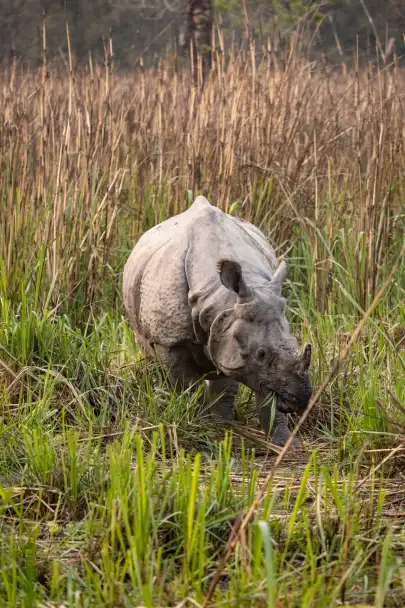
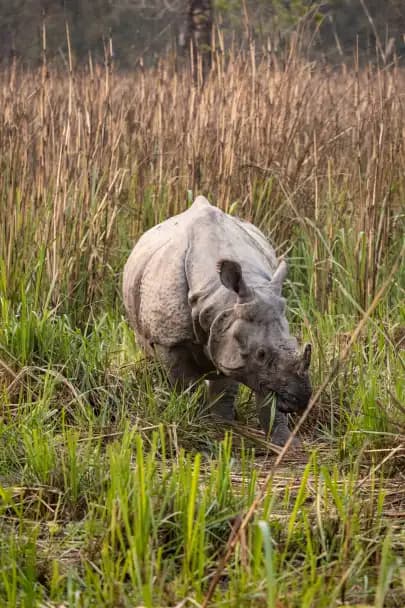
Chitwan National Park (UNESCO, Inner Terai) has the highest density of one-horned rhinoceros in Asia Chitwan National Park (UNESCO, Inner Terai) has the highest density of one-horned rhinoceros in Asia and the most accessible Bengal tiger population in Nepal. The guided 3-hour jungle walk gives the most immersive wildlife encounter — hearing rather than seeing is the primary mode, with occasional direct rhino encounters at 20m distance. Elephant grass, sal forest, and the Rapti River.
Insider tip
The dawn canoe trip on the Rapti River (5:30am, before the water birds disperse) gives river otters, gharial crocodiles, and the Narayani River junction with the best aquatic wildlife concentration in the park.
Kathmandu Durbar Square at 6 am
The Kathmandu Durbar Square The Kathmandu Durbar Square — the medieval royal palace complex of the Malla kings with 50+ temples and courtyards — was damaged in the 2015 earthquake but the Hanuman Dhoka Palace, the Kumari Ghar (house of the Living Goddess), and the Swet Bhairab temple are all operational. At 6am before ticket checking begins, the square belongs to pigeons, priests, and flower sellers.
Insider tip
The Kumari (Living Goddess) appears at her first-floor window at 9am for approximately 2 minutes — position directly across the courtyard at 8:45am for the most direct view. Photography is prohibited during the appearance itself.
Mountain Flight over Everest
The 1-hour mountain flight from Kathmandu (operated by multiple airlines, early morning departure on The 1-hour mountain flight from Kathmandu (operated by multiple airlines, early morning departure only) gives the Himalayan chain at 5,000–7,000m altitude from a window seat 200–300m from the peaks — Everest, Lhotse, Nuptse, Makalu, Kangchenjunga, and Annapurna all visible in sequence from a pressurised cabin. No trekking permit or physical fitness required.
Insider tip
Book the left window seat (A or B) on the outbound flight from Kathmandu for the closest pass to Everest — the flight reverses direction and switches sides on the return, giving both rows equal proximity. Yeti Airlines and Buddha Air are the most reliable operators.
Witness Pashupatinath Aarti at Dusk
The Pashupatinath Temple complex on the Bagmati River (Kathmandu) The Pashupatinath Temple complex on the Bagmati River (Kathmandu) — the most sacred Shiva temple in the Hindu world, UNESCO World Heritage — conducts the evening aarti ceremony at the main ghats from 6pm. The cremation ghats (Arya Ghat) visible from the eastern riverbank give the most direct single view of the Hindu rites of passage available to respectful outside observers in Nepal.
Insider tip
The elevated viewing area on the east bank (across from the Arya Ghat cremation platforms) allows respectful observation from a distance — move to the sadhu ascetic meditation area downstream (Mrigasthali Forest) at dusk for the most atmospheric single Pashupatinath moment.
Three Itinerary Options — 7/12/16 Days
See how each trip is paced, from arrival to departure. These are sample day-by-day plans; we tailor the dates and details.
Nepal Classic — 7 Days (Kathmandu + Pokhara + Sarangkot).
- Day 1Arrive KathmanduThamel evening walk · Boudhanath night circumambulation.
Advice
Boudhanath at night: stupa lit from below, 10pm quiet. - Day 2Kathmandu
Boudhanath 5:30 am (free entry) · Pashupatinath 9 am · Durbar Square afternoon.
Advice
Pashupatinath → Boudhanath: 500m walk between UNESCO sites. - Day 3Bhaktapur + Nagarkot
Bhaktapur 8:30 am · Pottery square · Nagarkot overnight.
Advice
Nagarkot overnight for next day sunrise. Book Himalayan-view room. - Day 4Nagarkot → Pokhara
Sunrise 5:15 am · Return Kathmandu · Domestic flight Pokhara (25 min).
Advice
Flight NPR 6,000-8,000 ≈ ₹3,750-5,000. Right side of plane for peak views. - Day 5Pokhara
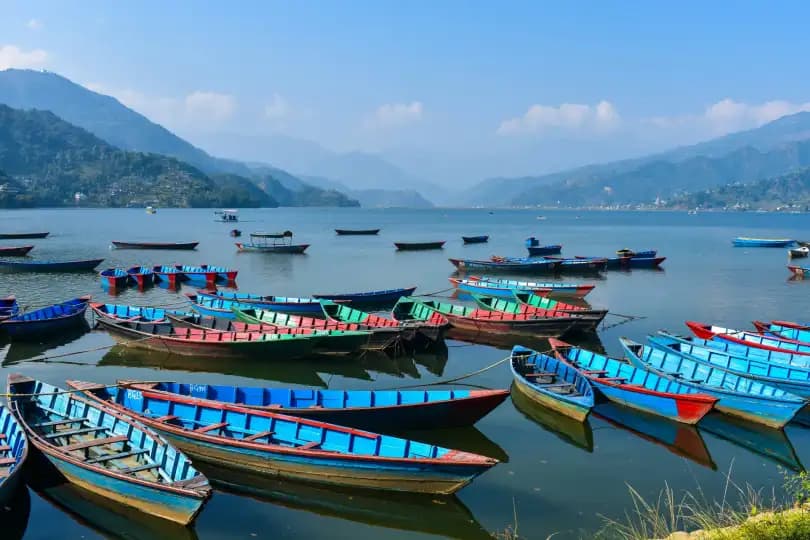
Sarangkot sunrise 5 am jeep · Phewa Lake rowing 9 am · Lakeside evening.
Advice
Sarangkot in morning, lake in morning, Lakeside rest in evening. - Day 6PokharaMountain flight 9am (optional) · Old Bazaar Pokhara · Gupteshwar Mahadev Cave.
Advice
Old Bazaar Pokhara: authentic Pokhara market, not Lakeside tourist strip. - Day 7Return + DepartPokhara → Kathmandu flight · Departure from TIA.
Advice
Allow 2 hrs Kathmandu airport buffer.
Nepal Popular — 12 Days Complete Nepal
- Day 1Arrive KathmanduThamel · Boudhanath night circumambulation.
Advice
Day 9 (Tikhedhunga → Ghorepani through rhododendron forest) is the specific day that justifies the Poon Hill trek. The 3,276 stone steps from Tikhedhunga to Ulleri (steepest section, 1 hour, forest beginning at top) leads directly into the rhododendron zone. Depart Tikhedhunga by 7am for the finest April forest light. Forest at 9-11am has best light — sun angle illuminates flowers from below the canopy. - Day 2Kathmandu
Boudhanath 5:30 am · Pashupatinath 9 am · Kathmandu Durbar Square 3pm.
Advice
Combined ticket: Kathmandu Valley heritage sites. - Day 3Bhaktapur + Nagarkot
Bhaktapur 8:30 am (pottery + Nyatapola) · Nagarkot overnight.
Advice
Nagarkot: book a room with the Himalayan view. - Day 4Nagarkot → Chitwan
Sunrise 5:15 am · Bus/cab Chitwan (5 hrs) · Arrive afternoon.
Advice
Or: 1-hr domestic flight Kathmandu → Chitwan (Bharatpur Airport). - Day 5Chitwan
Jungle walk 6am (rhino) · Dugout canoe 9 am · Jeep safari 4 pm.
Advice
All three modes for the complete Chitwan. - Day 6Chitwan → Pokhara (4 hrs bus)Tharu cultural programme morning · Drive afternoon.
Advice
Chitwan-Pokhara road passes through Prithvi Highway Himalayan views. - Day 7Pokhara
Sarangkot sunrise 5 am · Phewa Lake rowing 9am · Lakeside rest.
Advice
Rest day before trek begins. - Day 8Poon Hill Day 1Pokhara → Nayapul bus → Tikhedhunga walk (3 hrs).
Advice
Permit: TIMS + ACAP at Pokhara NTB office before departing. - Day 9Poon Hill Day 2Tikhedhunga → Ulleri → Ghorepani (rhododendron forest, 6 hrs).
Advice
The rhododendron forest section: Ulleri to Ghorepani, April peak. - Day 10Poon Hill Day 3
Poon Hill summit 5 am · Tadapani · Ghandruk (6 hrs).
Advice
Ghandruk: most beautiful Gurung village in Annapurna region. - Day 11Poon Hill Day 4 + PokharaGhandruk → Nayapul → Pokhara (bus, 4 hrs total).
Advice
Return Pokhara, evening lakeside. - Day 12Pokhara → Kathmandu → DepartDomestic flight 25 min · TIA departure.
Advice
Book return flight Kathmandu → India before the trek.
Nepal Complete — 16 Days (+ Everest Region)
- Day 1KathmanduBoudhanath · Pashupatinath · Thamel.
Advice
Lukla-Namche section (Days 13-15) is the beginning of the Everest Base Camp trek — these 2 trekking days give the specific Khumbu atmosphere (Sherpa villages, yak herds, prayer flags, Himalayan scale) without the full EBC commitment (14+ days). Namche Bazaar at 3,440m: highest point on this option, acclimatisation required. Viewpoint above Namche (Everest View Hotel ridge, 30-min walk) gives first Everest view. - Day 2KathmanduBhaktapur day trip · Pottery square.
- Day 3NagarkotSunrise + sunset Himalayan views.
- Day 4ChitwanTravel + Jungle walk.
- Day 5ChitwanCanoe + Jeep safari.
- Day 6PokharaSarangkot · Phewa Lake.
- Day 7Poon Hill Day 1Nayapul → Tikhedhunga.
- Day 8Poon Hill Day 2Tikhedhunga → Ghorepani.
- Day 9Poon Hill Day 3Poon Hill summit → Tadapani.
- Day 10Poon Hill Day 4Ghandruk → Nayapul → Pokhara.
- Day 11PokharaRest day.
- Day 12PokharaMountain flight · Sightseeing.
- Day 13Fly Pokhara → Lukla (50 min)Arrival Lukla (2,860m) · Trek to Phakding.
- Day 14Phakding → Namche Bazaar (3,440m)Gateway to Everest.
- Day 15Namche Bazaar (acclimatisation)Everest viewpoint above Namche · Sherpa culture · Rest.
- Day 16Fly back Lukla → KathmanduDeparture from Kathmandu.
Where to Stay in Nepal
Kathmandu — Thamel
Kathmandu — Patan/Bhaktapur
Nagarkot
Pokhara — Lakeside
Poon Hill Teahouses
Chitwan Resorts
4-Tier Daily Cost (Per Person · INR · Excluding Long-Distance Travel)
Budget
₹1,200 – ₹2,500 (excl long-distance travel)Money-saving travel- Stay
- Thamel guesthouses (₹625-₹1,875/night) · Pokhara Lakeside budget (₹625-₹1,875) · Poon Hill teahouses (₹375-₹750/night) · Nagarkot budget (₹500-₹1,250) · OYO/Backpacker hostels
- Food
- Dal bhat ₹250-₹375 unlimited (teahouses) · Thamel street food ₹100-200 · Local meals ₹150-300 · Tea ₹40-80
- Getting around
- Bus Delhi-Sunauli-Kathmandu (18-22 hrs) · Tourist bus Kathmandu-Pokhara (₹500-940, 6-7 hrs) · Local buses · Shared jeeps Sarangkot · Walking gallis
Mid-range
₹4,000 – ₹8,000 (excl long-distance travel)Comfortable everyday travel- Stay
- 3-star hotels Thamel/Lakeside (₹2,500-₹7,500/night) · Nagarkot mid-range (₹1,875-₹5,000) · Chitwan resorts (₹6,250-₹18,750) · Heritage hotels Patan/Bhaktapur (₹3,125-₹9,375)
- Food
- Mix of street food + restaurants · Specialty Newari cuisine · Italian/Continental in Thamel · Restaurant dinners with mountain views
- Getting around
- IndiGo/Air India Delhi-Kathmandu (₹8,000-₹22,000 return) · Domestic flight Kathmandu-Pokhara (₹3,750-₹7,500, 25 min) · Private cab in Kathmandu Valley · Private guides
PREMIUM
₹10,000 – ₹20,000 (excl long-distance travel)per person, per day- Stay
- Boutique lodges (₹10,000-₹25,000/night) · Tiger Mountain Pokhara Lodge · Misty Mountain Pokhara · Tiger Tops Chitwan · The Pavilions Himalayas · Hyatt Place Kathmandu
- Food
- Fine dining · Specialty Nepali chef tasting menus · Wine + craft beer · In-room private dining · Curated food tours with cultural context
- Getting around
- Premium domestic flights · Private Land Cruiser · Mountain flight (Everest from air) · Private guided Poon Hill trek with porter support · Private Chitwan safari with naturalist
Luxury
₹25,000 – ₹1,00,000+ (excl long-distance travel)Premium comfort- Stay
- Dwarika's Kathmandu (₹35,000+/night, 9th-century Newari architecture, the most luxurious heritage hotel in Nepal) · Pavilions Himalayas Pokhara (₹40,000+/night) · Tiger Tops Karnali Lodge · Helicopter accessible remote lodges
- Food
- Private chef · Specialty Newari heritage dining · Helicopter picnic at high altitude · Curated tea garden + Sherpa village dining
- Getting around
- Private helicopter to Everest Base Camp area (the EBC helicopter tour) · Private chartered Pilatus to remote airstrips · Private chauffeur · Specialty trekking lodges Annapurna circuit
How to Reach Nepal
How to reach Nepal and how to get around once you are there: the routes, how long they take and what they cost.
Plan your route ↗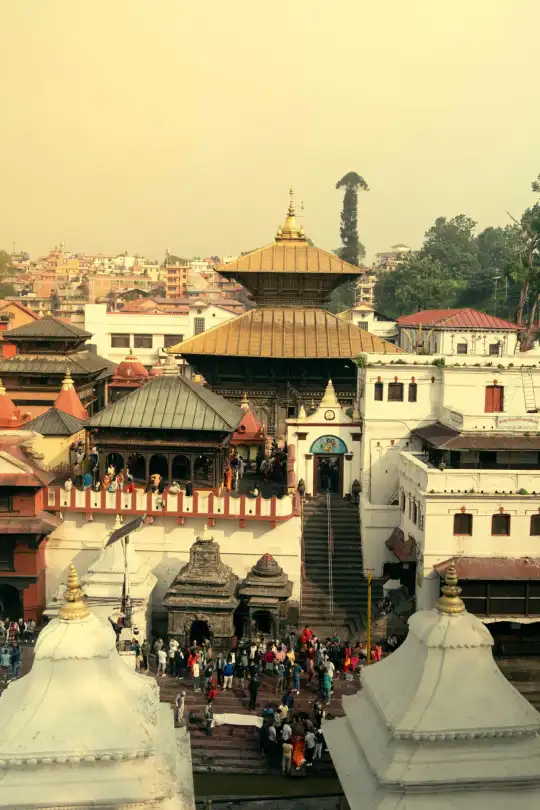 9 ways to travel
By Air
TIA Kathmandu arrival experience, flight times from 6 Indian cities, VOA process, taxi rates, October peak warning.
By Road
Sunauli border feel ("immediately Nepal feels different the moment you cross"), 3 border crossings, monsoon road warning
By Bus
Direct cross-border why it beats self-managed crossing, Greenline/Yatri, what the 24-hour journey actually feels like.
By Train
Strategic train-to-border formula, Gorakhpur/Raxaul junctions, exact shared jeep rates, station facilities
Domestic Flights
Why geographically necessary (not luxury), Lukla experience described, 1-2 day buffer advice, cancellation reality.
Tourist Bus
Why the 25-min flight misses something, Trishuli gorge moment described, route/operator/booking specifics
Taxi & Private Car
Full-day hire logic, specific rates (Bhaktapur/Nagarkot/Dhulikhel), Pathao vs inDrive explained
Electric Rickshaw/Tempo
How Kathmandu actually lives, specific routes with NPR fares, the Nepali-paper-note trick
Motorcycle & Bicycle
Self-directed valley circuit in 1 day vs 3 packaged days, IDP reality, Pokhara dawn motorcycle experience
Nepal Travel Tips
Indian currency (₹500 and ₹1,000 notes) is not accepted in Nepal — exchange to Nepali Rupee at the border or Kathmandu airport; Indian notes below ₹100 are accepted, but rates are poor. Wise or Forex cards work at Kathmandu ATMs.
TIMS card (Trekkers' Information Management System) and national park entry permits must be purchased at the TAAN office in Kathmandu, not from trekking agencies at a markup — buy directly for the flat government rate.
Do not trek solo in Nepal without filing a route plan with your guesthouse — solo trekkers go missing every season on the Annapurna Circuit and Langtang routes; buddy up or hire a registered guide for any high-altitude route.
Altitude sickness on EBC or Annapurna Circuit is a medical emergency — descend immediately if symptoms include confusion, inability to walk straight, or persistent vomiting at altitude; do not wait for it to resolve on its own.
In Nepal's Hindu and Buddhist temples, walk clockwise around stupas and temple courtyards — this is universally observed and departing from it marks you as inattentive at best.
Pass food, money, or any object with your right hand or both hands — the left hand is considered impure in Nepali culture, and handing things with the left hand alone is considered rude.
Fake trekking permit offices near Thamel — unofficial "Nepal Tourism Board" offices near Thamel sell counterfeit TIMS cards and park permits that fail at checkpoints; go to the official TAAN/NTB office on Bhrikuti Mandap.
Porter "upgrade" pressure at trailheads — a hired porter may claim to be a licensed guide and demand guide-rate wages; define roles and rates in writing before departure.
Kathmandu taxi meters are often "broken" — negotiate fares before entering any cab or use Pathao/InDrive apps; standard Thamel to airport fare is NPR 700–900; anything above NPR 1,500 is excessive.
What is worth it,
and what to avoid.
Last reviewed 2026-05-11.
- Sarangkot sunriseFull Annapurna range from Dhaulagiri to Machhapuchhre in 15 minutes from Pokhara. No permit. No acclimatisation. Most accessible major Himalayan panorama on Earth.
- Poon Hill rhododendron forestDay 2, Ulleri to Ghorepani — Densest rhododendron forest in Annapurna Conservation Area in April bloom. No equivalent in Indian Himalayan trekking circuit. Specific justification for the trek.
- Chitwan jungle walkrhino on foot — One-horned rhino at 25m without vehicle. Most visceral wildlife encounter available in Nepal. April dry season gives highest sighting probability.
- Boudhanath 5:30am koraLargest stupa in South Asia, butter-lamp ceremony, first circumambulants — for free, with 20 other people, at most atmospheric hour of day.
- Bhaktapur pottery square 9amMost authentic craft-in-practice experience in Kathmandu Valley. Potters working at wheel in open square, April sun drying pots. 20% of Kathmandu tourist footfall.
- Phewa Lake rowing at dawnMachhapuchhre reflected in still April surface. Specific Pokhara image, available only before morning wind arrives.
- Pashupatinath 5 am— Cremation fires at Bagmati River ghats at dawn. Sadhus at ghat steps. Specific Pashupatinath quality combining Varanasi experience with specific Kathmandu morning air.
- Dal bhat at Poon Hill teahouseMost calorie-dense and most specifically Himalayan meal, unlimited refills, cooked by family that owns teahouse, eaten at altitude after 6 hours trekking through rhododendron forest.
- Nagarkot Eastern Himalayan SunriseClosest high-altitude Himalayan sunrise viewpoint to Kathmandu. Eastern range visible — Ganesh Himal, Langtang, Everest outline at 150km on clearest days. April: clearest views of year.
- Kathmandu-Pokhara Domestic Flight25 minutes vs 7 hours bus. Passes within sight of several 6,000-7,000m peaks. Sit on right side of plane. Saves a full trekking day on 10-day circuit. Buddha Air or Yeti Airlines.
- Skipping Bhaktapur for more Thamel timeBhaktapur 13km from Thamel and 800 years from Thamel. Nyatapola Temple + pottery square + Durbar Square give most complete medieval Nepal experience with 20% of Kathmandu tourist footfall. NPR 200 SAARC entry fraction of cost.
- Poon Hill trek without ACAP and TIMS permitsACAP and TIMS permits checked at multiple points on Poon Hill trail. Trekking without permits results in fines and being turned back at checkpoints. Get both at NTB Pokhara Lakeside before departure.
- Sarangkot after 8amSarangkot viewpoint after 8am in April: morning haze building, Annapurna peaks becoming less distinct. After 10am: often partially obscured. 5-5:30am window is specific Sarangkot that justifies 4am wakeup.
- Chitwan with only a jeep safariJeep gives grassland circuit (best for tiger). Jungle walk gives rhino at close range on foot. Canoe gives gharial crocodile from water level. All three necessary for complete Chitwan. Doing only jeep is seeing 30% of park.
- Trekking Poon Hill in monsoon (June-September)Poon Hill trail in monsoon has leeches from Ulleri to Ghorepani, path is muddy and slippery, Himalayan views frequently cloud-obscured. October-November and March-May are correct Poon Hill windows.
- Not carrying cash on Poon Hill trekPoon Hill teahouses are cash-only (some now accept QR codes but not reliably). Carry NPR 8,000-12,000 (≈ ₹5,000-7,500) cash for 4-day trek (teahouse room + all meals + tips). Last reliable ATM: Nayapul.
- Kathmandu Durbar Square without contextHanuman Dhoka is former royal palace complex of Shah kings — specific content (erotic woodcarvings on Jagannath Temple struts, living goddess Kumari's palace and 4pm public window, Taleju Bhawani Temple) requires guide or prior reading. Without context: stone buildings.
- Skipping Boudhanath free entry before 8amBoudhanath entry fee (NPR 400 ≈ ₹250 for non-SAARC) waived before 8am. Arrive 5:30am and stupa is free and empty. Same stupa at 10am costs NPR 400 and has 300 visitors. Free + empty + atmospheric vs paid + crowded.
- Underestimating April Kathmandu air pollutionApril pre-monsoon period: Kathmandu Valley's infamous air pollution at highest (before monsoon rains clean air). Geographic bowl traps vehicular and brick kiln emissions. Carry basic dust mask for Kathmandu city walking. Pokhara and Poon Hill air significantly cleaner.
Himalayan Lakes & Temples !
Everest Mountain Flight + Pokhara Resort Deals
Plan your Nepal Tour ↗Nepal FAQ
Visas, costs, safety and the practical questions travellers ask us most.
Nepal Visa for Indians — Is It Free?
Nepal Trip Cost from India — 10 Days 2026?
Best Time to Visit Nepal from India 2026?
Is Poon Hill Trek Good for First-Time Trekkers?
Nepal vs Leh Ladakh — Which is Better for Indians?
India to Kathmandu Flight Cost 2026?
Can Indians Drive to Nepal?
Nepal Mein Kitne Din Chahiye?


Have a Nepal trip
in mind?
Choose a package, or tell us the dates, hotels and experiences you want. We check the details and send you a clear quote. Pay in BTC, ETH, USDT, USDC and 90+ other coins, with other methods confirmed on request.