Lakshadweep
Agatti Island Beaches, Bangaram Resort Stays, Snorkeling & Water Sports
- Island
- Honeymoon
- Nature
- Family
- Luxury
- Adventure
Lakshadweep, your way.
With time for what matters.
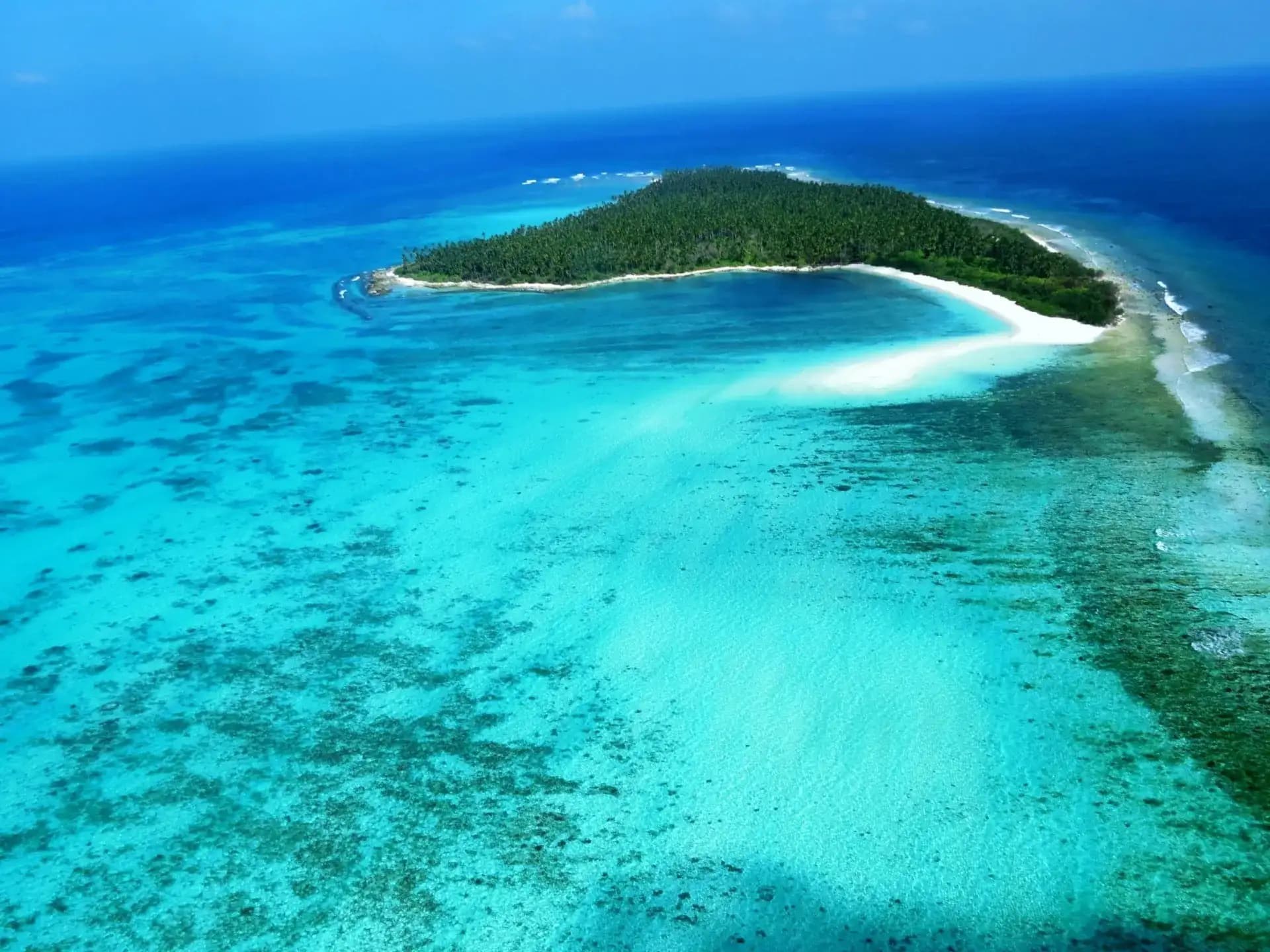
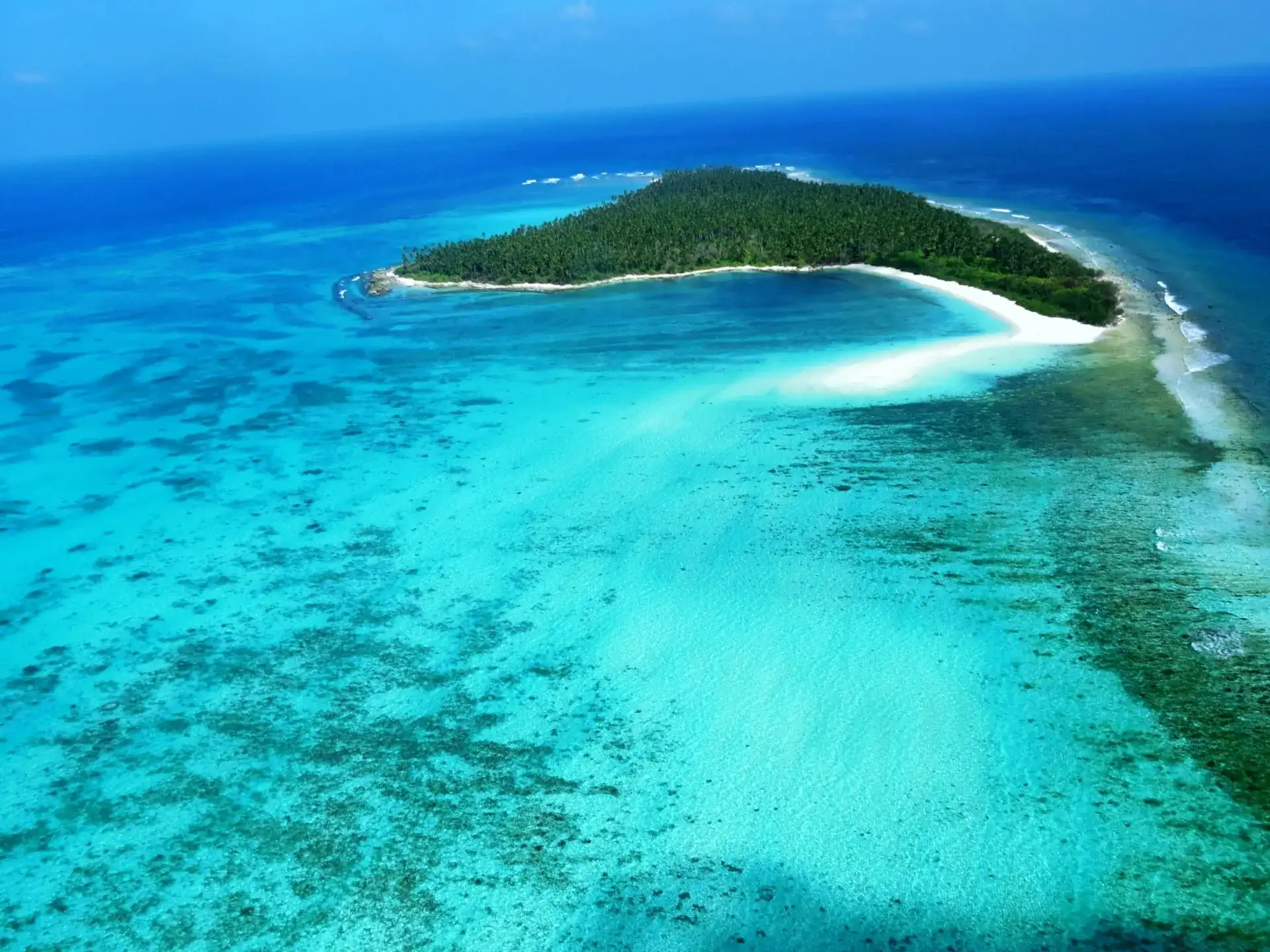
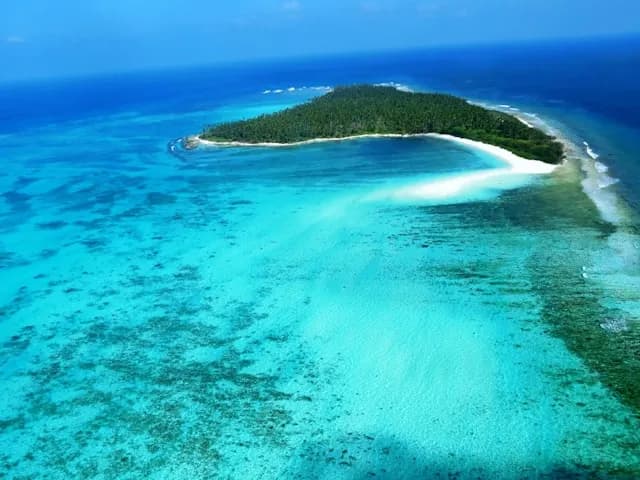
Lakshadweep (meaning "one hundred thousand islands" in Malayalam) is a Union Territory of India comprising 36 coral islands in the Arabian Sea, with a total land area of 32 sq km and a lagoon area of 4,200 sq km. Only 10 of the 36 islands are inhabited. The only coral atoll system in India — same tropical marine ecosystem as the Maldives, 700km to the south, but within Indian territorial waters. Tourist access requires an Entry Permit. Bangaram (uninhabited except for CGH Earth resort) and Agatti (only airport) are primary tourist access points.
Is Lakshadweep Worth Visiting in 2026?
Why Visit Lakshadweep Islands
Lakshadweep is what most Indian tourists travel to the Maldives for — coral atolls, turquoise lagoons, intact reefs, sea turtles, whale sharks — but within Indian territory, accessible with an Indian passport and a domestic flight from Kochi. The difference: Lakshadweep is significantly harder to access (the permit process, the limited flights, the minimal tourist infrastructure) and significantly more rewarding for that difficulty. In 2024, after the PM Modi visit and the subsequent surge in Indian interest, Lakshadweep began receiving the attention it has always deserved.
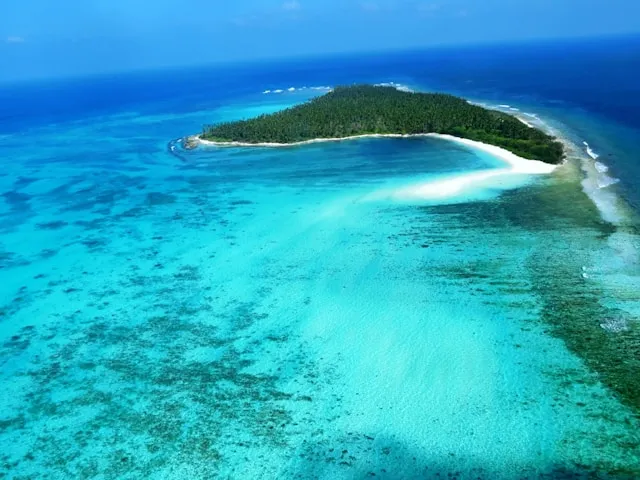
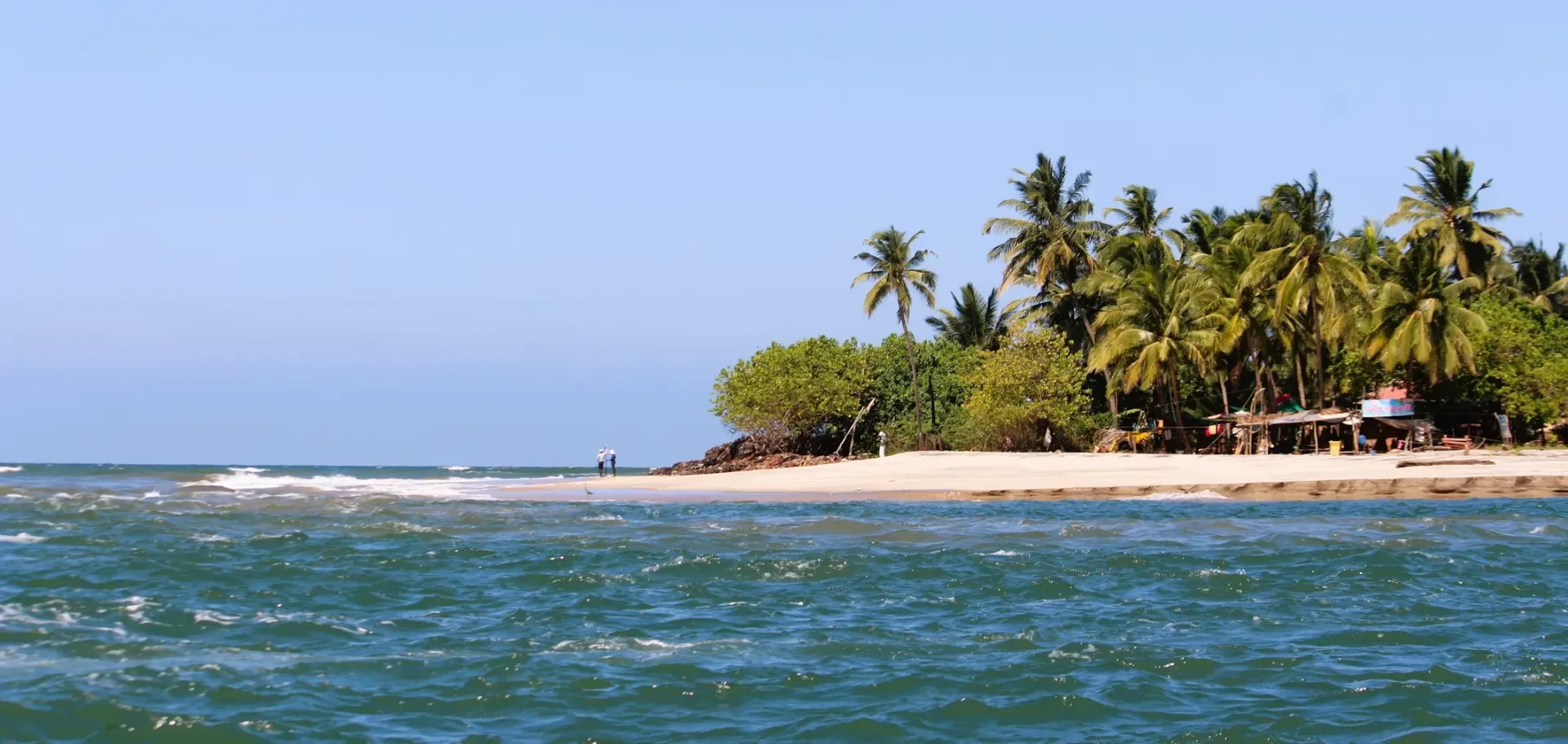
Lakshadweep is India's smallest Union Territory — 36 coral atolls in the Arabian Sea, 200–440km off the Kerala coast, with a total land area of 32 sq km surrounded by 20,000 sq km of lagoon. Agatti's lagoon is among the most photographed in India. Bangami Island resort offers the only complete 360° water horizon in Indian territory — no other land visible. Kadmat's east coast wall dive has 25–30m visibility with grey reef sharks at 4pm. Minicoy is culturally most distinct — Maldivian-Miharu tradition with 200-year-old lighthouse. Permit required for all islands (obtained via Lakshadweep Administration). Fly from Kochi to Agatti. Lakshadweep's coral atolls are structured as ring reefs around central lagoons — a geological form that creates the characteristic flat, turquoise, enclosed water that has no equivalent anywhere on the Indian mainland. Best time: October–May.
Key Features of Lakshadweep Islands
Best Places to Visit in Lakshadweep Islands
 01 / Place
Bangaram Island at 6am — Before Anyone Else Wakes
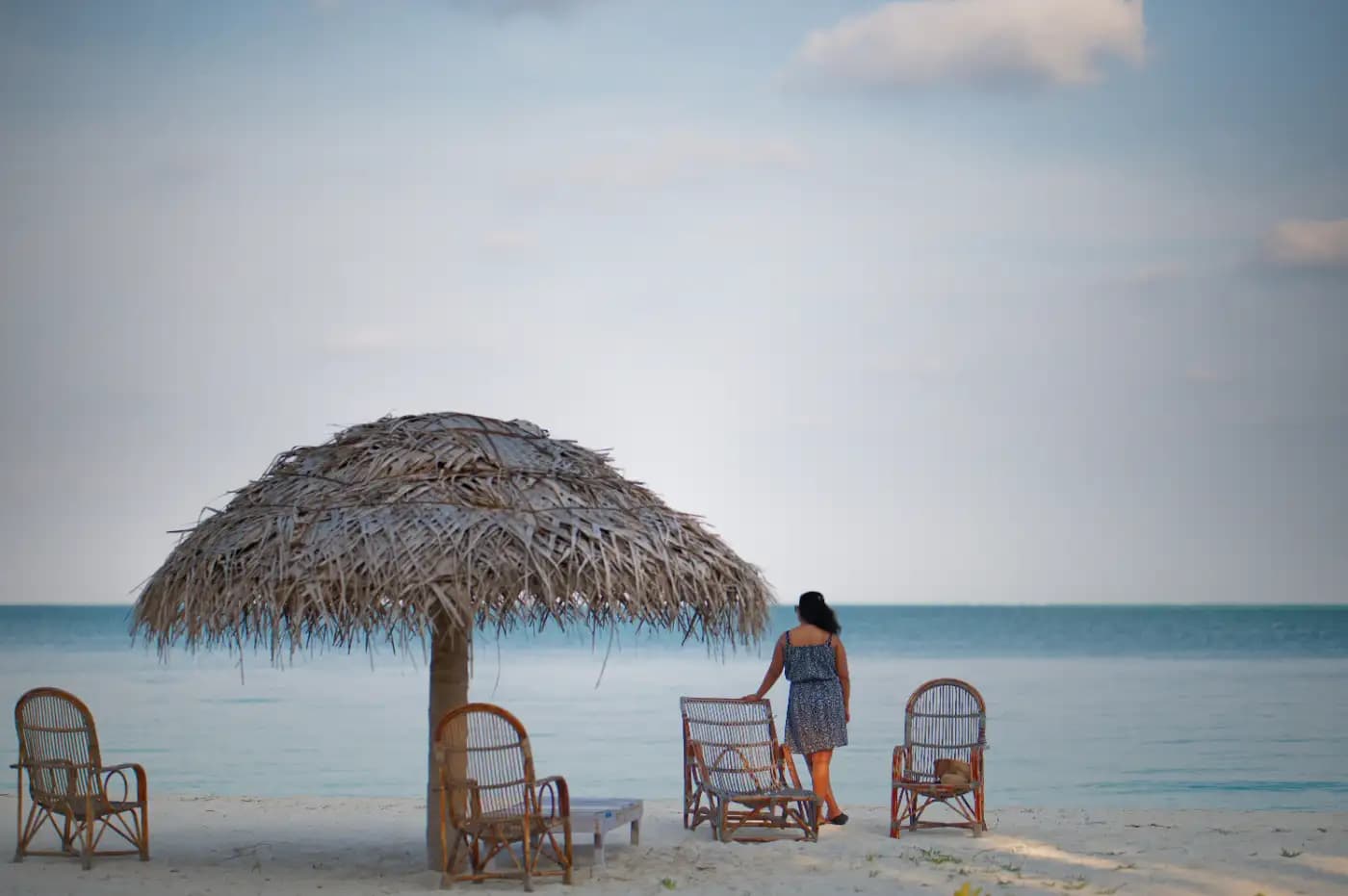
The Bangaram Island Resort (CGH Earth) has 30 cottages and water bungalows on the beach and in the lagoon. At 6am, before the resort's restaurant opens for breakfast, the beach is empty. The lagoon at this hour — the pre-sunrise quality of tropical water, the flat calm before the morning wind arrives — is the specific Bangaram experience that no photograph captures because no photograph can contain the silence and the clarity simultaneously. The 6am kayak along the lagoon edge: the coral heads visible below through 1.5-3m of clear water, the fish active in the morning light (the first hour of tropical reef light produces the most active fish behaviour — the predators at the surface before the day hunters take over), and the specific flatness of the lagoon in the morning calm that makes the kayak paddle feel unnecessary — the kayak gliding forward without apparent resistance, the water surface undisturbed. The specific Bangaram 6am is the reason to stay here rather than take a day trip from Agatti. 02 / Place
Bangaram Reef Snorkelling — The Drop-Off
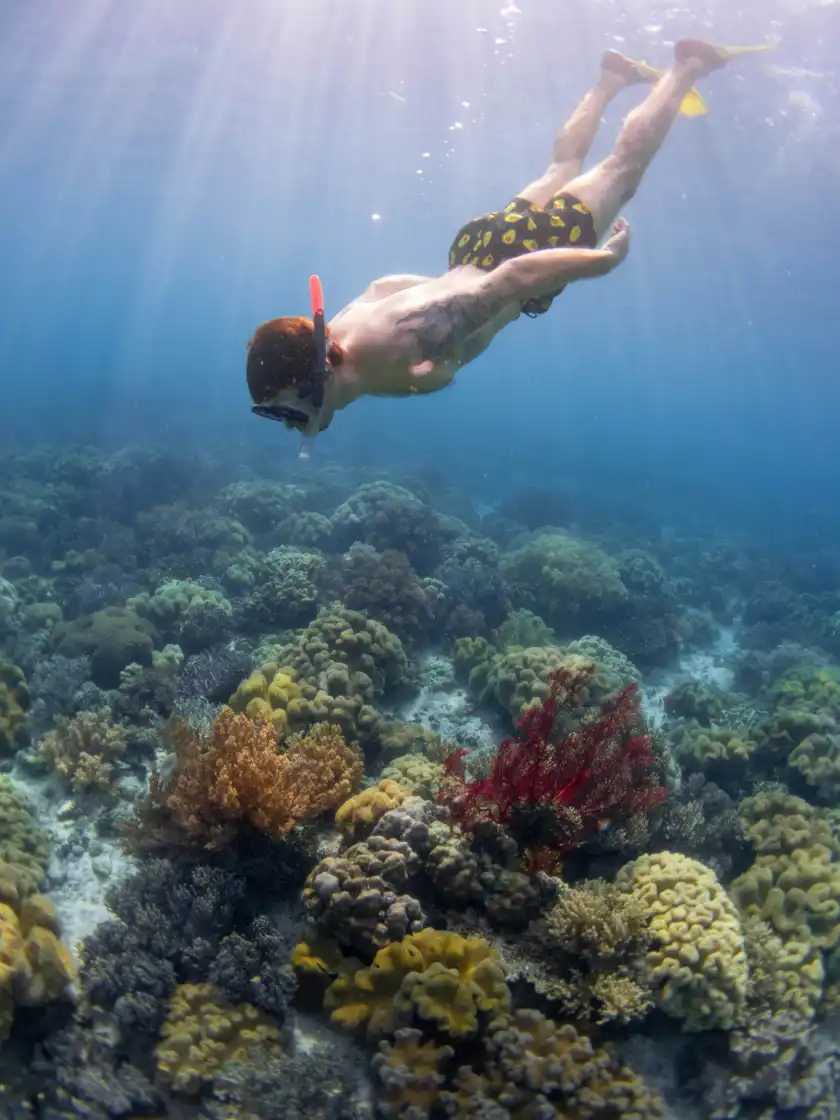
The Bangaram reef (5 minutes by boat from the beach, or 15 minutes by kayak) has a specific feature that makes it the finest snorkelling in India: the reef drop-off. The lagoon floor (3-4m depth) ends at the ocean-facing reef edge, where the bottom drops vertically from 4m to 25m over a distance of 3-5 metres. Floating at the surface above this drop-off: the coral wall visible from the sunlit shallows down into the blue-dark of the deeper water, the fish of different depth zones simultaneously visible in a single view. The fish life at the Bangaram drop-off: the parrotfish at the shallow coral heads, the moorish idol in the mid-water, the Napoleon wrasse (the largest and most charismatic coral reef fish — adults at 180cm, the specific blunt-headed profile, moving slowly through the reef with the deliberateness of an animal that has no predators) at the base of the drop-off in 20-25m water, visible from the surface through the 20m+ visibility of peak season.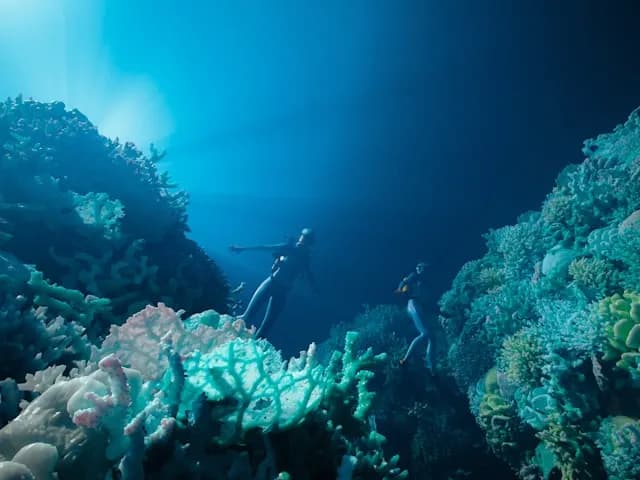 03 / Place
Bangaram Night Snorkelling — Bioluminescence
The Bangaram Resort dive school offers night snorkelling (arrange with the dive centre, included in the premium package or at additional cost for standard room guests) — the specific Bangaram night marine experience: bioluminescent plankton (the single-celled organisms that flash blue-green light when disturbed by movement) in the lagoon. In the shallow lagoon at 9pm, moving the hand through the water produces blue sparks. In the deeper water near the reef, a swimmer surrounded by bioluminescence appears to move through a cloud of cold blue fire. The night snorkelling also reveals the reef nocturnal shift: the fish that hide in the coral during the day (the soldierfish, the squirrelfish) emerge at night, the lobsters emerge from their crevices to feed on the bottom, and the octopus (invisible against the coral in daylight, unmistakeable in the torchlight at night — the specific texture change between the octopus's skin camouflage and the surrounding coral) moves across the reef surface. 04 / Place
Agatti Lagoon — The First View
The approach to Agatti by air gives the first Lakshadweep visual — the atoll shape visible 10 minutes before landing: the ring of land (narrow, the width of a road in some sections) enclosing the lagoon, the turquoise water of the lagoon within the ring, the deep blue of the Arabian Sea beyond. Landing on the Agatti airstrip (the runway barely extends the full width of the island at its narrowest) gives the specific sensation of an aircraft stopping on a coral island in the middle of the sea. The Agatti lagoon walk (from the airstrip, turn west at the main road and walk to the lagoon shore — 5 minutes) gives the first lagoon at ground level: the specific Lakshadweep water colour (turquoise distinct from Andaman teal or Goa blue-grey, the coral atoll shallows producing a specific light-scattering that the silica-sand beaches of Goa cannot replicate), the fishing boats pulled up on the beach, and the island's population cycling past on the road behind — a functioning Muslim community on a coral atoll, 220km from the mainland.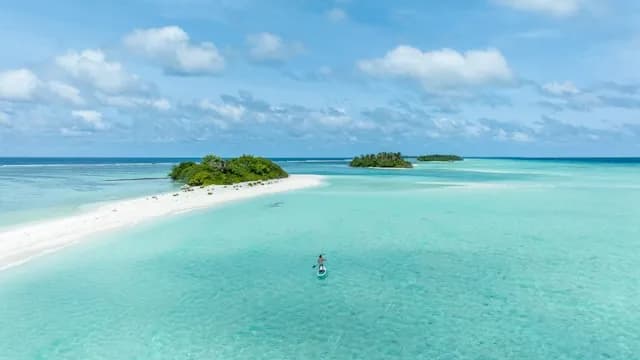 05 / Place
Kalpeni Island — The Three-Island Lagoon
Kalpeni (accessible by SPORTS package from Kochi — the package tour format is the primary access mechanism for non-Bangaram islands) has the most visually complex lagoon in Lakshadweep: three islands (Kalpeni, Tilakkam, and Pitti) enclosing a single shallow lagoon, the islands visible from each other across the water, and the coral rubble bank (the talus — the accumulated coral debris of centuries of reef growth, pushed by storms into a walkable bank between the islands) connecting them at low tide. The Kalpeni lagoon snorkelling (the soft coral garden between Kalpeni and Tilakkam — the branch corals and fan corals that grow in the sheltered lagoon between the two islands, more colourful and more structurally complex than the hard coral of the reef edge) is the most accessible reef snorkelling in the SPORTS package destinations. The glass-bottom boat (operated from the SPORTS jetty) gives the non-swimmer equivalent: the same coral visible through the glass floor without entering the water.Best Time to Visit Lakshadweep Islands
January · Best Peak. Calmest seas. 25-30m visibility. All activities. Manta rays. Year's finest Lakshadweep month.
February · Best Peak. Same as January. Calmest seas. Coral reef at maximum clarity. Manta rays active.
March · Best Peak end. Still calm. Excellent visibility. Pre-summer pricing slightly higher.
April · Good Good. Warming. Some wind days. Still excellent visibility on calm days.
May · Best Vikas's Visit. End of season. Pre-monsoon tail. 10-20m visibility. Fewer tourists. End-of-season pricing.
June · Avoid Monsoon. Bangaram resort closed. Sea ferries reduced. Rough seas.
July · Avoid Monsoon peak. All resorts closed. SPORTS suspended. Very rough seas.
August · Avoid Monsoon. Heavy rain. Most facilities closed. Bioluminescence peaks but access restricted.
September · Avoid Monsoon tail. Most facilities still closed. Some operations resuming late September.
October · Best Post-monsoon recovery. Whale sharks appear. Manta rays returning. Maximum bioluminescence. Best value pre-peak.
November · Best Top Pick. Calm seas returning. Whale sharks active. Manta rays peak. Maximum bioluminescence. Best month for first-time visit.
December · Best Peak begins. Calmest seas establishing. Maximum visibility. All activities. Year-end festive season.
Lakshadweep trips,
ready to personalise.
 5D / 4N
Lakshadweep Island Escape Tour Package
Agatti, Bangaram
Lakshadweep experiencesTop Things to Do in Lakshadweep Islands
Bangaram Reef Snorkelling — Morning Boat
Insider tip
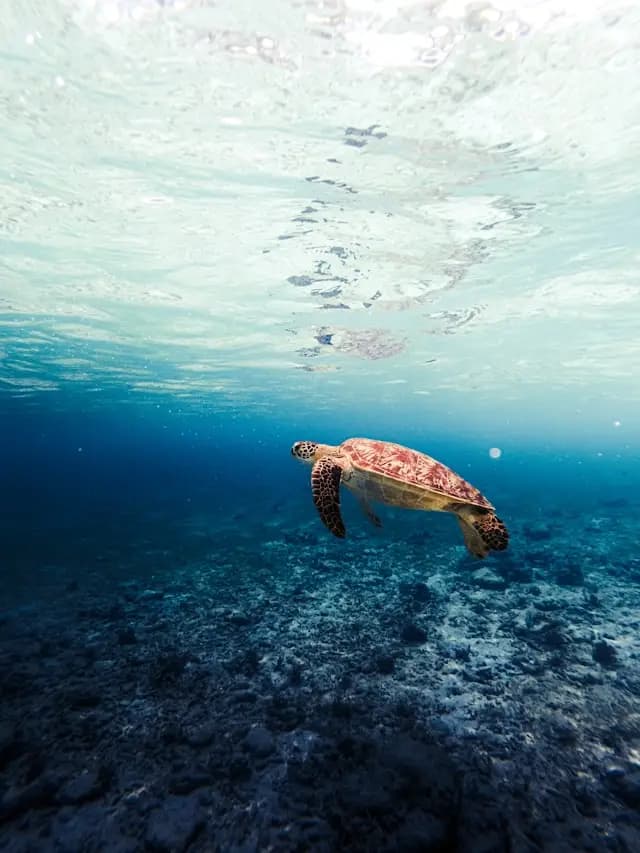
Sea Turtle Dawn Watch — 6:30am, Lagoon North End
Insider tip
Scuba Diving — The Cathedral and the Wreck
Insider tip
Kayak Along the Reef Edge — The 6am Window
Insider tip
Glass-Bottom Boat — For Non-Swimmers
Insider tip
Agatti Lagoon Walk — Local Life on a Coral Island
Insider tip
Dolphin Watching — Bangaram Morning Boat
Insider tip
Night Snorkelling — Bioluminescence
Insider tip
SPORTS Package Islands — Kadmat, Kavaratti, Kalpeni
Insider tip
Reef-Safe Sunscreen — The Non-Optional Gear
Insider tip
Sample Itineraries for Lakshadweep Islands
See how each trip is paced, from arrival to departure. These are sample day-by-day plans; we tailor the dates and details.
Lakshadweep Quick — 5 Days (Agatti + Bangaram)
- Day 1Kochi → Agatti (flight)Arrive Agatti · Lagoon walk · Transfer speedboat to Bangaram.
Advice
Speedboat to Bangaram: 45 min. Book with CGH Earth — resort arranges speedboat timing for flight connection. - Day 2Bangaram6am kayak · 8am reef snorkelling · Turtle watch · Sunset beach.
Advice
The 6am kayak is THE Bangaram experience — set the alarm. No photography for first 30 minutes (the trap is photography over experience). - Day 3BangaramScuba diving (Cathedral) · Glass-bottom boat · Hammock afternoon.
Advice
Cathedral dive: finest single dive site in Lakshadweep. Non-divers: PADI Discover ₹3,500-4,500 covers Cathedral's upper section. - Day 4BangaramDolphin morning boat · Night snorkelling (bioluminescence).
Advice
Arrange night snorkel at dive desk on Day 3. Bioluminescence in May: moderate but reliable. October-November: maximum effect. - Day 5Bangaram → Agatti → KochiSpeedboat Agatti · Flight Kochi.
Advice
CGH Earth arranges speedboat timing for flight connection. Allow 2 hours buffer at Agatti before Kochi flight.
Lakshadweep Popular — 8 Days (Bangaram + SPORTS Island)
- Day 1Kochi → AgattiArrive · Lagoon · Night on Agatti guesthouse.
Advice
Day 6 Kalpeni (2-hour speedboat from Bangaram) is the SPORTS circuit addition that most Bangaram-only visitors miss. The Kalpeni three-island lagoon, the rubble bank walkable at low tide between islands, and the soft coral garden snorkelling give a different Lakshadweep experience from Bangaram reef edge. Combination of Bangaram (uninhabited resort island) + Kalpeni (inhabited island with community + SPORTS accommodation) = most complete Lakshadweep experience available. - Day 2Agatti → BangaramMorning kayak in Agatti lagoon · Speedboat 10am · Bangaram arrival.
- Day 3Bangaram6am kayak · Reef snorkelling · Turtle watch.
- Day 4BangaramScuba (Cathedral + Wreck) · Night snorkelling.
- Day 5BangaramDolphin boat · Kayak reef edge · Sunset.
- Day 6Bangaram → Kalpeni (speedboat, 2 hrs)Arrive Kalpeni · SPORTS accommodation · Lagoon snorkelling.
- Day 7KalpeniGlass-bottom boat · Low-tide rubble bank walk · Talus walk.
- Day 8Kalpeni → Agatti → KochiSpeedboat to Agatti · Flight Kochi.
Lakshadweep Complete — 12 Days (Full Circuit).
- Day 1KochiKochi fort area before departure.
Advice
The 12-day complete circuit requires a SPORTS package ship from Kochi for access to Minicoy + Kavaratti + Kadmat (Bangaram cannot be reached by the SPORTS ship). The complete circuit combines: SPORTS package ship + Bangaram independent stay at the start or end. Most complex Lakshadweep itinerary to coordinate — confirm all departure dates at lakshadweep.gov.in before booking. - Day 2Kochi → Ship boardingShip boarding at Kochi jetty.
- Day 3Ship · Arrive MinicoyOvernight on ship · Minicoy lighthouse · Mahl culture.
- Day 4Minicoy → KavarattiSpeedboat transfer · Capital island · Marine Aquarium.
- Day 5BangaramReef snorkelling + Scuba diving.
- Day 6BangaramDolphin + turtle.
- Day 7KalpeniThree-island lagoon · Rubble bank walk.
- Day 8KadmatSPORTS package diving island · Kadmat reef.
- Day 9KadmatNight snorkel · Diving day.
- Day 10AgattiAgatti lagoon · Agatti reefs.
- Day 11AgattiFinal kayak · Pre-departure.
- Day 12Agatti → Kochi flightDeparture.
Where to Stay in Lakshadweep Islands
Bangaram Island Resort (CGH Earth)
Agatti Island Beach Resort (SPORTS)
Agatti Private Guesthouses
SPORTS Package Islands (Kadmat, Kalpeni, Kavaratti, Minicoy)
Travel Costs for Lakshadweep Islands
Budget
₹3,000 – ₹6,000/Person (excl Kochi travel)Money-saving travel- Stay
- Agatti SPORTS Island Beach Resort (₹2,500-₹6,000/night) · Agatti private guesthouses (₹1,200-₹3,000/night) · SPORTS package islands (₹2,000-₹5,000/night, included in package)
- Food
- Local Malayali fare at guesthouses (₹150-₹300/meal) · Coconut + fresh fish · Limited dining options on inhabited islands · SPORTS package meals included
- Getting around
- MV Kavaratti/MV Arabian Sea/MV Lakshadweep Sea ship from Kochi (₹1,200-₹3,500) · Bicycle on Agatti (₹100-₹200/day) · Walking
Mid-range
₹6,000 – ₹12,000/Person (excl Kochi travel)Comfortable everyday travel- Stay
- Agatti private guesthouse extended stay · Snorkelling packages · Mid-range guesthouse experiences
- Food
- Mix local + small private dining · Coconut + tuna preparations · Some imported items at higher cost
- Getting around
- Alliance Air flight Kochi-Agatti (₹5,000-₹12,000 one-way) · Speedboat transfers · Private snorkelling boat hire
PREMIUM
₹15,000 – ₹30,000/Person (excl Kochi travel)per person, per day- Stay
- Bangaram Island Resort mid-range cottage (CGH Earth, ₹18,000-₹35,000/night, all-inclusive) · Beach cottage with lagoon view
- Food
- Bangaram all-inclusive (3 meals + snacks + soft drinks) · Fresh seafood daily · Continental + Indian + local Malayali cuisine · Theme nights
- Getting around
- Alliance Air flight Kochi-Agatti · CGH Earth speedboat Agatti-Bangaram (45 min, included) · Resort reef boats included · Dive boats
Luxury
₹35,000 – ₹80,000+/Person (excl Kochi travel)Premium comfort- Stay
- Bangaram Island Resort premium water bungalow (CGH Earth, ₹45,000-₹55,000/night, all-inclusive) · Honeymoon suite · Private island access
- Food
- Bangaram premium dining · Private chef arrangements · Private beach dinner · Wine pairings · Specialty seafood preparations
- Getting around
- Private charter flight Kochi-Agatti (₹2,00,000+ one-way for small group) · Private yacht charter Bangaram waters · Helicopter possible from Kochi (very limited availability)
How to Reach Lakshadweep and Getting Around
How to reach Lakshadweep and how to get around once you are there: the routes, how long they take and what they cost.
Plan your route ↗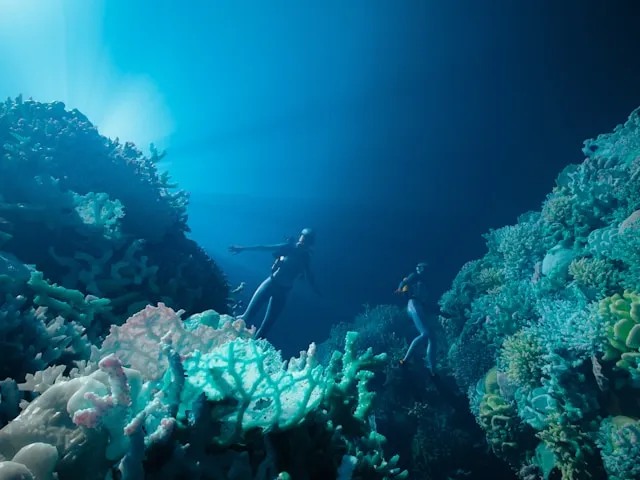 9 ways to travel
Kochi (COK) → Agatti (AGX)
Alliance Air (IndiGo wet-lease).Indian Coast Guard special charters · 1.5 hrs. Most important booking in any Lakshadweep trip — seats extremely limited. Book BEFORE Entry Permit application.
Kochi → Lakshadweep by Ship
MV Kavaratti, MV Arabian Sea, MV Lakshadweep Sea · Kochi Willingdon Island Jetty → various islands · 14-20 hours · Overnight journey, departure dusk, arrival dawn. Not for seasickness-prone (Arabian Sea rough Apr-May).
Speedboat Agatti → Bangaram
45 minutes · Arranged by CGH Earth resort or Agatti guesthouses. CGH Earth includes timing coordination with Agatti flight schedule.
Resort boat (Bangaram)
Bicycle (Agatti/Kavaratti)
Standard island transport on inhabited islands · Single road runs island length.
Walking (Bangaram)
Glass-bottom boat
Available at most tourist-accessible islands · Best for non-swimmers.
SPORTS Ship Inter-Island
Indian Coast Guard Helicopter (emergency only)
Lakshadweep Islands Travel Tips
Lakshadweep's only accommodation options are government-run SPORTS bungalows, one private resort (Bangaram Island Resort), and approved guesthouses on select islands — there are no budget alternatives; build accommodation costs realistically before planning.
UPI and card acceptance on islands is limited outside the Bangaram Resort — carry sufficient INR cash for your entire stay; the nearest reliable ATM is in Agatti, and it frequently runs low.
Open-water swimming between islands is unsafe without a guide — Lakshadweep's lagoon appears calm but strong tidal currents run in inter-island channels; swim only in designated lagoon zones near your island.
Coral cuts from reef walking should be cleaned immediately with antiseptic — coral harbours bacteria that cause rapid and stubborn infections; diving with bare legs near the reef is strongly discouraged.
Lakshadweep's population is 97% Muslim — alcohol is permitted only on Bangaram Island Resort (the only island with a licence); bringing alcohol onto other islands is prohibited and deeply offensive to the community.
Dress modestly when in island villages — beach swimwear is acceptable at resort beaches but should be covered with a sarong or clothing when entering any village area.
"Private" Lakshadweep tour packages sold by mainland Kerala operators that promise unrestricted island access — Lakshadweep's permit system restricts which islands tourists can visit; verify the specific islands included in the permit with the Lakshadweep Administration before paying.
Dive operators claiming "no permit needed" for Suheli Par or Cherbaniani Reef — these are restricted permits that require advance application; any operator claiming otherwise is operating outside the regulatory framework.
Flights to Agatti by Air India (the only route) are frequently overbooked and delayed — book refundable tickets and carry a buffer day on your mainland before the return journey.
What is worth it,
and what to avoid.
Last reviewed 2026-05-11.
- Bangaram Reef SnorkellingMost intact coral reef accessible by snorkelling in India. The drop-off visible from surface. Napoleon wrasse at 25m depth through 20m+ of clear water.
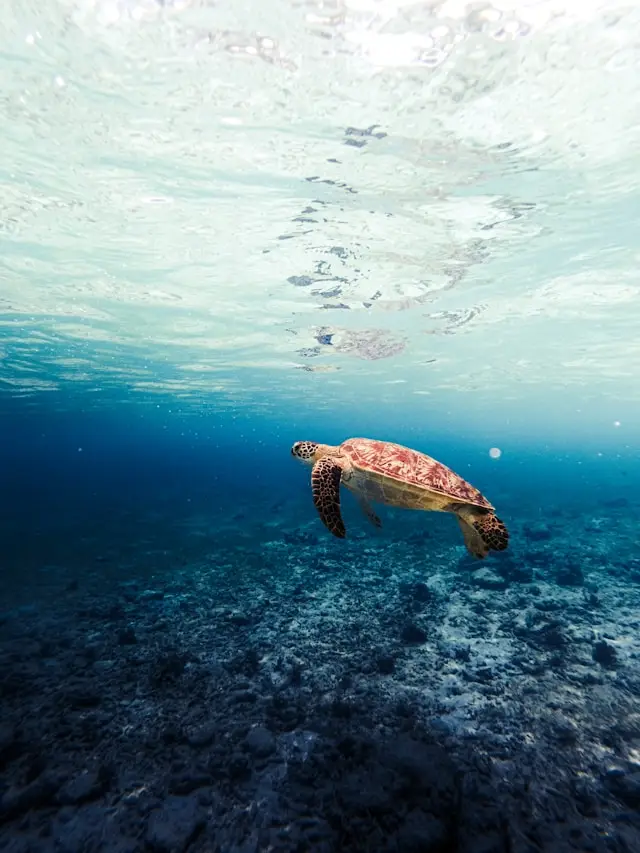
- 6am Kayak in Bangaram LagoonLagoon before anyone else wakes. Coral heads below hull. Turtle feeding in seagrass. The silence.
- Bangaram Resort all-inclusive— Permit handled. Reef-safe sunscreen in room. Kayaks + snorkelling + morning reef boat + night snorkelling all included. Most complete Lakshadweep experience.
- Kalpeni Three-Island LagoonMost visually complex lagoon in Lakshadweep. Rubble bank walkable between islands at low tide. Soft coral garden. Most distinctive single Lakshadweep geography.
- Night Snorkelling BioluminescenceHand through water = blue sparks. Lobsters and octopus at reef at 9pm. Only place in India where bioluminescent snorkelling is consistently available.
- Sea Turtle Dawn WatchWalk to north end of Bangaram beach at 6:30am. Stand still. Turtle appears. No guide, no boat, no cost.
- Minicoy Lighthouse ClimbOldest lighthouse structure in Lakshadweep (1885). View of atoll ring from 47m. Open Indian Ocean to south. Most dramatically positioned lighthouse in India.
- Reef-Safe Sunscreen— Direct, immediate, personal contribution to reef that makes all above experiences possible. Most impactful ₹1,000 spent in Lakshadweep.
- Bangaram Sunset + Dark SkyLagoon faces west, sun sets over Arabian Sea directly from beach. Post-sunset bioluminescence. Milky Way (Jul-Nov) — darkest sky in India's maritime territory.
- Scuba PADI Discover1-day pool training + open water dive. Discover dive 12m max — sufficient for Cathedral's upper section. Gives reef experience to non-divers without full PADI certification course.
- Using standard sunscreen in the waterOxybenzone and octinoxate damage coral larvae and bleach reefs. Lakshadweep reef intact specifically because access restricted. Standard sunscreen most direct way tourist damages what they came to see. Reef-safe sunscreen NOT optional.
- Not arranging Bangaram permit through CGH EarthIndependent permit process (lakshadweep.gov.in) takes 15-30 days. If you've booked Bangaram, CGH Earth handles permit — most reliable process. Do not try independent booking.
- Visiting in June, July, August, SeptemberMost facilities closed (Bangaram resort, SPORTS ships reduced). Monsoon sea rough, water activities not safe. Bioluminescence peaks but access restricted.
- Only taking ship not flying to AgattiShip (14-18 hrs, overnight) is budget method. For 5-day trip: 14 hrs there + 14 hrs return leaves 3 effective days. Flight (1.5 hrs) gives 5 full days. Flight always correct for time-limited visits.
- Assuming Lakshadweep = MaldivesSame coral atoll geology. Tourist infrastructure completely different. Maldives 160+ resort islands; Lakshadweep 1 uninhabited resort island (Bangaram). Expect Lakshadweep more limited, authentic, specific than Maldives circuit.
- Not carrying enough cash from KochiAgatti has 1 ATM (may be out of order). Bangaram accepts cards for room only. Cash needed for tips, local purchases, speedboats. Carry ₹5,000-₹10,000 from Kochi.
- Skipping night snorkellingBangaram night snorkel (bioluminescence + reef nocturnal shift — lobsters, octopus, soldierfish) often skipped as optional. NOT optional — nocturnal reef is different ecosystem from daytime. Bioluminescence available only in Lakshadweep among Indian destinations.
- Not checking SPORTS package departure datesSpecific departure/return dates from Kochi (lakshadweep.gov.in for 2026 schedule). Cannot be changed to match personal schedule. Check schedule before booking Kochi travel.
- Booking Bangaram less than 2 months aheadCGH Earth Bangaram has only 30 cottages. Peak season (Nov-Mar) books out 3-6 months ahead. May/Oct (shoulder): 1-2 months minimum. Last-minute Bangaram booking impossible during tourist season.
- Forgetting reef-safe sunscreen until arrivalReef-safe sunscreen NOT available on islands (not even at Bangaram). Must buy in Kochi before flight to Agatti, or arrive with it from mainland city. Standard sunscreen used = ecological damage + Bangaram resort enforces reef-safe rule.
Escape to Coral Lagoons !
Hassle-Free Permit Processing & Bangaram Resort Packages
Start Planning Lakshadweep Trip ↗Lakshadweep Islands FAQ
Visas, costs, safety and the practical questions travellers ask us most.
How to Get Entry Permit for Lakshadweep 2026?
Lakshadweep Trip Cost — 5 Days 2026?
Lakshadweep vs Maldives — Which is Better?
Best Time to Visit Lakshadweep 2026?
Can Foreigners Visit Lakshadweep?
What is the SPORTS Package?
How to Reach Lakshadweep from India?
Lakshadweep Mein Kitne Din Chahiye?


Have a Lakshadweep trip
in mind?
Choose a package, or tell us the dates, hotels and experiences you want. We check the details and send you a clear quote. Pay in BTC, ETH, USDT, USDC and 90+ other coins, with other methods confirmed on request.