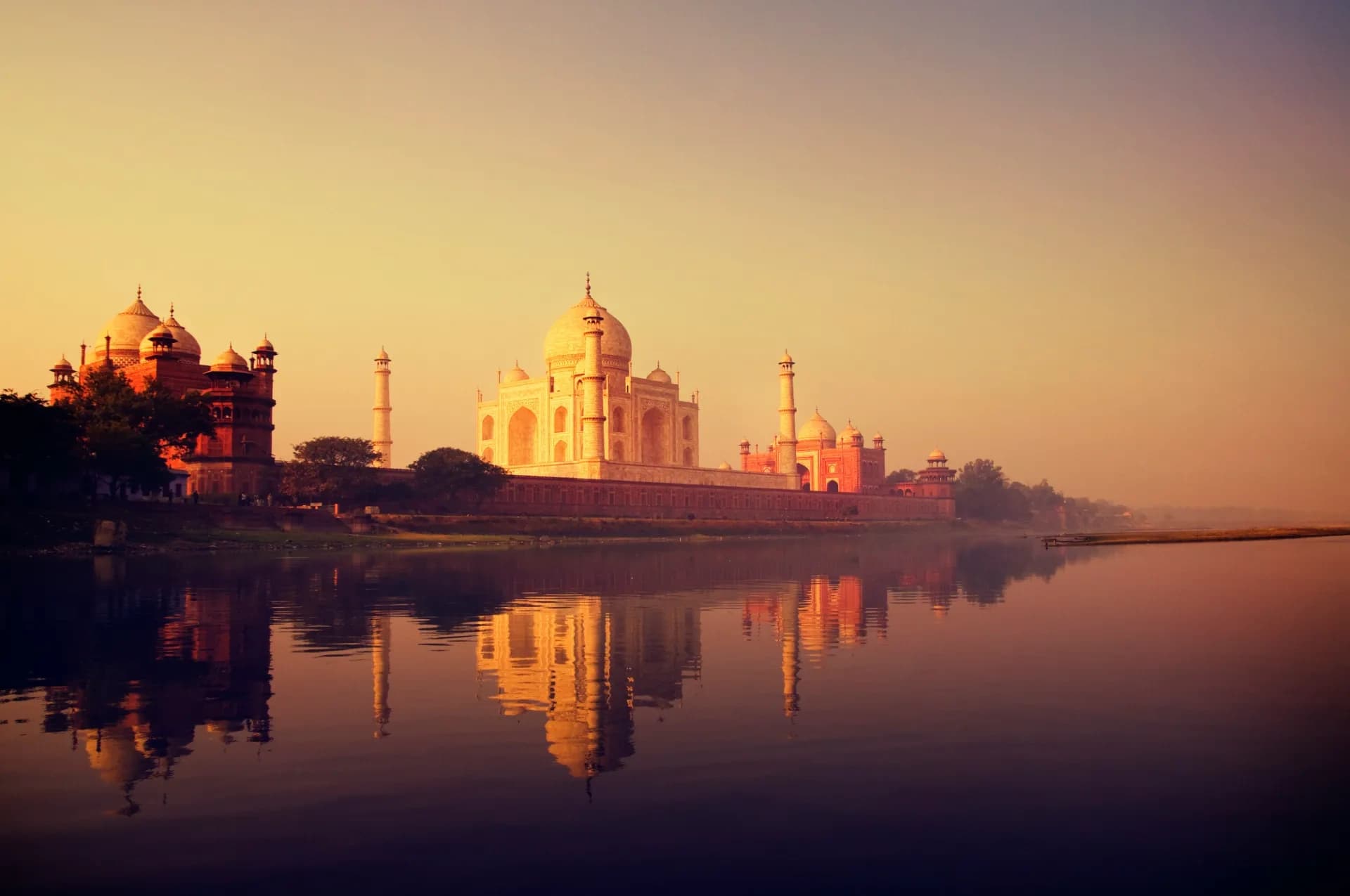
Agra Taj Mahal
Why the 7th Wonder Still Stops You — 374 Years of Standing in Front of It
- Family
- Honeymoon
- City
- Culture
Agra Taj Mahal, your way.
With time for what matters.
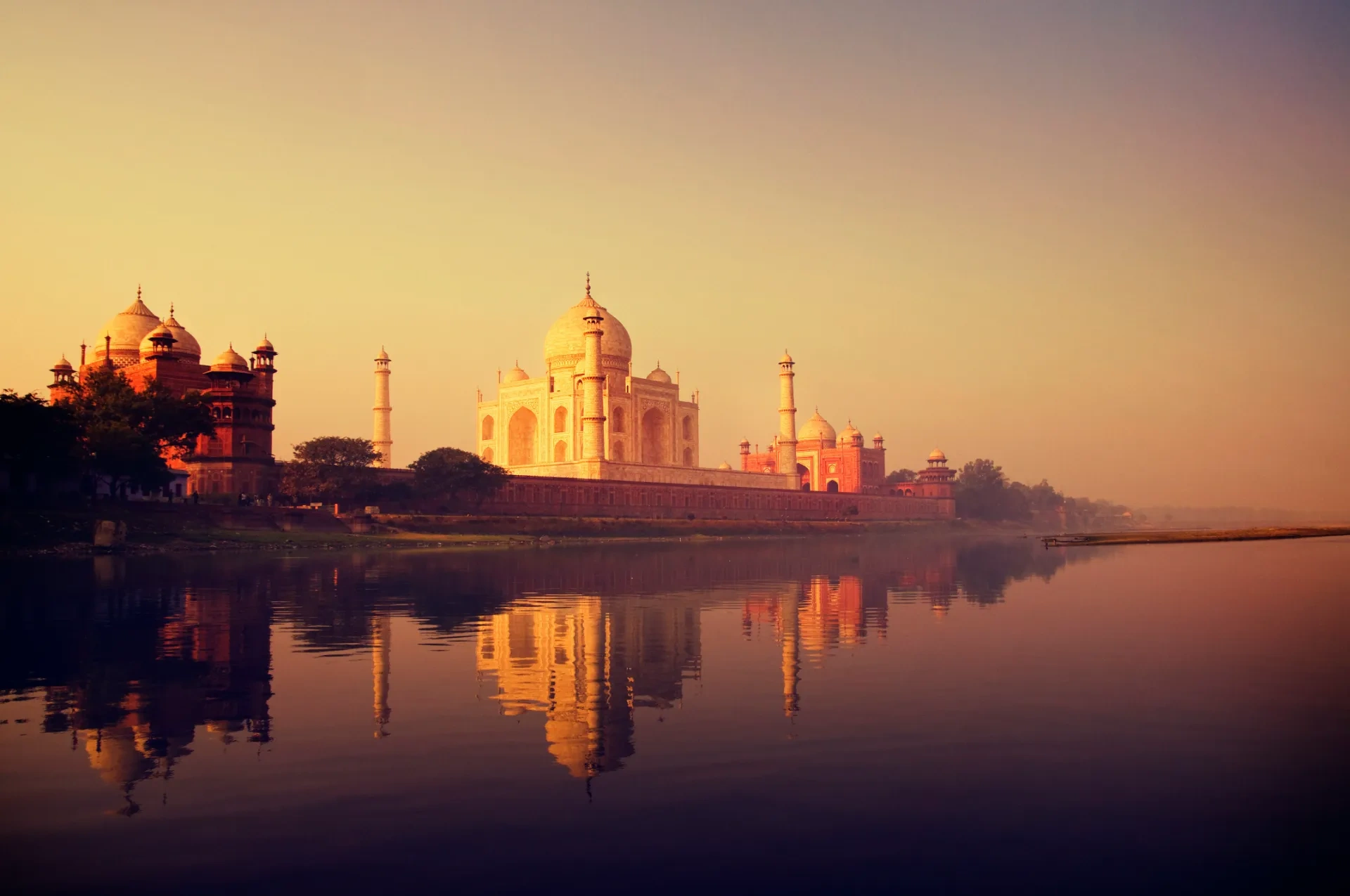
Agra was the Mughal imperial capital under Akbar (Agra Fort), Jahangir, and Shah Jahan (Taj Mahal + Diwan-i-Khas in the Fort). The city has 3 UNESCO World Heritage Sites: Taj Mahal (1632-1648, mausoleum of Mumtaz Mahal — the most visited monument in India, 7-8 million annual visitors), Agra Fort (1565, Mughal fortification + imperial residence), and Fatehpur Sikri (1569-1585, the abandoned Mughal city 40km from Agra).
Is the Taj Mahal Worth Visiting in 2026?
Why Visit Agra & Taj Mahal
Key features of Agra Taj Mahal
Best Places to Visit in Agra & Taj Mahal
 01 / Place
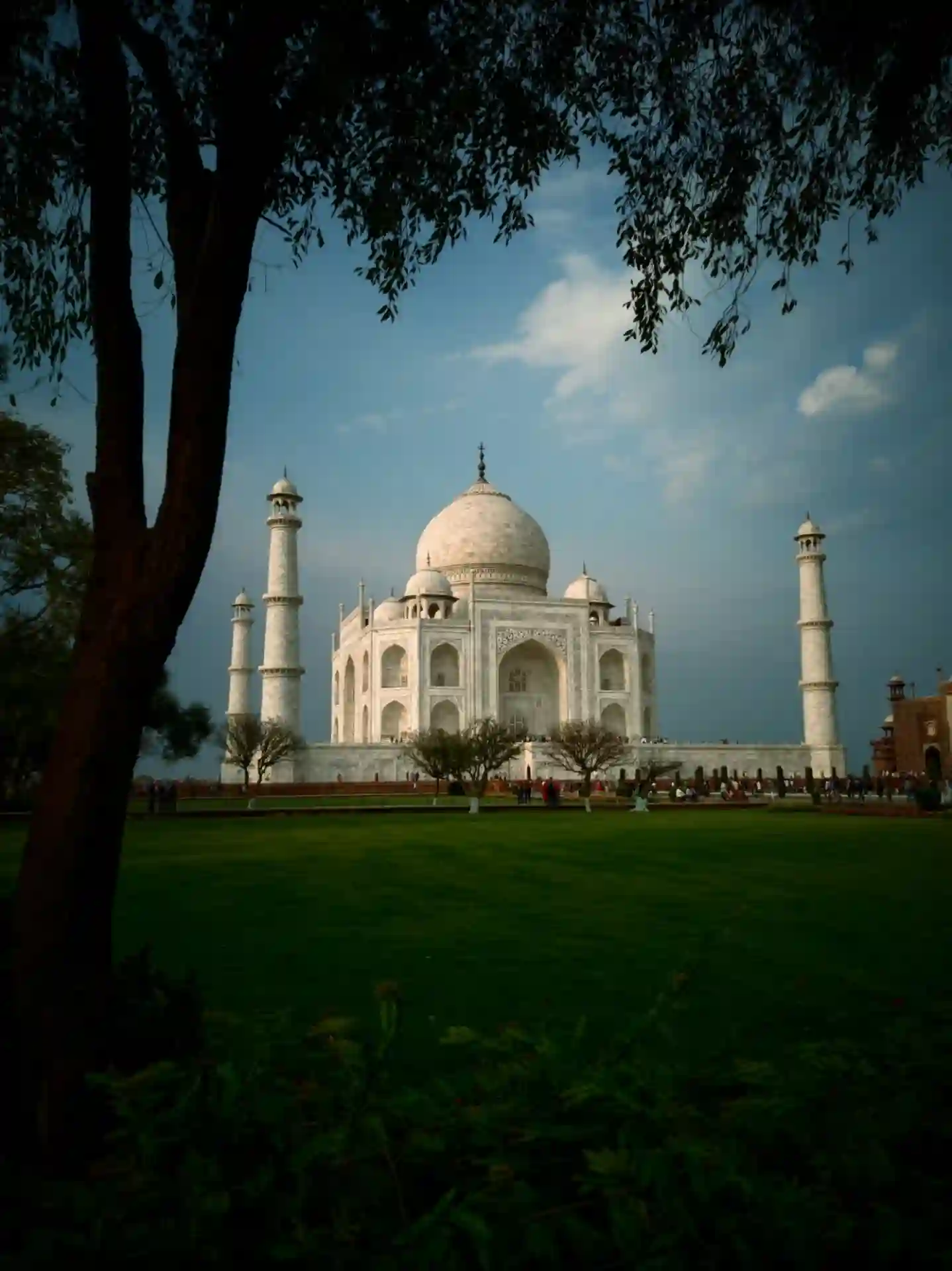
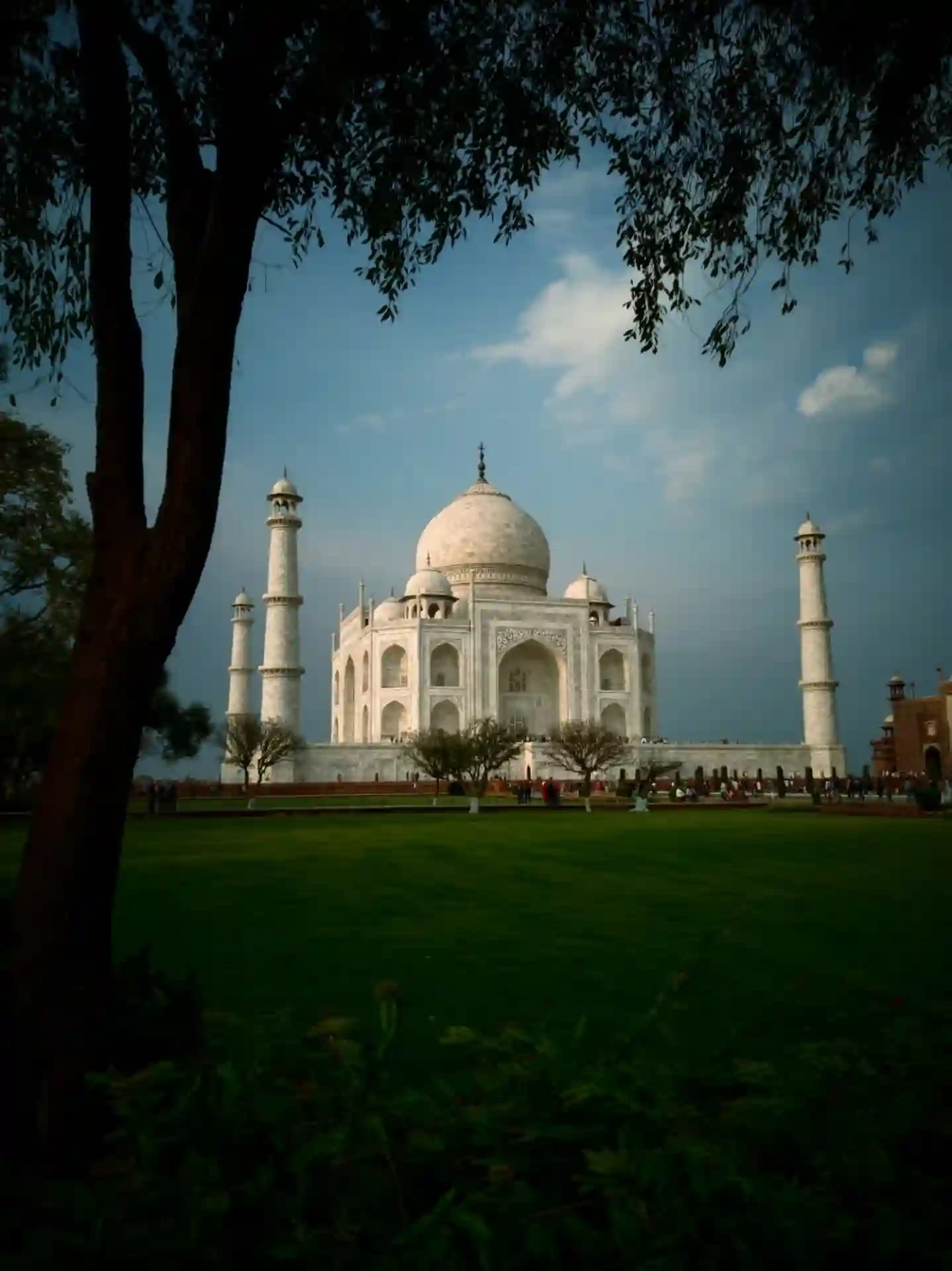
Taj Mahal
The Taj Mahal (1632-1648, UNESCO, Mughal mausoleum of Mumtaz Mahal). East Gate (opening at 5:45 am in November; less crowded), South Gate (main tourist entry), West Gate. Inside: Darwaza-i-Rauza (gateway arch frame), Charbagh garden, reflection pool, main mausoleum, Taj Ganj (the neighbourhood immediately south of the Taj — budget hostels, marble inlay workshops, Taj Mahal Rooftop Café for distant view with meal).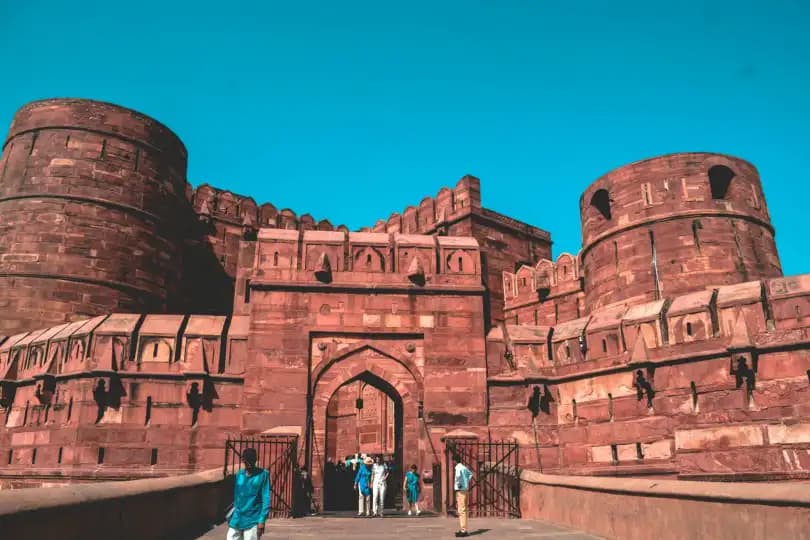 02 / Place
Agra Fort + Riverside
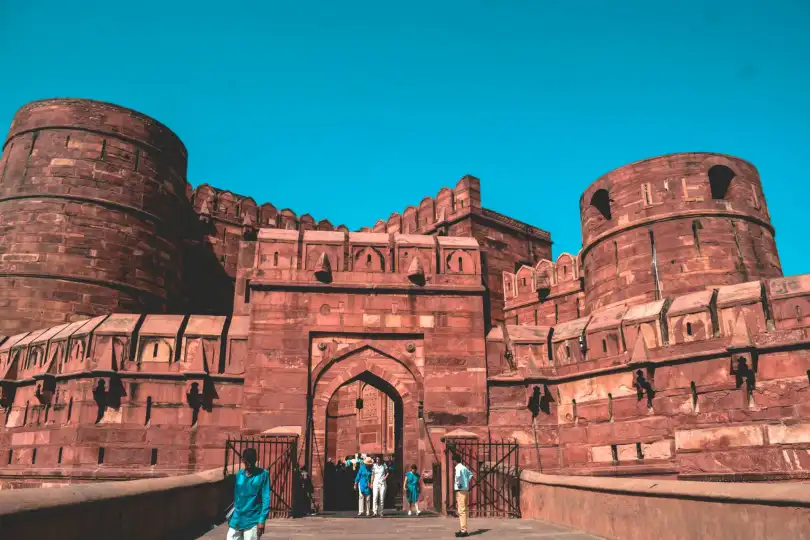
Agra Fort (1565, UNESCO, 2.5km from Taj). Diwan-i-Aam (public audience hall), Diwan-i-Khas (private hall), Khas Mahal (Shah Jahan's white marble palace), Musamman Burj (octagonal tower — Shah Jahan's 1658-1666 prison, Taj visible 2.2km south through a window), Jahangiri Mahal (oldest Hindu-style structure). Mehtab Bagh, across the Yamuna, for a sunset Taj view.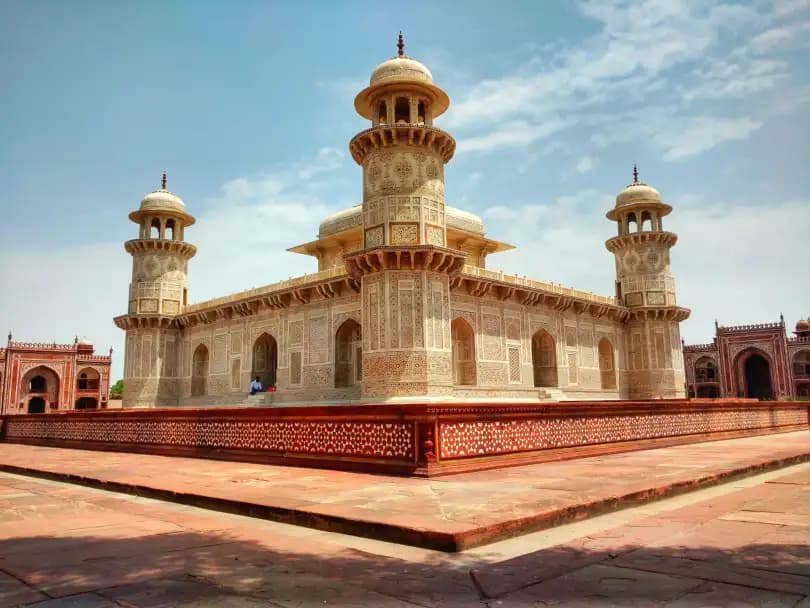 03 / Place
Itimad-ud-Daulah + Sikandra
Itimad-ud-Daulah (Baby Taj, 3km from Agra Fort by auto; the first fully white marble Mughal mausoleum, 1622- 1628 — close-range pietra dura inspection, the precursor to the Taj). Sikandra (Akbar's Tomb, 8km from Agra on Mathura Road— 5-storey mausoleum, 4 gateways in 4 architectural styles, deer park surrounding). The most undervisited UNESCO-related monuments in Agra. 04 / Place
Fatehpur Sikri
40km from Agra, 1 hour, UNESCO. Akbar's purpose-built capital, 1569-1585, abandoned after 14 years when the Sikri reservoir failed. Buland Darwaza (54m, highest Mughal gateway), Diwan-i-Khas (Akbar's theological column-and-bridge audience hall), Jodha Bai Palace (Hindu-Islamic fusion), Panch Mahal (5-storey wind-tower), Birbal's House.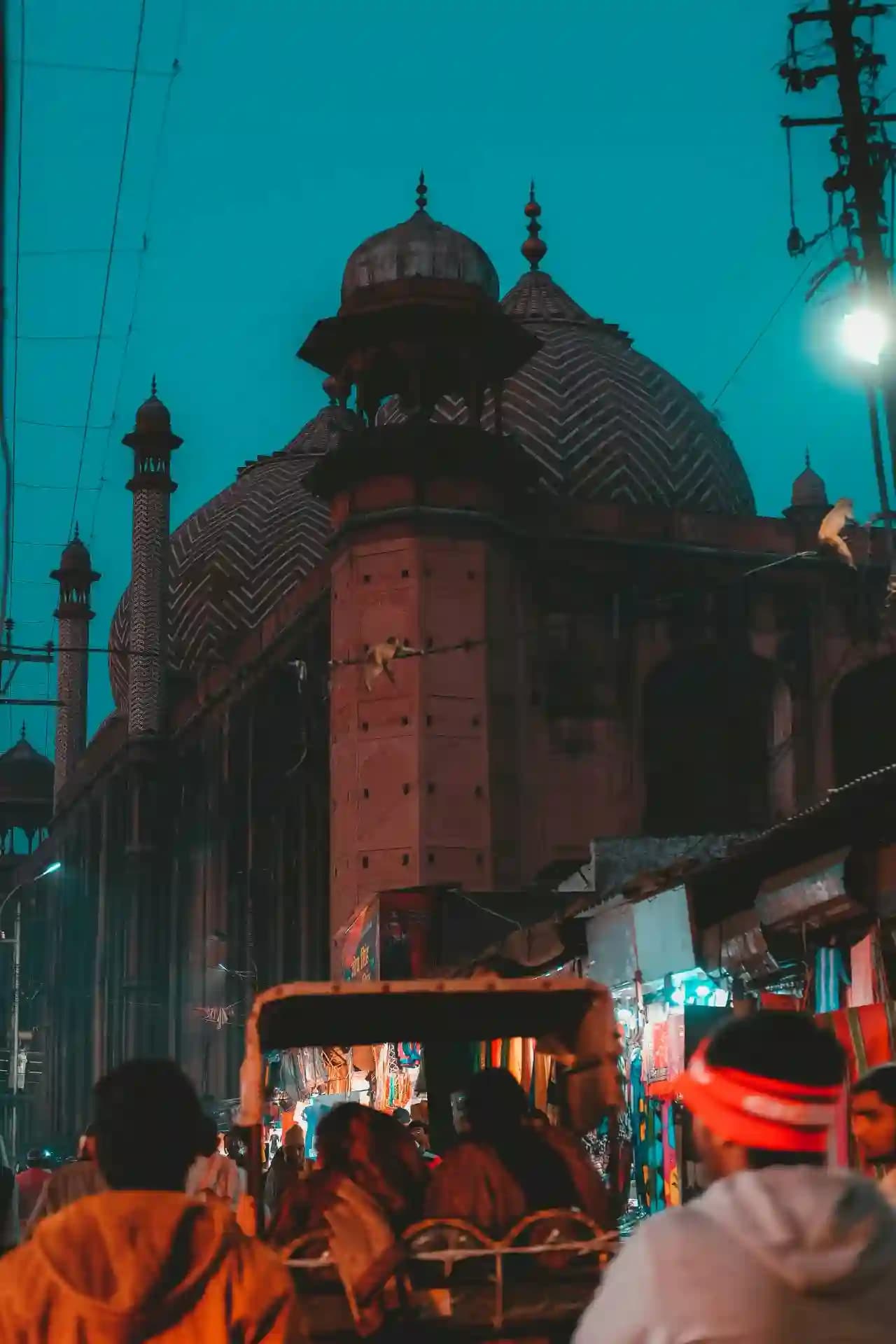 05 / Place
Sadar Bazaar + Kinari Bazaar (Old City)
The traditional Agra market areas between Taj and Fort. Kinari Bazaar (Mughal-era market lane — Panchi Petha shop, Bhagat Halwai Dalmoth since 1900, marble inlay workshops, leather goods). Sadar Bazaar (the wider market area — local Agra food, dhabas, tonga horse-drawn carriages, Bedai breakfast at any old city sweet shop). The most specifically authentic Agra street experience.The Taj Mahal (1632-1648, UNESCO, Mughal mausoleum of Mumtaz Mahal). East Gate (opening at 5:45 am in November; less crowded), South Gate (main tourist entry), West Gate. Inside: Darwaza-i-Rauza (gateway arch frame), Charbagh garden, reflection pool, main mausoleum, Taj Ganj (the neighbourhood immediately south of the Taj — budget hostels, marble inlay workshops, Taj Mahal Rooftop Café for distant view with meal).
Agra Fort (1565, UNESCO, 2.5km from Taj). Diwan-i-Aam (public audience hall), Diwan-i-Khas (private hall), Khas Mahal (Shah Jahan's white marble palace), Musamman Burj (octagonal tower — Shah Jahan's 1658-1666 prison, Taj visible 2.2km south through a window), Jahangiri Mahal (oldest Hindu-style structure). Mehtab Bagh, across the Yamuna, for a sunset Taj view.
Itimad-ud-Daulah (Baby Taj, 3km from Agra Fort by auto; the first fully white marble Mughal mausoleum, 1622- 1628 — close-range pietra dura inspection, the precursor to the Taj). Sikandra (Akbar's Tomb, 8km from Agra on Mathura Road— 5-storey mausoleum, 4 gateways in 4 architectural styles, deer park surrounding). The most undervisited UNESCO-related monuments in Agra.
40km from Agra, 1 hour, UNESCO. Akbar's purpose-built capital, 1569-1585, abandoned after 14 years when the Sikri reservoir failed. Buland Darwaza (54m, highest Mughal gateway), Diwan-i-Khas (Akbar's theological column-and-bridge audience hall), Jodha Bai Palace (Hindu-Islamic fusion), Panch Mahal (5-storey wind-tower), Birbal's House.
When should you
visit Agra Taj Mahal?
January · Avoid Dense fog possible — the Taj in fog is ethereal but can be invisible. Check meteo.gov.in forecast before booking sunrise Taj trip.
February · Good Post-fog clarity. Winter ending. Comfortable 10-22°C. Good photography. Pre-Holi tourist increase.
March · Good Holi week (Mathura-Agra is Holi epicentre — Barsana Lathmar Holi + Vrindavan Holi 50-80km from Agra). Warming.
April · Avoid Heating up 30-38°C. Early morning monument visits only. Afternoon outdoor exposure uncomfortable.
May · Avoid Hot 35-42°C. Heat wave risk. Heat reduces tourist comfort significantly.
June · Avoid Pre-monsoon 36-42°C + humidity. Monsoon approaching late month.
July · Avoid Monsoon. Heavy rain. Sometimes beautiful post-rain sky at Taj but unpredictable.
August · Avoid Monsoon. August Taj in rain is a specific image but visit logistics challenged. Hot and humid.
September · Good Monsoon ending. Cooling. Post-monsoon clarity beginning.
October · Best Post-monsoon. Clear skies. 18-28°C. Ideal temperatures. Pre-fog clarity.
November · Best Yeeshu's visit. The finest photography month — golden light, no fog, comfortable 15-25°C. The Taj at its photographic peak.
December · Good Fog begins (variable). The foggy Taj is specifically atmospheric — but unpredictable. Check forecast before sunrise visit.
Agra Taj Mahal experiencesTop Things To Do in Agra & Taj Mahal
Taj Mahal Sunrise — East Gate, 30 Minutes Before
Insider tip
Agra Fort — Musamman Burj Window + Diwan-i-Khas
Insider tip
Mehtab Bagh Sunset — 4:30pm Entry
Insider tip
Fatehpur Sikri — 9am, Before the Tour Buses
Insider tip
Itimad-ud-Daulah — The Close-Range Pietra Dura
Insider tip
Agra Food Circuit — Petha + Bedai + Dalmoth
Insider tip
Taj Mahal Late Afternoon — 3-5pm Light
Insider tip
Taj Mahal Interior Mausoleum — The Cenotaphs
Insider tip
Taj Mahal Full Moon Night — If Dates Align
Insider tip
Suggested Agra & Taj Mahal Itinerary
See how each trip is paced, from arrival to departure. These are sample day-by-day plans; we tailor the dates and details.
Agra Quick — 1 Day (Taj Sunrise + Fort)
- Day 1Hazrat Nizamuddin Delhi 6:10am → Agra → Delhi 5:50pm returnGatimaan Express Delhi 6:10am — actually NOT suitable for same-day sunrise (arrives Agra 9:50am, after sunrise). Better: drive to Agra previous night via Yamuna Expressway (2.5-3 hrs, ₹3,000-4,500 cab), overnight in Wadi Musa-equivalent Taj Ganj guesthouse for 5:40am Taj East Gate access. East Gate 5:40am. Pre-dawn Taj. Sunrise sequence. Interior mausoleum (₹200). Exit 8:30am. Petha + Bedai breakfast. Agra Fort 9:30am-12pm (Musamman Burj window, Diwan-i-Khas, ₹35). Lunch + Kinari Bazaar 12pm. Mehtab Bagh 2pm (afternoon Taj view across Yamuna, ₹25). Return Delhi 5:50pm Gatimaan or 7pm Shatabdi.
Advice
The single-day Agra from Delhi misses the most important hour — the sunrise — unless you overnight in Agra. A 1-night Agra stay (overnight) is significantly more complete than the same-day Gatimaan return. If single-day is the only option: prioritise the late-afternoon Taj (3-5pm light, the western sun, the second-best Taj light of the day) over a noon Taj visit.
Agra Popular — 2 Days (Yeeshu's November 2018 Circuit)
- Day 1Taj Ganj → Agra Fort → Itimad-ud-Daulah → Mehtab Bagh
The Day 1 sequence is the complete Mughal Agra circuit — the Taj (1632-1648) + the Fort (1565) + the Baby Taj precursor (1622-1628) + the alternative sunset view across the Yamuna. The 4 monuments together give the architectural narrative: Itimad-ud-Daulah was the first marble Mughal mausoleum (the model), the Taj Mahal perfected the technique, Agra Fort housed both the builder (Shah Jahan as emperor) and the prisoner (Shah Jahan in the Musamman Burj), and Mehtab Bagh was the originally planned counterpoint to the Taj.
Advice
Pre-book Gatimaan Express the previous day. Stay in Agra overnight (at a Taj Ganj or Fatehabad Road hotel). 5:40 am Taj East Gate. Sunrise sequence 5:45-6:35 am
- Day 2Sikandra → Fatehpur Sikri → Return Delhi
Sikandra 7 am (Akbar's Tomb, 8km from Agra) — the deer park in dawn light, 4 gates in 4 architectural styles (Hindu, Jain, Christian, Islamic motifs), no other visitors. Drive to Fatehpur Sikri (40km from Agra, 1 hour). Fatehpur Sikri 9 am. Buland Darwaza 9:15am (54m, highest Mughal gateway, inscription 'The world is a bridge'). Diwan-i-Khas 9:45 am (Akbar's theological column-and-bridge audience hall). Jodha Bai Palace 10:15 am (Hindu-Islamic fusion architecture). Panch Mahal 10:45 am (5-storey wind tower). Return to Agra at 12 pm. Shatabdi or Gatimaan returns to Delhi.
Advice
Sikandra at 7am is the most specifically uncrowded major Mughal monument experience near Agra — the deer in the morning light, the red sandstone gateway, essentially no other visitors. The asymmetric gateway designs (4 gates in 4 architectural styles) are the most architecturally legible expression of Akbar's theological philosophy. By 8:30am: first tourist buses arrive. The 7am window gives the monument in complete quiet.
Agra Complete — 3 Days (+ Full Moon + Vrindavan)
- Day 1Taj Mahal → Agra Fort → Itimad-ud-DaulahTaj sunrise 5:40am East Gate. Interior mausoleum (₹200). Agra Fort Musamman Burj 9:30am. Itimad-ud-Daulah 11am. Hotel rest. Optional: Taj afternoon 3pm visit (₹50 — second-best light, fewer visitors than morning peak).
Advice
Day 1 is the complete Mughal East Agra UNESCO circuit. Two visits to Taj (sunrise + afternoon) on Day 1 if energy permits. - Day 2Fatehpur Sikri → Mehtab BaghFatehpur Sikri 9am (1 hour drive each way) — Buland Darwaza + Diwan-i-Khas + Jodha Bai + Panch Mahal with ASI guide. Return Agra 1pm. Mehtab Bagh 4:30pm sunset (₹25). Kinari Bazaar evening.
Advice
Day 2: Fatehpur Sikri morning + Mehtab Bagh sunset = the ghost city + the alternative Taj view. The two least-tourist-saturated UNESCO experiences in Agra. - Day 3Vrindavan day → Taj Mahal full moon nightVrindavan day trip (50km from Agra, 1 hour) — the Krishna pilgrimage city, Banke Bihari Temple, Radha Raman Temple, ISKCON temple. Return Agra 4pm. Taj Mahal Full Moon Night session 8pm (if dates align with full moon — ₹510 + ₹200 interior, 400 tickets per night). 30-minute viewing from central garden.
Advice
Day 3 requires full moon date alignment for the night Taj. Check Purnima dates for 2026 against trip dates. Vrindavan is a day trip with or without the full moon — the most specifically spiritual addition to the Agra circuit. The most specifically dramatic Day 3 in the Indian heritage circuit.
Places worth
staying a little longer.
Taj Ganj (Adjacent to Taj Mahal East Gate)
Fatehabad Road (Hotel District)
Sadar Bazaar (Agra Old City)
Taj Mahal View Zone (600m from Taj)
Travel Costs for Agra & Taj Mahal"
Budget
₹800–₩2,000Money-saving travel- Stay
- Taj Ganj guesthouse (₹800-2,000/night, rooftop Taj views available) or Sadar Bazaar guesthouse (₹700-1,800/night). Hostels available for solo travellers from ₹500/night.
- Food
- Local dhabas: Bedai breakfast + sabzi (₹40-60) · Petha + Dalmoth snacks (₹50-100) · Mughlai dinner at any old city dhaba (₹150-250/person) · Sadar Bazaar street food
- Getting around
- Local Bus ,Auto
Mid-range
₹3,500–₩7,000Comfortable everyday travel- Stay
- Fatehabad Road 3-star hotels (₹2,500-5,000/night) · Tourism Bungalow (UP Tourism, ₹2,000-3,500/night) · Better Taj Ganj boutique (₹3,000-5,000/night)
- Food
- Hotel restaurant breakfast + lunch + dinner · Mughlai restaurant dinner (Pinch of Spice, Esphahan in Fatehabad Road, ₹500-1,000/person) · Petha + Dalmoth purchases · Auto-rickshaw transport between sites
- Getting around
- Local Bus ,Auto
PREMIUM
₹10,000–₩22,000per person, per day- Stay
- Fatehabad Road 4-5 star hotels (Trident, Crystal Sarovar, Jaypee Palace, ₹8,000-20,000/night) · ITC Mughal (₹15,000-30,000/night)
- Food
- 5-star hotel restaurants · Private guide for Taj + Fort + Fatehpur Sikri (₹2,500-4,000/day) · All entries included · Private cab Agra circuit (₹3,500/day)
- Getting around
- Cabs
Luxury
₹65,000+Premium comfort- Stay
- Oberoi Amarvilas Taj-view room (the only hotel in Agra where every room directly faces the Taj 600m away, ₹60,000-1,50,000/night)
- Food
- Oberoi Amarvilas all-day restaurants with Taj view · Private historian tour of Taj + Fort + Fatehpur Sikri · Helicopter Agra-Delhi return optional
- Getting around
- Private AC Cabs
How To Get to Agra & the Taj Mahal
How to reach Agra Taj Mahal and how to get around once you are there: the routes, how long they take and what they cost.
Plan your route ↗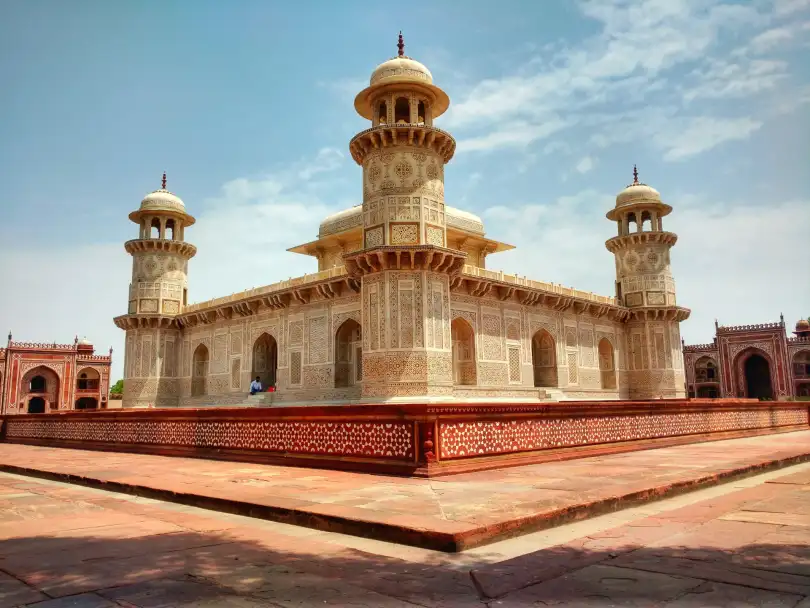 4 ways to travel
Gatimaan Express (Fastest, Recommended)
Shatabdi Express
Yamuna Expressway (Car/Cab)
Bus (ISBT Kashmiri Gate)
Agra & Taj Mahal Travel Tips
Do not rely on finding open physical ticket counters early in the morning. Tickets should be pre-booked online through the official Archaeological Survey of India (ASI) portal. Make sure to purchase the "High-Value" ticket that includes entry to the main mausoleum chamber to explore the inner marble pedestal.
The Taj Mahal is strictly closed to the general public on Fridays for prayers. Ensure itineraries avoid being in Agra on a Friday if the Taj is the primary objective.
Security checkpoints are highly stringent. Large bags, tripods, selfie sticks, power banks, drones, food items, and tobacco products are completely banned inside. Travelers should carry only a small daypack with their phone, camera, wallet, and passport.
To truly beat the crowds and the intense midday heat, plan to arrive at the gates between 5:00 AM and 5:30 AM. Entering right at sunrise offers the most magical lighting as the white marble appears to glow in soft pink hues.
What is worth it,
and what to avoid.
Last reviewed 2026-06-10.
- Taj at first entry 30 min pre-sunriseMarble in dawn transition. 6am: 450 visitors. 11am: 4,000. Non-negotiable timing.
- Mehtab Bagh for photographyOnly correctly positioned Taj photograph. ₹300 entry, 15 min by tuk-tuk from East Gate.
- Agra FortShah Jahan's window (Musamman Burj) — Taj visible from the tower where Shah Jahan spent 8 years imprisoned. Most poignant single view in Mughal heritage.
- Fatehpur Sikri on Jaipur route40km west on Jaipur road. Most completely preserved uninhabited Mughal capital.
- Itmad-ud-Daula (Baby Taj)Most exquisite pietra dura inlay in India. Most undervisited major Agra monument.
- Ram Bagh (oldest Mughal garden, free)1528 CE, Babur's prototype for all Mughal gardens. Almost no visitors.
- Akbar's Tomb Sikandra8km from Agra. Most architecturally unusual imperial Mughal tomb in circuit.
- Akbar's Tomb Sikandra8km from Agra. Most architecturally unusual imperial Mughal tomb in circuit.
- Agra tourist restaurant near Taj South GateWestern city prices for mediocre food. Joney's Place area: better local food, fraction of price.
- Second Taj visit same dayRe-entry requires new ticket. Dawn visit covers it completely.
- Agra beyond 2 daysTaj + Fort + Itmad-ud-Daula + Mehtab Bagh + Fatehpur Sikri = 1.5 full days.
- Agra beyond 2 daysTaj + Fort + Itmad-ud-Daula + Mehtab Bagh + Fatehpur Sikri = 1.5 full days. Not more.
Plan Your Agra Trip 2026
Taj Mahal sunrise 6am + Musamman Burj + Mehtab Bagh sunset — Yeeshu's November 2018 circuit
Get Personalised Quote ↗Agra & Taj Mahal FAQ
Visas, costs, safety and the practical questions travellers ask us most.
What is the Taj Mahal Entry Fee 2026?
What is the Best Time to Visit Taj Mahal in 2026?
How to Reach Agra from Delhi 2026?
Is the Taj Mahal Worth the Entry Fee for Indians?
What is Mehtab Bagh and Why Visit?
Is Fatehpur Sikri Worth the 40km Trip from Agra?
Does the Taj Mahal Look Different in Fog (December-January)?
Agra Mein Kitne Din Chahiye?


Have a Agra Taj Mahal trip
in mind?
Choose a package, or tell us the dates, hotels and experiences you want. We check the details and send you a clear quote. Pay in BTC, ETH, USDT, USDC and 90+ other coins, with other methods confirmed on request.