Great Britain
Royal Palaces, Rolling Countryside, Castle Stays & Scenic Lakes
Great Britain, your way.
With time for what matters.
Why Visit Great Britain — From Vikas Rana
Why Visit Great Britain
Key Features of Great Britain
Best places to visit in Great Britain
 01 / Place
Edinburgh Old Town and Castle
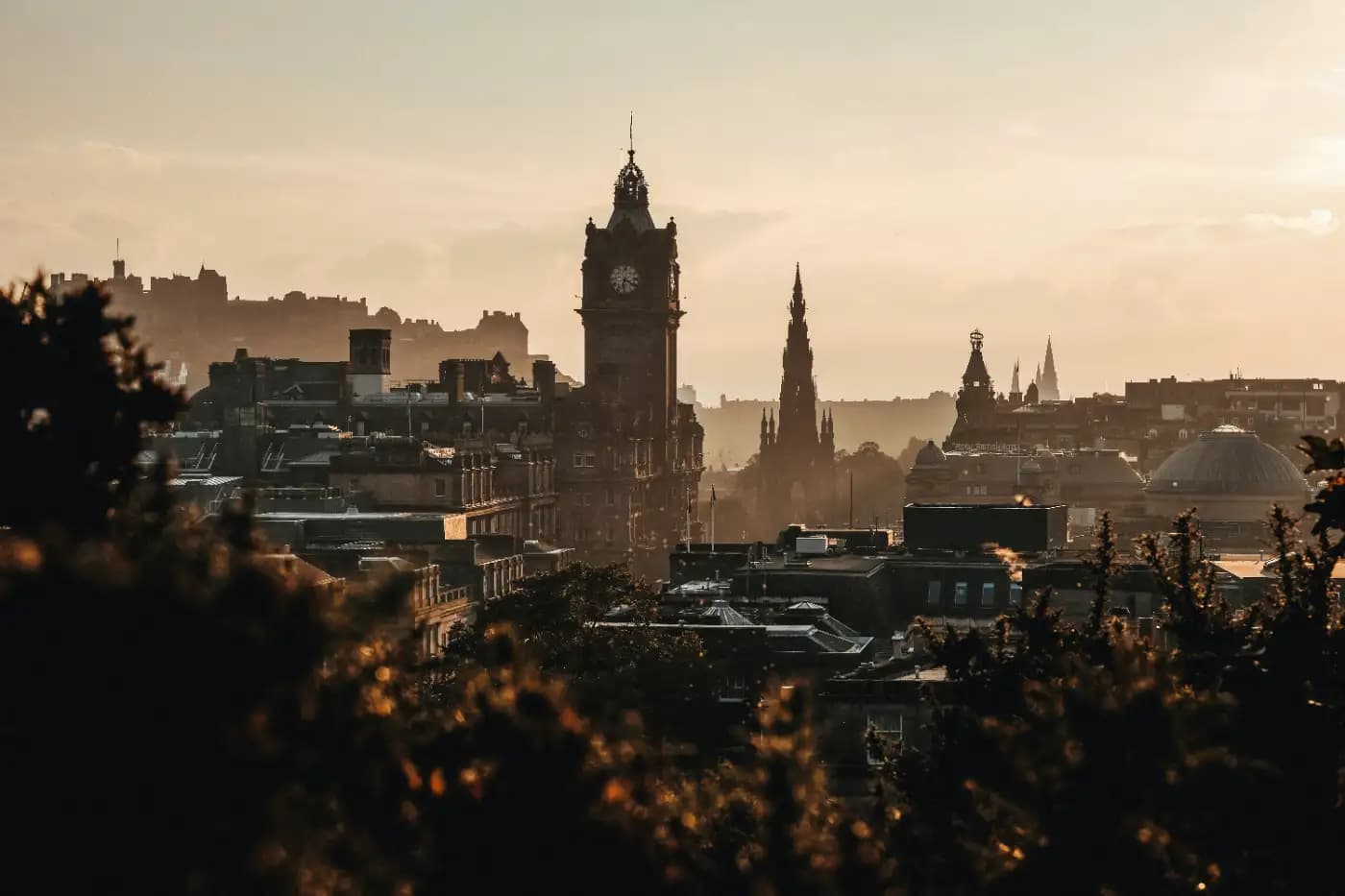
Edinburgh's Old Town is a vertical city — built on the spine of a 350-million-year-old volcanic crag, its closes (narrow stone alleyways dropping steeply off the Royal Mile) hide courtyards, pubs, and galleries that visitors walking only the main street never find. Mary King's Close (the 17th-century street sealed beneath a later building and preserved unchanged underground — visitorsare walked through the rooms where residents lived during the 1645 plague) gives Edinburgh's most specifically claustrophobic single heritage experience. The Castle itself houses the Honours of Scotland (the Scottish Crown Jewels — the oldest surviving Crown Jewels in the British Isles, dating to the 15th century) and the Stone of Destiny, on which Scottish and British monarchs have been crowned since 1296 AD. 02 / Place
Scottish Highlands — Glencoe, Torridon, and the Red and Black Cuillin
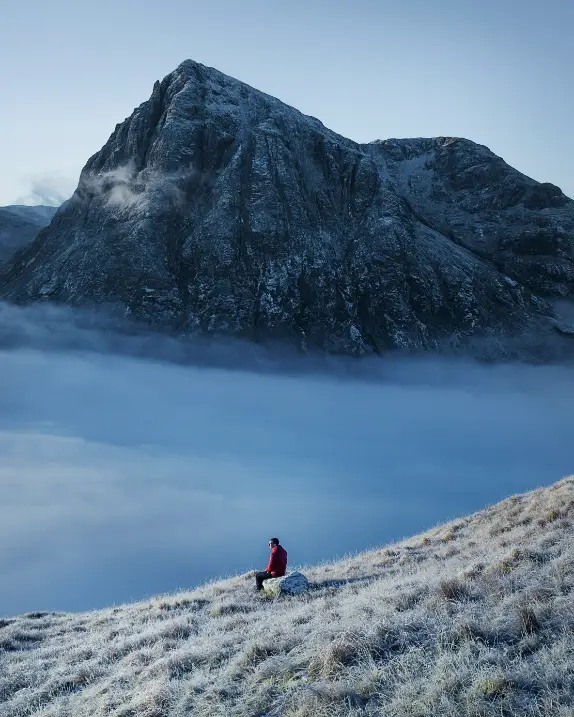
The Scottish Highlands are not one landscape but a geological archive of five: the ancient Torridonian sandstone mountains of the northwest (750 million years old — the oldest exposed rock in Britain), the volcanic Glencoe valley (the result of a magma chamber collapse 400 million years ago), the granite massifs of the Cairngorms plateau (the largest sub-Arctic wilderness in Britain), the sea loch fjords of the west coast, and the peat moorland of Caithness and Sutherland. Glencoe's Three Sisters (Beinn Fhada, Gearr Aonach, and Aonach Dubh — the three buttresses of Bidean nam Bian) are the specific rock faces that give the valley its distinct amphitheatre silhouette. The valley also carries the history of the 1692 Glencoe Massacre — the killing of the MacDonald clan by government troops they were hosting — the specific event that made clan hospitality in Scotland a subject of national memory.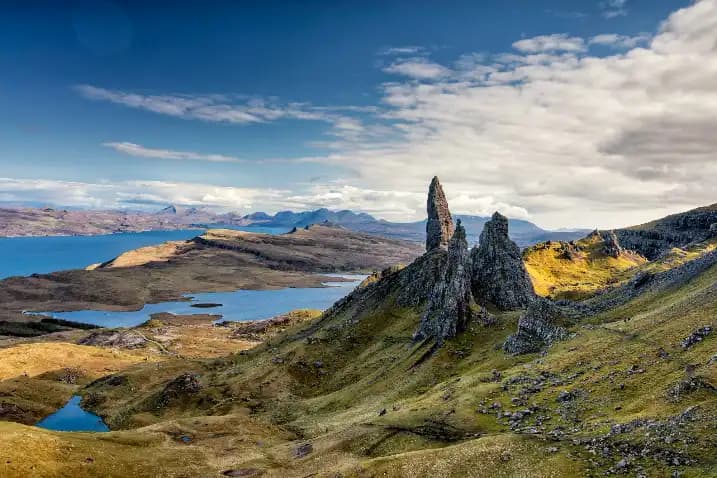 03 / Place
Isle of Skye, Scotland
Skye's landscape is the result of two geological events separated by 300 million years — the ancient Torridonian and Lewisian basement rocks in the south, and the younger (60-million-year-old) Cuillin gabbro intrusion that created the black serrated ridge dominating the island's southern half. The Fairy Pools at Glen Brittle (the series of clear mountain pools fed by waterfalls descending from the Black Cuillin — the turquoise colour comes from the mineral composition of the glacially-scoured basalt riverbed) are accessible by a 3km return walk from the Glen Brittle carpark. The Skye Museum of Island Life at Kilmuir (the most specifically intact crofting township in Scotland — 7 thatched cottages preserved as they were in the 1890s, with original furniture and agricultural tools, and the grave of Flora MacDonald who helped Bonnie Prince Charlie escape government forces in 1746) gives Skye's human history alongside its geological drama. 04 / Place
Lake District National Park, England
T he Lake District's 16 lakes and 214 named fells occupy 2,362 sq km of the English northwest — the most artistically documented single landscape in Britain. John Ruskin lived at Brantwood on Coniston Water and wrote from its view; William Wordsworth was born at Cockermouth, educated at Hawkshead, lived at Dove Cottage in Grasmere, and walked every fell visible from his study window; Beatrix Potter bought Hill Top farm at Near Sawrey from the royalties of The Tale of Peter Rabbit and used its garden and interior in 13 of her books. The specific Lake District experience most visitors miss: Ullswater (the second-largest lake, Wordsworth's "How Rich the Wave" daffodil shore at Gowbarrow) and Buttermere (the 4km circular lake walk giving 360° fell views in 2h — the single most rewarding effort-to-landscape ratio of any Lake District walk accessible to non-hikers).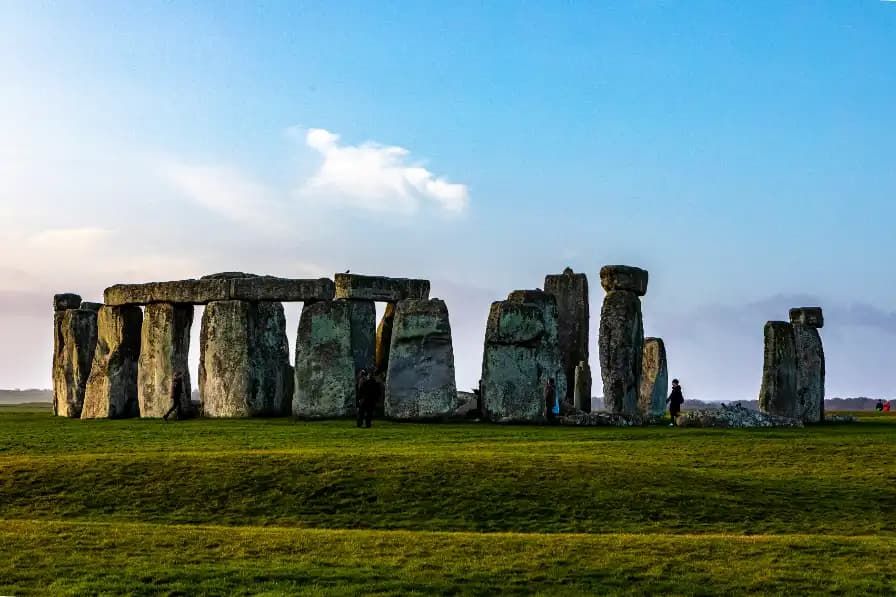 05 / Place
Stonehenge and Avebury, Wiltshire
Stonehenge's visible monument — the 83 sarsen stones and 43 bluestones arranged in circles and horseshoes — is the final, 4th-phase construction on a site used continuously from 3000 BCE. The bluestones (the smaller inner circle, 2–5 tonnes each) were transported from the Preseli Hills in Pembrokeshire, Wales — a 240km overland and sea journey that remains one of prehistoric engineering's most specifically debated problems. Fourteen kilometres north, Avebury is the less-visited and more specifically overwhelming monument: the outer circle (the largest stone circle in the world — 331m diameter, 98 surviving stones) completely encircles the village of Avebury, with houses, a pub, and a church built inside the Neolithic monument over centuries. The West Kennet Long Barrow (1.5km from Avebury, the 100m Neolithic chambered tomb from 3650 BCE — older than Stonehenge by 500 years, freely accessible at all hours) gives the most intimate single prehistoric interior in Britain.Edinburgh's Old Town is a vertical city — built on the spine of a 350-million-year-old volcanic crag, its closes (narrow stone alleyways dropping steeply off the Royal Mile) hide courtyards, pubs, and galleries that visitors walking only the main street never find. Mary King's Close (the 17th-century street sealed beneath a later building and preserved unchanged underground — visitorsare walked through the rooms where residents lived during the 1645 plague) gives Edinburgh's most specifically claustrophobic single heritage experience. The Castle itself houses the Honours of Scotland (the Scottish Crown Jewels — the oldest surviving Crown Jewels in the British Isles, dating to the 15th century) and the Stone of Destiny, on which Scottish and British monarchs have been crowned since 1296 AD.
The Scottish Highlands are not one landscape but a geological archive of five: the ancient Torridonian sandstone mountains of the northwest (750 million years old — the oldest exposed rock in Britain), the volcanic Glencoe valley (the result of a magma chamber collapse 400 million years ago), the granite massifs of the Cairngorms plateau (the largest sub-Arctic wilderness in Britain), the sea loch fjords of the west coast, and the peat moorland of Caithness and Sutherland. Glencoe's Three Sisters (Beinn Fhada, Gearr Aonach, and Aonach Dubh — the three buttresses of Bidean nam Bian) are the specific rock faces that give the valley its distinct amphitheatre silhouette. The valley also carries the history of the 1692 Glencoe Massacre — the killing of the MacDonald clan by government troops they were hosting — the specific event that made clan hospitality in Scotland a subject of national memory.
Skye's landscape is the result of two geological events separated by 300 million years — the ancient Torridonian and Lewisian basement rocks in the south, and the younger (60-million-year-old) Cuillin gabbro intrusion that created the black serrated ridge dominating the island's southern half. The Fairy Pools at Glen Brittle (the series of clear mountain pools fed by waterfalls descending from the Black Cuillin — the turquoise colour comes from the mineral composition of the glacially-scoured basalt riverbed) are accessible by a 3km return walk from the Glen Brittle carpark. The Skye Museum of Island Life at Kilmuir (the most specifically intact crofting township in Scotland — 7 thatched cottages preserved as they were in the 1890s, with original furniture and agricultural tools, and the grave of Flora MacDonald who helped Bonnie Prince Charlie escape government forces in 1746) gives Skye's human history alongside its geological drama.
The Lake District's 16 lakes and 214 named fells occupy 2,362 sq km of the English northwest — the most artistically documented single landscape in Britain. John Ruskin lived at Brantwood on Coniston Water and wrote from its view; William Wordsworth was born at Cockermouth, educated at Hawkshead, lived at Dove Cottage in Grasmere, and walked every fell visible from his study window; Beatrix Potter bought Hill Top farm at Near Sawrey from the royalties of The Tale of Peter Rabbit and used its garden and interior in 13 of her books. The specific Lake District experience most visitors miss: Ullswater (the second-largest lake, Wordsworth's "How Rich the Wave" daffodil shore at Gowbarrow) and Buttermere (the 4km circular lake walk giving 360° fell views in 2h — the single most rewarding effort-to-landscape ratio of any Lake District walk accessible to non-hikers).
Stonehenge's visible monument — the 83 sarsen stones and 43 bluestones arranged in circles and horseshoes — is the final, 4th-phase construction on a site used continuously from 3000 BCE. The bluestones (the smaller inner circle, 2–5 tonnes each) were transported from the Preseli Hills in Pembrokeshire, Wales — a 240km overland and sea journey that remains one of prehistoric engineering's most specifically debated problems. Fourteen kilometres north, Avebury is the less-visited and more specifically overwhelming monument: the outer circle (the largest stone circle in the world — 331m diameter, 98 surviving stones) completely encircles the village of Avebury, with houses, a pub, and a church built inside the Neolithic monument over centuries. The West Kennet Long Barrow (1.5km from Avebury, the 100m Neolithic chambered tomb from 3650 BCE — older than Stonehenge by 500 years, freely accessible at all hours) gives the most intimate single prehistoric interior in Britain.
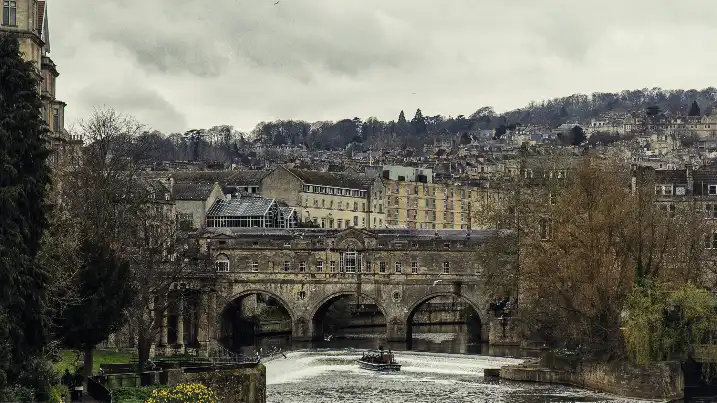
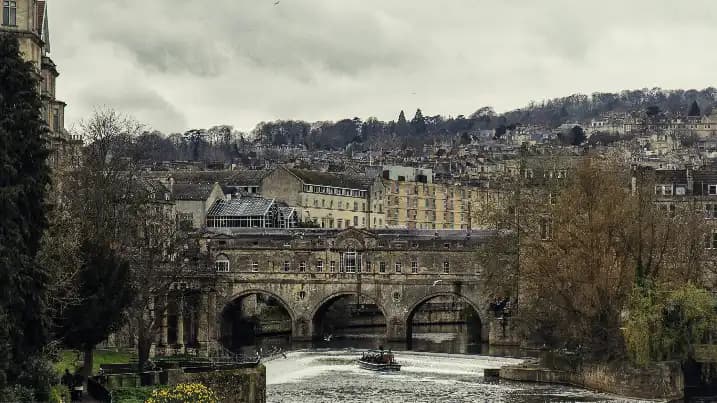
Bath's specific historical achievement is the overlap of two entirely different civilisations' most ambitious single projects on the same 1.5km of city centre. The Roman Baths complex (the sacred spring, the plunge pools, the hypocaust underfloor heating, the lead-lined Great Bath at 1.5m depth) was the largest Roman religious and bathing complex in northern Britain — the spring at its centre produces 1.17 million litres of 46°C water daily from a geological fault that has flowed continuously for 10,000 years. The Georgian city above it (built from 1727–1790 in a single phase of unified planning by architects John Wood the Elder and John Wood the Younger) is the most complete single-period urban design in Britain — the Circus (30 townhouses arranged in a perfect circle, begun 1754), the Royal Crescent (30 houses in a uniform facade curving for 150m, 1767–1774), and the Pump Room (the 1795 assembly room where Austen's characters took the waters) are all within a 10-minute walk of each other.
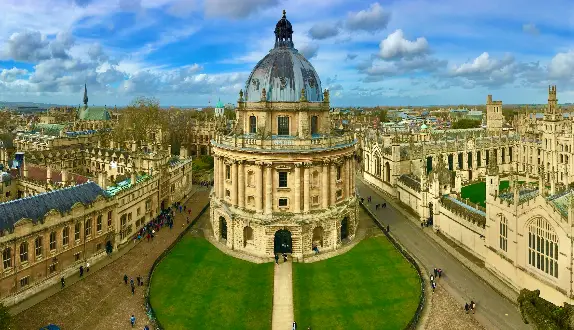
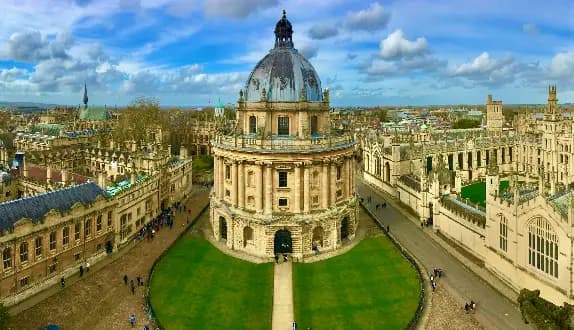
Oxford's 38 colleges are independent institutions governed separately — each with its own chapel, dining hall, library, and garden, and each on different opening hours and entry policies. The Radcliffe Camera (the 1748 circular library, the most photographed single Oxford building — visible from Brasenose Lane, Radcliffe Square, and the Bodleian's Divinity School courtyard in 3 entirely different compositions) is surrounded by 4 different colleges without belonging to any of them. The covered Oxford Market (1774, the oldest covered market in England in continuous use — the butchers, cheesemongers, bakers, and cafés unchanged in character since the 18th century) at Carfax gives Oxford's most specifically daily-life non-tourist single circuit — enter from the Market Street door and exit via the Golden Cross courtyard, where Shakespeare's company performed in 1604.
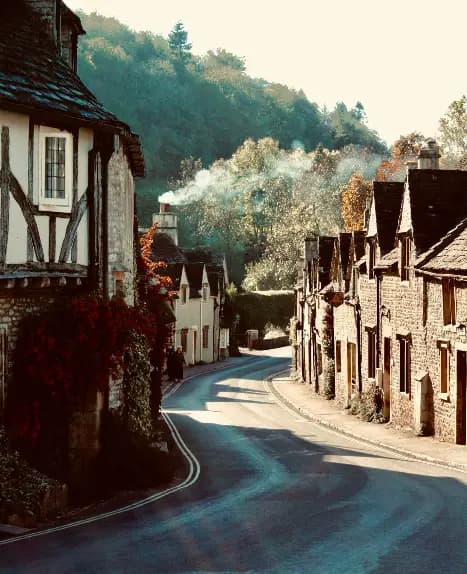
The Cotswolds' limestone is oolitic — formed on the seabed 170 million years ago from calcium carbonate granules around shell fragments, quarried locally in the same colour that gives every wall, roof, and building in the region its visual continuity. The specific villages most visitors skip: Minster Lovell (the ruined 15th-century manor on the River Windrush, accessible by a 10-minute walk from the village, the most photographic Cotswolds ruin), Bourton-on-the-Hill (the single street of perfect limestone cottages on a gradient, 4km from Moreton-in-Marsh, visited by 1% of Cotswolds tourists), and Chipping Campden (the most intact single Cotswolds wool-merchant town — the 14th-century church tower, the market hall, and the graveyard of the 17th-century wool barons whose wealth built the buildings). The Cotswolds Way (163km from Chipping Campden to Bath) is walkable in 8–10 days with luggage transfer services available — the most specifically Cotswolds single immersive experience for travellers with 10 days.
Best Time to Visit Great Britain
January · Good Winter — cold 1-8C south, colder/snowy Scotland. Short days but festive London, museums, Scottish Hogmanay hangover.
February · Good Winter — cold 1-8C, short days. Museums quietest. Chinese New Year Parade London (Chinatown).
March · Good Spring begins — 8-16C, occasional rain. Fresh green, daffodils, mild days before summer crowds and prices. Lovely good-value window.
April · Best Spring 8-16C — daffodils, blossom, mild days before summer crowds. Excellent value shoulder month. Easter events.
May · Best Spring 8-16C. Best for London, gardens, Cotswolds, city sightseeing. Chelsea Flower Show late May. Pre-peak pricing.
June · Best Summer begins 16-24C. Long days (light until 10pm). Wimbledon end month. Trooping the Colour London. Book ahead.
July · Best Summer 16-24C occasional 28-30C heatwaves. Peak crowds and prices. Wimbledon first week. Best for Scotland and countryside.
August · Best Peak summer 16-24C. Edinburgh Fringe festivals — city sells out months ahead. UK school holidays. Notting Hill Carnival Bank Holiday.
September · Best Autumn 8-16C. Crisp air, autumn colour, thinning crowds. Sweet spot as prices ease. London Design Festival.
October · Good Autumn 8-16C early cooling to 4-10C. Best for cities, Lake District, foliage drives. Excellent value shoulder month. Half-term crowds.
November · Good Autumn 4-10C. Daylight shortens quickly. Bonfire Night Nov 5. Christmas lights switching on late month.
December · Good Winter 1-8C south, cold Scotland. Magical Christmas markets, festive London, Scottish Hogmanay. Best for festive city breaks.
Great Britain trips,
ready to personalise.
 15D / 14N
Great Britain & Ireland Grand Tour Package
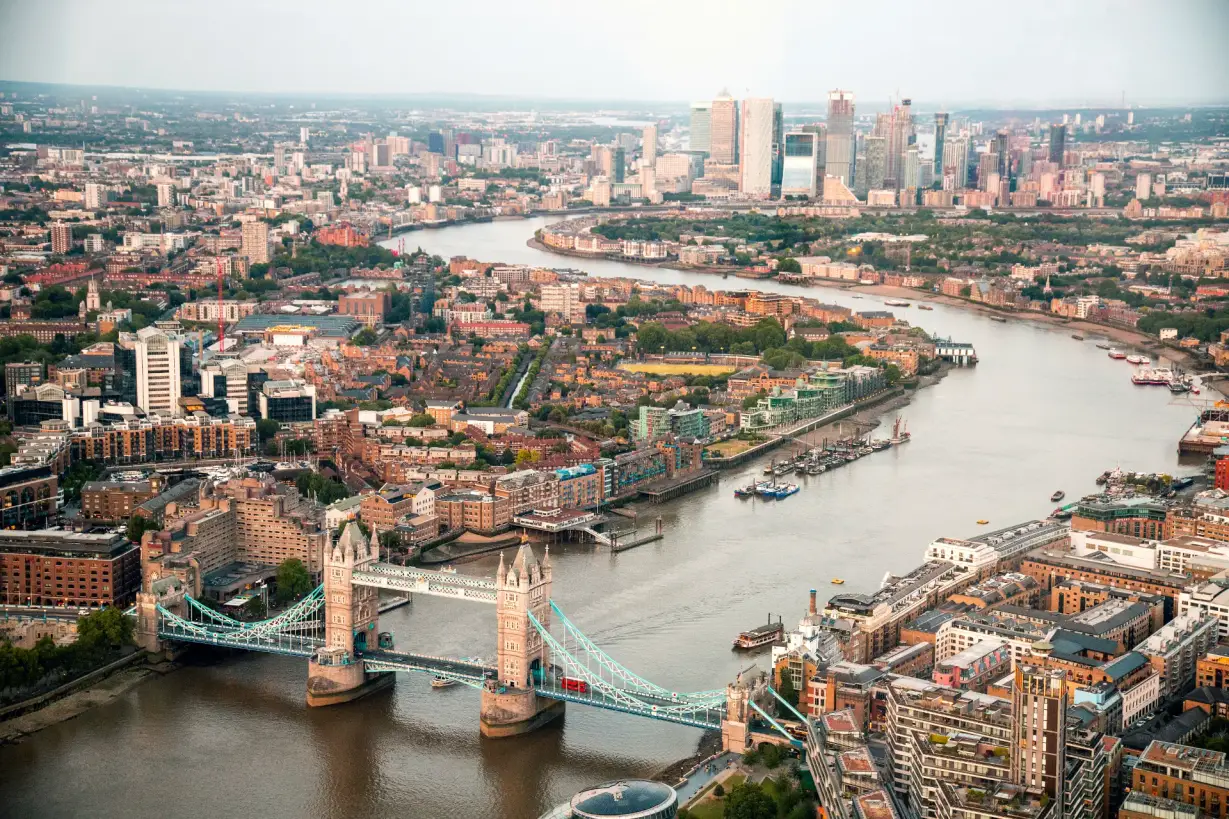
London, Bath, Liverpool, Edinburgh, Belfast, Dublin
Great Britain experiencesTop Things to Do in Explore Historic Great Britain
Ride the Jacobite Steam Train (Hogwarts Express), Scotland
The Jacobite steam train (ScotRail's heritage locomotive, operated by West Coast Railways) runs between Fort William and Mallaig (84 miles return, 2h each way) through the most dramatic Highland landscape in Britain. The Glenfinnan Viaduct crossing (the 21-arch concrete viaduct at 30m height, used in every Harry Potter film from Chamber of Secrets onwards as the Hogwarts Express crossing) is at 21 minutes into the westbound journey — position at the window on the right (south) side for the most complete viaduct view from the train. The train also passes Glenfinnan Monument, Loch Eilt (the lake used for Dumbledore's funeral), and arrives at Mallaig on the Knoydart peninsula.
Insider tip
Book at westcoastrailways.co.uk minimum 6 weeks ahead — the Jacobite sells out for the entire summer season by April. The 10:15am departure from Fort William gives the viaduct in morning light; the 2:10pm Mallaig return gives the journey in the opposite direction in afternoon light. The First Class observation car (limited seats, separate booking) gives open-sided windows and the clearest Glenfinnan Viaduct photography.
Whisky Distillery Trail, Speyside, Scotland
The Speyside whisky trail (the Malt Whisky Trail, official route, maltwhiskytrail.com) follows the River Spey between Forres and Tomintoul through 9 participating distilleries — Glenfiddich (the world's best-selling single malt, the most comprehensively curated single distillery museum), Balvenie (the last distillery in Scotland with its own working floor maltings and cooperage), The Glenlivet (the first legal Scotch distillery in 1824, the specific single distillery that ended 200 years of illicit Highland whisky), and Strathisla (the oldest continuously operating distillery in the Highlands, 1786). Each gives a 45–90-minute guided tour with tasting.
Insider tip
Glenfiddich distillery (Dufftown, glenfiddich.com, the 1.5h Explorers tour) at 10am gives the full production floor (the copper pot stills, the warehouse, the bottling hall) before the afternoon coach tours arrive. The Solera Room tasting (the 15-year Glenfiddich from the specific Solera vat that is never emptied below 50%) gives the most specifically irreplaceable single dram in the entire trail.
Walk the Cotswolds Way or Villages Circuit
The Cotswolds Way National Trail (165km, Chipping Campden to Bath, 8–10 days for the full route) or the village day-circuit by hire car (Moreton-in-Marsh → Chipping Campden → Stow-on-the-Wold → Bourton-on-the-Water → Bibury → Cirencester, 70km loop) gives the most specifically English single visual landscape — the honey oolitic limestone building material, the dry-stone wall field boundaries, and the River Windrush winding through the meadow give a 17th–18th century England preserved without modern intrusion. The Cotswolds are the most intact single Area of Outstanding Natural Beauty in England.
Insider tip
The Bibury–Burford combination by hire car (15 min between villages) at 7am gives both villages empty — Arlington Row in first light and Burford's High Street before the Oxford day-tripper traffic builds at 10am. Bourton-on-the-Water (the shallow River Windrush flowing through the village green, the medieval stone footbridges) at 8am gives the bridges without any other visitor — by 11am it is the most crowded Cotswolds village.
Edinburgh Festival — August Arts Explosion
The Edinburgh Festival Fringe (the world's largest arts festival by number of performances — theatre, comedy, dance, circus, and spoken word across 300 venues from stadium-sized to a dentist's waiting room) runs simultaneously with the Edinburgh International Festival (the curated classical programme), the Military Tattoo (the Royal Edinburgh Military Tattoo on the Castle Esplanade — the most specifically military-cultural single Scotland performance, the pipes and drums under the Castle floodlights, pre-book 12 months ahead at edintattoo.co.uk), and the Edinburgh International Book Festival. The Royal Mile in August gives the most concentrated single street performance in any European city.
Insider tip
The Fringe box office on the Royal Mile (fringebox.com, available daily from 9am in August) gives same-day discount tickets for shows with unsold seats — the best single Fringe budget strategy, giving shows at 40–60% below face value on the day of performance. The most reviewed single Fringe shows (the Sunday Times Critics' Choice list and the Guardian 5-star list) consistently appear at the Pleasance Courtyard and Assembly Rooms — the two most reliable single Fringe venue complexes.
Climb Snowdon by Mountain Railway or Trail
Snowdon (Yr Wyddfa in Welsh — the highest peak in England and Wales at 1,085m) is accessible by the Snowdon Mountain Railway (rack-and-pinion steam or diesel, 4.7 miles from Llanberis, 1h ascent, the world's highest railway in Britain, pre-book at snowdonrailway.co.uk) or by the Llanberis Path (the most accessible walking route, 9 miles return, 5h, the most-walked mountain route in Wales). The summit gives Anglesey, the Pembrokeshire coast, and on clear days, the Mourne Mountains in Ireland simultaneously.
Insider tip
The Pyg Track (the steeper, more scenic Snowdon ascent — 8km return from Pen-y-Pass, 4h, the mountain lake Glaslyn visible below the summit in the descent) combined with the Miners' Track descent gives the most complete single Snowdon circuit. Start at 7am from Pen-y-Pass for the summit before the Snowdon Mountain Railway delivers its first passengers at 9:30am — the summit is most specifically clear in the morning 2-hour window before valley cloud builds.
The NC500 — North Coast 500 Road Trip, Scotland
The North Coast 500 (the circular route from Inverness, north and west along the Scottish coast — officially named by the North Highland Initiative in 2015 as Scotland's answer to America's coastal road trips) gives Torridon (the 750-million-year-old Torridonian sandstone mountains, the most ancient exposed rock surface in Britain), Duncansby Head (the most northeasterly mainland point, the sea stacks visible from the cliffside walk), Durness (the westernmost point of mainland Scotland, the Smoo Cave sea cave), and Applecross (the Bealach na Bà mountain road — the most dramatic single pass in Scotland, 626m with 20% gradients, the summit giving Skye across the strait).
Insider tip
The NC500 minimum is 5 days, ideal is 7–10 days. Drive anti-clockwise (Inverness → Applecross → Durness → John O'Groats → back to Inverness) so you have the sea on your left and the mountain views facing your direction of travel. Applecross' Bealach na Bà at dawn (the road closes in severe ice — check trafficscotland.org before driving) gives the Cuillin Ridge of Skye from 626m across the Inner Sound at the most dramatic single NC500 viewpoint.
Punting on the Cam, Cambridge
The Cambridge punting circuit (the Backs — the 2km stretch of the River Cam behind the Colleges, where the Mathematical Bridge, the Bridge of Sighs, and the rear gardens of King's, Queen's, Trinity, and St John's Colleges are all visible from the water) gives the most academically exclusive single British river view. Chauffeur punts (operated by the colleges' own punt companies — Scudamore's at Mill Lane or Trinity Punt, both at scudamores.com) give the circuit with narration; self-hire gives the specific freedom to stop at each College bridge independently.
Insider tip
The Cambridge punting circuit at 7:30am (Scudamore's opens at 8am, the earliest rental window) gives the Backs entirely empty — the Bridge of Sighs (the covered bridge connecting two wings of St John's College, 1831) and the rear of King's College Chapel without any other punt on the water. By 10am the river is at capacity and punting becomes more competitive than serene.
Exploring Hadrian's Wall, Northumberland
Hadrian's Wall (73 miles, AD 122, the northern frontier of the Roman Empire — the most complete Roman military infrastructure visible above ground anywhere north of Italy) runs coast to coast from Wallsend (Newcastle) to Bowness-on-Solway (Cumbria). The most dramatic central section (the Sycamore Gap — the single tree in a dip of the wall made famous by the 1991 Kevin Costner film Robin Hood: Prince of Thieves, felled by vandals in 2023 — and the Housesteads Roman Fort, the most completely excavated fort on the entire wall) is accessible from the B6318 Military Road. The 84-mile Hadrian's Wall Path National Trail (coast-to-coast, 6–8 days) is the most historically specific single long-distance British walk.
Insider tip
Housesteads Roman Fort (housesteads.co.uk, the most visited single Hadrian's Wall site) at 9:30am opening gives the fort's commanding-officer's house, the Roman latrines (the most specifically humorous single Roman installation — a multi-seat communal toilet with a running water channel and shared sponge), and the Wall extending to both horizons without other visitors blocking the line of sight.
The Hogmanay and Highland Games Cultural Circuit, Scotland
Hogmanay (the Scottish New Year celebration, December 31 — the Edinburgh Hogmanay street party gives 75,000 ticket-holders on Princes Street under the Edinburgh Castle fireworks, the world's most spectacular single Hogmanay event — book tickets at edinburghshogmanay.com 3–4 months ahead) and the Highland Games (the summer circuit from Braemar (September, the Royal Highland Gathering — the Monarch attends annually, the most prestigious single Games event) to Dunoon, Oban, and Cowal) give the two most specifically Scottish cultural encounters available to any visitor.
Insider tip
The Braemar Gathering (first Saturday of September, braemargathering.org) at 9am gives the opening ceremony with the massed pipe bands before the Highland events begin — the stone put, the caber toss (a 19-foot pine log, the sole Highland Games event with no distance or height measurement — only accuracy of direction is judged), and the tug-of-war are the three most specifically Highland Games single athletic moments.
Visit Churchill's War Rooms and the Imperial War Museum, London
The Churchill War Rooms (the actual underground complex from which Churchill directed the Second World War — the Map Room (unchanged since 1945, the room lit by bulbs that burned continuously from 1940 to 2015), the Cabinet Room (where Churchill and his War Cabinet met in 115 recorded wartime sessions), and the Churchill Museum (the most comprehensively curated single Winston Churchill collection)) combined with the Imperial War Museum (the free museum covering all 20th-century conflicts including the two World Wars, the Partition of India, and India's specific WWI and WWII contributions — the Indian Army gave 2.5 million soldiers in WWII, the largest single volunteer army in history) gives the most specifically significant half-day for any Indian visitor to London.
Insider tip
The Churchill War Rooms (iwm.org.uk/visits/churchill-war-rooms, 3h minimum required) are consistently the most undervisited paid London attraction relative to their historical significance — the queue is rarely more than 15 minutes even in peak season. The IWM's First World War galleries (free, the Lives of the First World War database includes 8 million Indian servicemen records searchable by name) give the most specifically personal single museum encounter for Indian family historians.
Itineraries for Explore Historic Great Britain
See how each trip is paced, from arrival to departure. These are sample day-by-day plans; we tailor the dates and details.
3-Day Itinerary — London Essentials
- Day 1Westminster & the South BankBig Ben, Westminster Abbey, London Eye, Thames walk, West End show.
Advice
Get an Oyster/contactless card at the airport; book the evening show before you fly. - Day 2Royal & Historic LondonBuckingham Palace (Changing of the Guard), Tower of London & Crown Jewels, Tower Bridge.
Advice
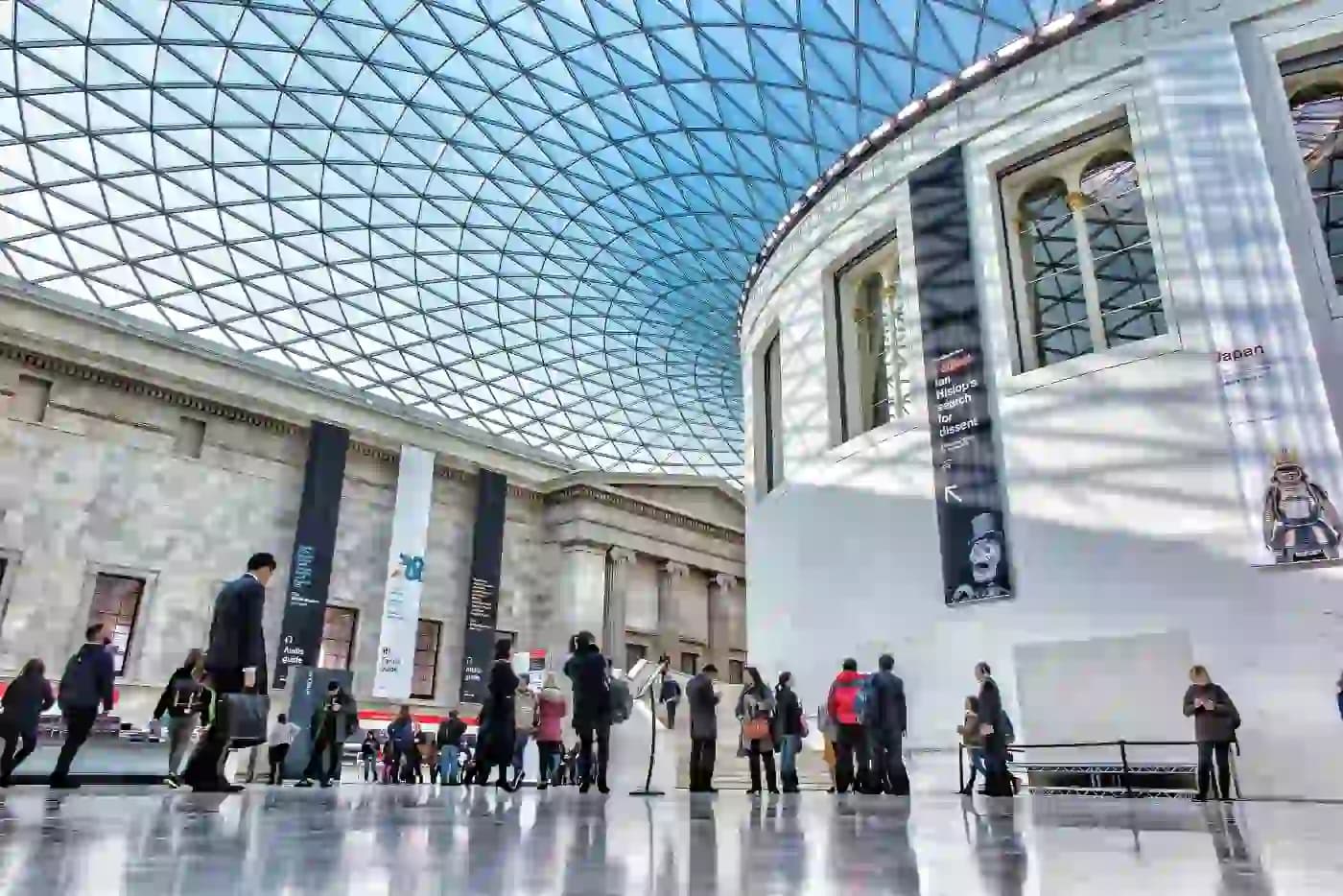
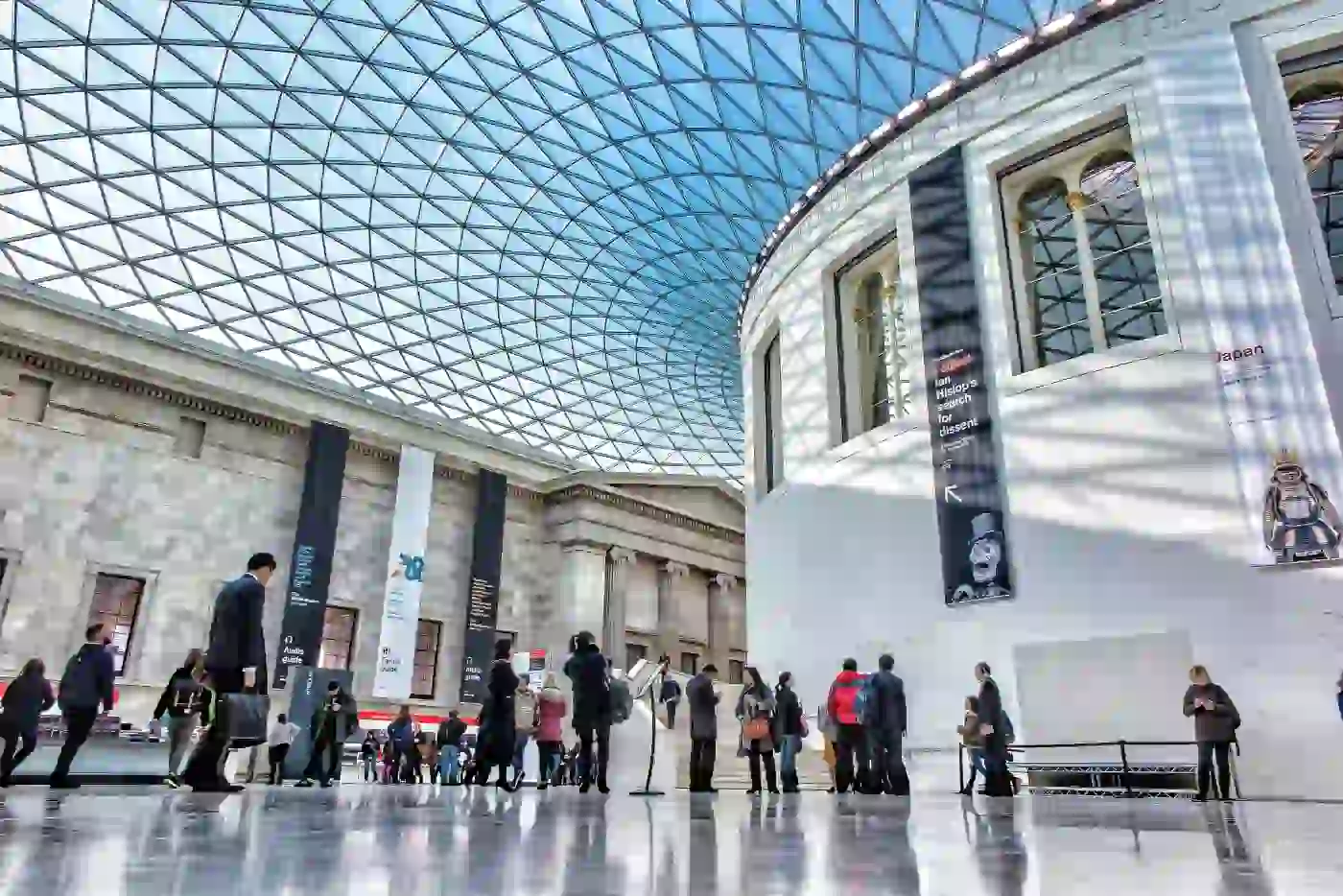
Check the Guard schedule; join the free Beefeater tour early at the Tower. - Day 3Museums & MarketsBritish Museum, Covent Garden, Oxford Street shopping, or a half-day Harry Potter Studio tour.
Advice
Museums are free; if doing the Potter tour, pre-book and dedicate the whole afternoon.
5-Day Itinerary — England Highlights
- Day 1LondonWestminster, London Eye, evening West End show.
Advice
Anchor the trip in central London for walkability. - Day 2LondonBuckingham Palace, Tower of London, British Museum.
Advice
Use the Tube; tap contactless for auto-capped fares. - Day 3Windsor & OxfordWindsor Castle, then Oxford's colleges and punting.
Advice
An easy westward day by train/car; term time is livelier. - Day 4Bath & StonehengeRoman Baths, Royal Crescent, Stonehenge en route.
Advice
A guided loop tour covers both in a day without a car. - Day 5The CotswoldsBibury, Bourton-on-the-Water, country-pub lunch.
Advice
Self-drive or small-group tour; the villages have no rail link.
7-Day Itinerary — England & Scotland
- Day 1LondonArrive, Westminster, London Eye, adjust to time zone.
Advice
Only 4.5-5.5 hrs ahead of India — jet lag is mild. - Day 2LondonBuckingham Palace, Tower of London, museums, West End.
Advice
Pre-book show and Tower tickets. - Day 3London → YorkMorning train to York; York Minster, city walls, the Shambles.
Advice
Book advance rail tickets online for the best fares. - Day 4York → EdinburghTrain to Edinburgh; Royal Mile, Old Town, Calton Hill sunset.
Advice
LNER East Coast line — sit on the sea (right) side northbound. - Day 5EdinburghEdinburgh Castle, Holyrood, Arthur's Seat, whisky tasting.
Advice
Buy castle tickets online; arrive at opening. - Day 6Highlands Day/OvernightLoch Ness cruise, Glencoe, Highland scenery.
Advice
Take a 2-day Highlands tour or self-drive rather than a rushed day trip. - Day 7EdinburghLast sights, shopping on Princes Street, fly home.
Advice
Fly out of Edinburgh (EDI) to avoid backtracking to London.
Where to Stay in Explore Historic Great Britain
Westminster + Covent Garden (Central London)
Kensington + South Kensington (Museum-adjacent)
King's Cross (Transport Hub — Eurostar + Northbound)
Southall + Wembley (Indian food + groceries)
Old Town Edinburgh (Castle + Royal Mile walkable)
Windermere (Lakeside — Walking + Cruises)
What a day costs
in Great Britain.
Budget
£70-110 (₹7,500-11,500)Money-saving travel- Stay
- Premier Inn/Travelodge or hostels. Advance rail tickets, coaches (Megabus/National Express), London Tube. Booking trains early is the single biggest saver; museums are free.
- Food
- Self-catered & pub meals, free museums. Meal deals from supermarkets (Tesco/Sainsbury's/Boots) are the great British budget hack.
Mid-range
£110-200 (₹11,500-21,000)Comfortable everyday travel- Stay
- 3-star hotels. Standard-class rail, contactless Tube/bus, occasional taxi. Best value-for-comfort balance for most travellers.
- Food
- Casual dining out, paid attractions. Gastropubs + Indian restaurants (Dishoom, Southall). Mid-range mix works well.
PREMIUM
£200-350 (₹21,000-37,000)per person, per day- Stay
- 4-star hotels. First-class rail, private transfers, black cabs. Pre-book scenic trains and shows; central hotels save commuting.
- Food
- Sit-down dining, guided day tours. Afternoon tea at grand hotels + Michelin-adjacent restaurants.
Luxury
£350+ (₹37,000+)Premium comfort- Stay
- Iconic 5-star stays, Highland lodges. Private guide/chauffeur, first-class rail, domestic flights. Peak-season and festival (Aug Edinburgh) rates rise sharply.
- Food
- Fine dining. The Ritz + Fortnum & Mason afternoon tea + Michelin-starred UK restaurants.
How to Get to Explore Historic Great Britain
How to reach Great Britain and how to get around once you are there: the routes, how long they take and what they cost.
Plan your route ↗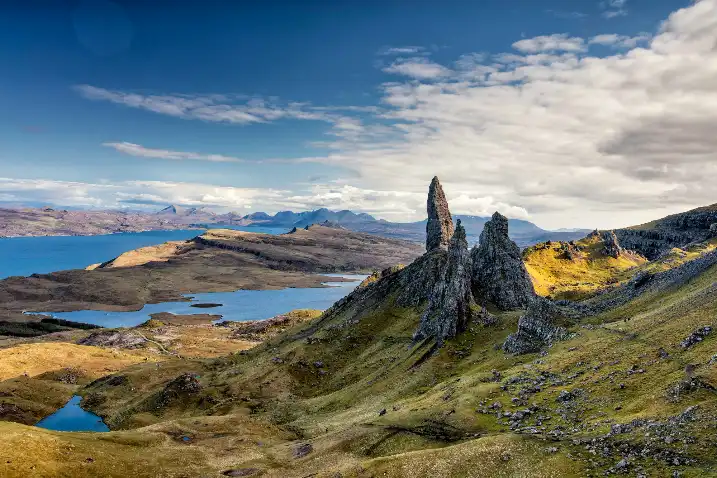 10 ways to travel
By Air Direct — Air India / British Airways / Virgin Atlantic
By Air One-Stop via Gulf Hubs — Emirates / Qatar / Etihad
By Air One-Stop via European Hubs — Lufthansa / KLM / Air France
By Air One-Stop via Istanbul — Turkish Airlines
By Eurostar / Ferry / Cruise — Overland from Mainland Europe
By Train — National Rail (LNER / Avanti West Coast / GWR / ScotRail)
By Underground & Bus — London Tube + Iconic Red Buses
By Taxi & Ride App — Black Cabs + Uber / Bolt
By Rental Car — Self-Drive Left-Hand Side (like India)
By Domestic Flight & Ferry — Internal Air + CalMac Ferries
Good to know
before you go.
What is worth it,
and what to avoid.
- Advance-booked train ticketsBooking rail online days ahead can be a fraction of the walk-up fare; the single biggest money-saver in Britain.
- The Harry Potter Studio TourFor fans it's genuinely unmissable and lives up to the hype; just pre-book, as it sells out.
- Going beyond London to ScotlandThe Highlands and Edinburgh are the trip's most memorable scenery; don't let them fall off the itinerary.
- A London contactless/Oyster setupTap-and-go with automatic daily fare caps saves money and queuing versus paper tickets.
- Staying central in LondonPaying more for a Westminster or King's Cross base saves hours of commuting and late-night cab fares.
- One proper afternoon teaA quintessentially British treat worth doing once; a tearoom version delivers the ritual affordably.
- Travel insurance with medical coverNHS care is chargeable for visitors; insurance is essential, not optional.
- A scenic rail journeyRoutes like the West Highland Line are attractions in themselves and cost no more than a normal ticket.
- Confusing the ETA with a visaIndians are NOT eligible for the UK ETA and still need a full Standard Visitor Visa; applying for an ETA wastes money and time.
- Only seeing LondonBritain's soul is in its countryside and Scotland; a London-only trip misses the best of it.
- Not booking trains in advanceTurn-up-and-go rail fares are punishingly expensive; advance online tickets cost far less.
- Under-packing for rainIt can rain in any season; no umbrella and no waterproof layer means a soggy trip.
- Trying to drive in central LondonThe congestion charge, ULEZ fees, and scarce parking make it a costly mistake; use the Tube instead.
- Over-tippingA discretionary 10-12.5% service charge is often already on restaurant bills; check before adding more, and tipping isn't expected in pubs.
- Applying for the visa too lateSummer VFS slots fill fast; start the application 6-12 weeks (ideally up to 3 months) before travel.
- Cramming Scotland into a day tripEdinburgh-to-Highlands day tours spend most of the time on the coach; give Scotland at least two days.
Explore British Castles!
London City & Scottish Highlands Custom Rail Packages
Get UK Itinerary ↗Common questions
about Great Britain.
Visas, costs, safety and the practical questions travellers ask us most.
Do Indian citizens need a visa or an ETA to visit the UK?
How do I apply for the UK visa, and how long does it take?
When is the best time to visit Great Britain?
Should I just see London, or go further?
Is vegetarian and Indian food easy to find in Britain?
Do I need a car, and is driving difficult for Indians?
How many days do I need for a Britain trip?
What should I pack for the British weather?


Have a Great Britain trip
in mind?
Choose a package, or tell us the dates, hotels and experiences you want. We check the details and send you a clear quote. Pay in BTC, ETH, USDT, USDC and 90+ other coins, with other methods confirmed on request.