
Spain
Barcelona Sagrada Familia, Madrid Royal Palaces & Flamenco Shows
- Culture
- City
- Honeymoon
- Solo
- Adventure
- Luxury
- Family
Spain, your way.
With time for what matters.
Spain is the second-largest country in the European Union — the Iberian Peninsula's dominant nation, organised into 17 autonomous communities each with its own language, cuisine, and cultural identity: Catalonia (Barcelona, Modernisme), Madrid (the capital, the Prado), Andalusia (Seville, Granada, Córdoba, flamenco, Moorish palaces), the Basque Country (San Sebastián, pintxos, Guggenheim Bilbao), Galicia, and Valencia (Las Fallas, paella).
Is Spain Worth Visiting in 2026?
Why Visit Spain
Spain has the second-most UNESCO World Heritage Sites in Europe. Gaudí's Sagrada Família in Barcelona has been under construction since 1882 and is still unfinished — no other modern building generates the same sustained global fascination. Madrid's Prado contains Velázquez, Goya, and El Greco within a single building; the Thyssen next door adds Rembrandt and Monet. The Alhambra in Granada — Nasrid Islamic palace complex above a Spanish Renaissance city — is booked months in advance. San Sebastián has more Michelin stars per capita than any city on Earth. Camino de Santiago has been a pilgrimage route for 1,200 years. Schengen visa required. Direct flights from Mumbai and Delhi. The Camino de Santiago — a 1,200-year-old pilgrimage network — has been walked by over 350,000 people per year recently, with the last 100km alone qualifying for the Compostela certificate in Santiago de Compostela. Best time: April–June and September–October.
Key Feature Of Spain
Best places to visit in Spain
 01 / Place
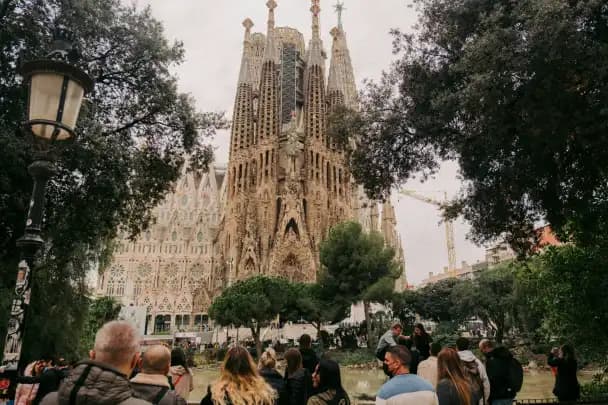
Sagrada Família — The Cathedral That Is Still Becoming Itself
Gaudí began the Sagrada Família in 1883 (taking over from Francisco de Paula del Villar) and worked on it until his death in 1926, when he was struck by a tram at the corner of Gran Via and Carrer de Bailèn. At the time of his death, the building was approximately 25% complete. The construction has continued under successive architects since then, using Gaudí's models and plans (partially destroyed by anarchists in 1936, partially recovered, and partially reconstructed). The building is expected to be fully complete within this decade — making every current visit a visit to a building in the act of becoming what it was always meant to be. The interior in the February 9am light: the stained-glass windows on the Nativity facade (east side) catch the morning sun first and cast blue, green, and amber light across the stone-forest columns and the floor. The columns branch at approximately 20m height, the branching continuing into smaller structural members until the vault is a continuous canopy of stone. The Sagrada Família produces a quality of light not available anywhere else in European architecture — Gothic structural principles, Art Nouveau formal language, Catalan Modernisme colour theory, and Gaudí's specific geometric genius. 02 / Place
Alhambra — The Last Light of Moorish Spain
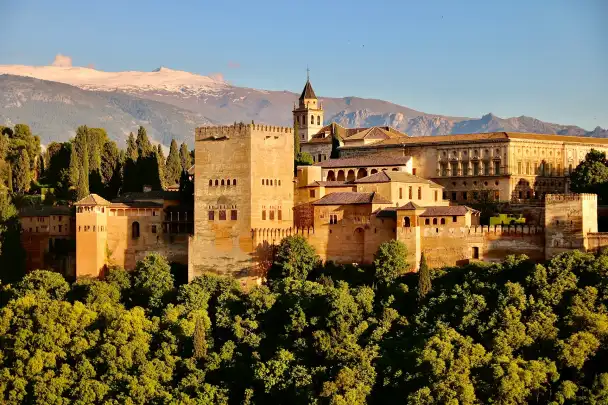
The Alhambra sits on the Sabika hill above Granada — a walled city of palaces, gardens, baths, and towers built by the Nasrid dynasty between 1238 and 1492 (the year the last Nasrid sultan Boabdil surrendered Granada to the Catholic Monarchs Ferdinand and Isabella, ending 781 years of Moorish rule in Iberia). The Nasrid Palaces are the specific reason the Alhambra is the most visited monument in Spain — three successive palace complexes (the Mexuar, the Comares Palace, the Palace of the Lions) connected by corridors and courtyards, each surface covered in carved stucco calligraphy and geometric pattern and muqarnas vaulting. The Court of the Lions (1370s — central fountain supported by 12 marble lions, 124 slender marble columns surrounding it, carved arches above each portal): the specific image of the Alhambra. The Hall of the Two Sisters ceiling (5,416-cell muqarnas stalactite dome): the image that is impossible to photograph accurately because the camera cannot capture both whole and detail simultaneously. In February at 8:30am with 30 other visitors, both whole and detail are available. Book at alhambra-patronato.es minimum 2-3 months ahead — even in February.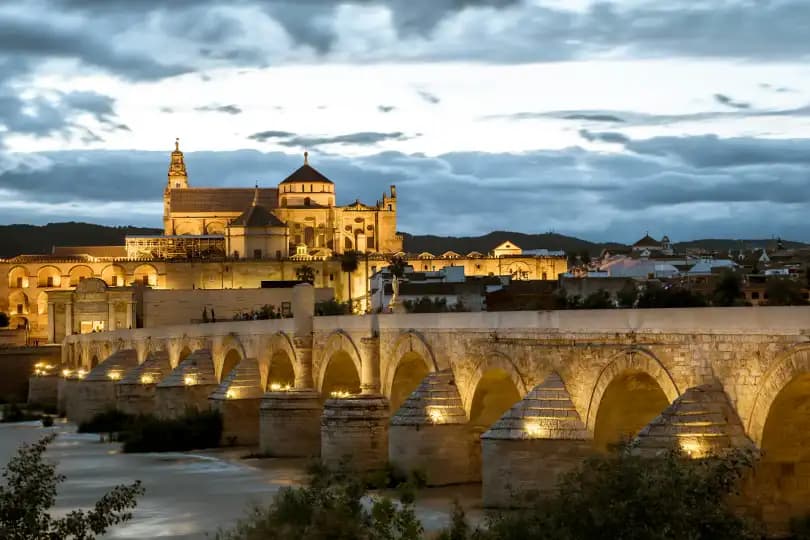 03 / Place
Córdoba Mezquita-Cathedral — The Building That Argues With Itself
Walking into the Mezquita-Cathedral of Córdoba through the Puerta de las Palmas is the most architecturally disorienting experience in Spain — the forest of 856 columns (originally 1,013) in double arches of alternating red brick and white stone, stretching in every direction to the edges of visibility, and then — directly in the centre of this forest — a Gothic cathedral nave rising from the columns, interrupting the geometry with a completely different architectural vocabulary. The cathedral was inserted between 1523 and 1599 by order of Charles I, who had initially approved the insertion and then, visiting the completed work, is reported to have said: "You have destroyed something unique to build something ordinary. Had I known, you would not have touched it." The Mezquita in February at 10am has 150 visitors in a prayer hall covering 22,400 sq m. The specific February quality of the Córdoba winter light enters through the orange tree courtyard (Patio de los Naranjos, 98 orange trees in a grid, the oldest parts of the courtyard from the 8th century, orange blossom smell in February beginning) and then through the forest of columns in a diffused, filtered quality the high summer sun cannot produce. 04 / Place
Seville — The City That Flamenco Comes From
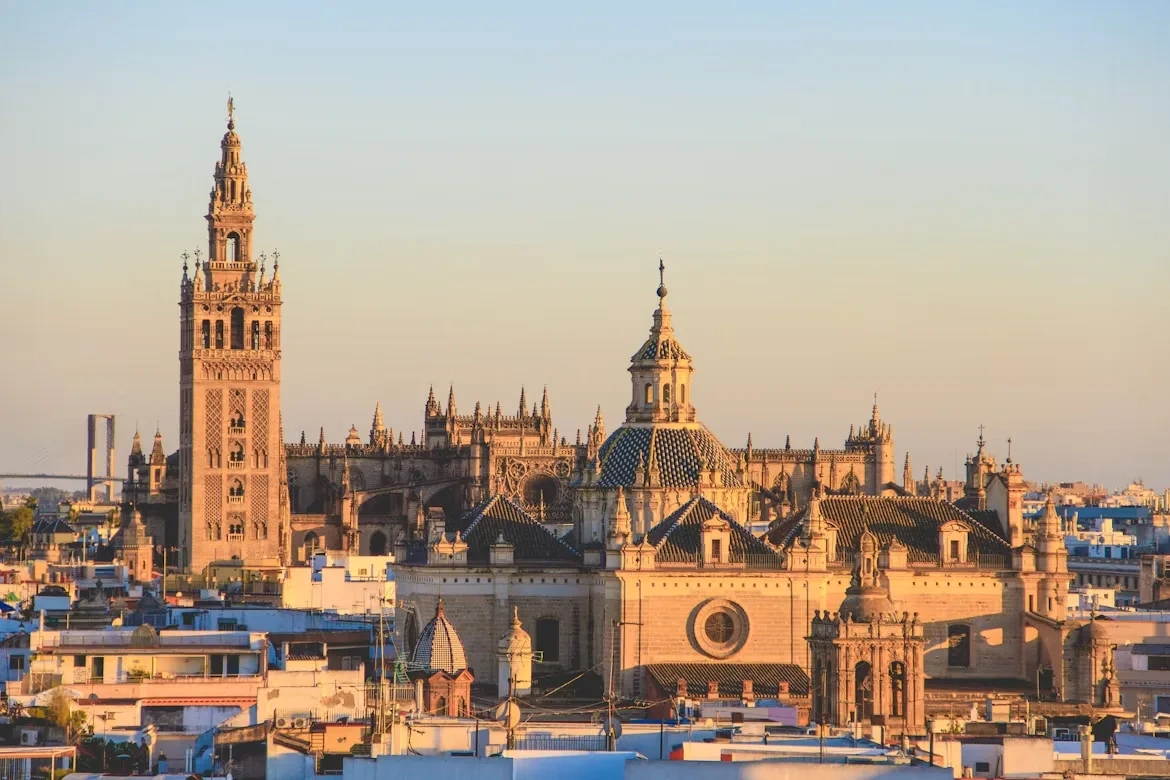
Seville is the capital of Andalusia and the most specifically beautiful city in Spain — the Barrio Santa Cruz (the former Jewish quarter, the network of whitewashed lanes and orange-tree patios and azulejo-tiled doorways below the Cathedral, the specific smell of azahar — orange blossom — beginning in February), the Gothic Cathedral (the largest Gothic church in the world by volume, the interior darkness of the nave at 93m width, the tomb of Christopher Columbus carried by four royal heraldic figures), the Giralda tower (the 12th-century Almohad minaret converted to a bell tower by the Christians — 35 sloped ramps rather than stairs, built so the muezzin could ride a horse to the top for the call to prayer), and the Real Alcázar (the royal palace that is still in active use as the Spanish royal family's official Seville residence — the Mudejar palace of Pedro I, the gardens, and the Hall of the Ambassadors). February Seville: the almond trees in the city parks beginning to bloom (Parque de María Luisa has the finest concentration), orange trees of Santa Cruz in blossom, and brotherhood rehearsals in churches of Santa Cruz and Triana neighbourhood preparing for April Semana Santa processions.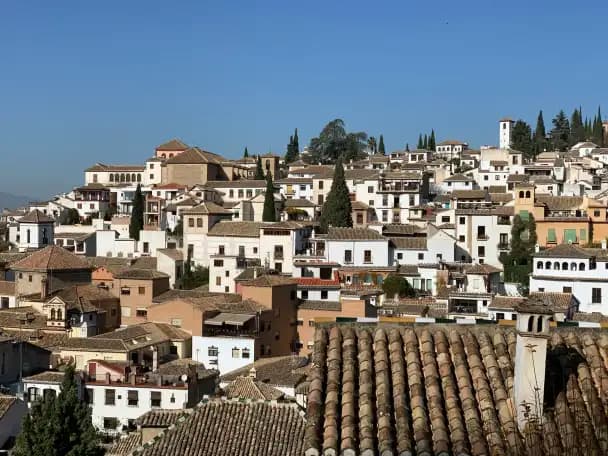 05 / Place
Granada Albaicín — The Whitewashed Quarter at Dawn
The Albaicín (or Albayzín) is the Moorish quarter of Granada on the hill opposite the Alhambra — a UNESCO World Heritage neighbourhood of whitewashed houses (carmenes — the specific Granada house form, with a walled garden and a tower) built on the street plan of the medieval Islamic city, above which the Mirador de San Nicolás gives the most photographed view of the Alhambra: the Nasrid Palaces and the Sierra Nevada mountains behind them, from across the Darro River valley. February 7am at the Mirador de San Nicolás: 8 people. February 10am: 200. February summer afternoon: 1,000. The Albaicín at dawn in February — the winding lanes still dark, the street cats of Granada (famous for their population and their specific relationship to the city's tourist economy) moving between doorways, the first light appearing on the Alhambra walls across the valley. The Sacromonte (the cave quarter above the Albaicín, where the Romani community of Granada has lived in cave houses since the 15th century) at night for the zambra — the specific Sacromonte flamenco form, performed in the cave itself, audience 15 people maximum.Gaudí began the Sagrada Família in 1883 (taking over from Francisco de Paula del Villar) and worked on it until his death in 1926, when he was struck by a tram at the corner of Gran Via and Carrer de Bailèn. At the time of his death, the building was approximately 25% complete. The construction has continued under successive architects since then, using Gaudí's models and plans (partially destroyed by anarchists in 1936, partially recovered, and partially reconstructed). The building is expected to be fully complete within this decade — making every current visit a visit to a building in the act of becoming what it was always meant to be. The interior in the February 9am light: the stained-glass windows on the Nativity facade (east side) catch the morning sun first and cast blue, green, and amber light across the stone-forest columns and the floor. The columns branch at approximately 20m height, the branching continuing into smaller structural members until the vault is a continuous canopy of stone. The Sagrada Família produces a quality of light not available anywhere else in European architecture — Gothic structural principles, Art Nouveau formal language, Catalan Modernisme colour theory, and Gaudí's specific geometric genius.
Best Time to Visit Spain
January · Good Quiet. Post-New Year. Lowest prices. Some attractions reduced hours.
February · Best Narender's Visit. Cádiz Carnival. Almond blossoms Andalusia. Off-peak everywhere. 25-35% cheaper.
March · Good Spring beginning. Fallas Valencia (March 15-19) — most spectacular pyrotechnic festival in Europe. Pre-Semana Santa.
April · Best Top Pick. Semana Santa (Holy Week) — Seville most extraordinary. Feria de Abril (2 weeks after Easter).
May · Best Excellent. Post-Semana Santa. Warm. Good value. All festivals ending.
June · Good Good. Warming. Pre-summer. Good value.
July · Avoid Peak. Maximum heat (42°C Seville). Maximum crowds. La Tomatina prep.
August · Avoid Peak. La Tomatina (last Wed August, Buñol). San Fermín Pamplona July 6-14. Busiest month.
September · Best Top Pick. Post-summer. 28-32°C. All sites. Rioja harvest. Best Barcelona month.
October · Best Excellent. Cooling. Quieter. Good value. La Vendimia (wine harvest).
November · Good Good. Quiet. Lower prices. All major sites open.
December · Good Christmas. Nativity scenes (Belenes). Quieter than summer. Christmas markets.
Spain experiencesBest 10 Things to Do in Spain
Sagrada Família Interior — 9am Morning Light Ticket
The Sagrada Família's interior — the nave columns branching into a stone forest canopy, the stained glass windows (west side warm yellow-orange in morning, east side cool blue-green in afternoon) — at 9 am opening with the first entry ticket gives 20 minutes of relative quiet before the 10am visitor surge. The 2024 nave extension section gives the most complete single interior view.
Insider tip
The morning west-facing windows (Gaudí's warm-spectrum glass, designed to evoke autumn and harvest) are most luminous between 9–10am when the sun is low in the east and backlights the yellow-orange glass from behind — the same glass appears dull at midday when overhead light removes the directional colour.
Alhambra Nasrid Palaces — 8:30 am First Entry
The Alhambra (Granada) — the Nasrid Palace complex (14th century, the most intricate Islamic palace interiors in Spain), the Generalife gardens, and the Alcazaba fortress — is the most visited single heritage site in Spain. The first entry ticket (8 am Tuesday–Saturday) gives the Patio of the Lions and the Hall of Two Sisters in the most specific morning light. Book at alhambra-patronato.es 90 days ahead.
Insider tip
The Alhambra timed entry system releases tickets at 8am 90 days in advance — they typically sell out within 2–3 hours. Check for cancellations at 24–48 hours before your preferred date; the cancellation release at 10am on the day before often frees individual time slots.
Mezquita-Cathedral Córdoba — Early Morning Free Entry
The Córdoba Mezquita — the 8th-century Great Mosque with 856 columns of jasper, onyx, marble, and granite in a forest-of-columns interior, built over a Visigothic church, with a 16th-century Renaissance cathedral inserted into the centre — is the single most architecturally layered building in Spain. Free entry for daily mass (8:30–9:30am) Monday–Saturday.
Insider tip
The free daily mass entry window (8:30–9:30am) gives the Mezquita's forest of columns without the ticket queue and with morning light entering from the orange courtyard on the north side. The same visit costs €11 from 10am.
Flamenco Tablao — Seville or Granada, 9pm
The most authentic flamenco — compás (rhythm), duende (emotional depth), cante jondo (deep song), and zapateado (percussive footwork) — is performed in the historic tableaux of Seville's Triana district and Granada's Sacromonte cave houses. The Tablao El Arenal (Seville, tourist-focused but technically excellent) and the Cueva de la Rocío (Sacromonte, more locally frequented) give the full performance format.
Insider tip
The Sacromonte cave houses (Cueva de Zambra, Cueva María la Canastera) in Granada stage flamenco in authentic cave spaces in the Gypsy district — more specifically located than the Seville tableaux, less polish but more rawness. The 9:30 pm show avoids the 8pm tourist rush.
Prado Museum — Las Meninas Room 12, Wednesday Morning
The Museo del Prado (Madrid) — Velázquez's Las Meninas, Goya's The Third of May 1808, El Greco's The Disrobing of Christ, Hieronymus Bosch's The Garden of Earthly Delights — gives free entry Monday–Saturday 6–8pm and Sunday 5–7pm. The same collection costs €15 during standard hours.
Insider tip
The Goya Black Paintings room (room 067, Annex building) has the most disturbing and most historically specific canvases in the Prado — the 14 paintings transferred from Goya's own house walls are displayed at the original scale and give the painter's late-period mental world most directly.
Seville Alcázar + Barrio Santa Cruz — 9:30am Entry
The Real Alcázar (the living royal palace of Seville, the most complex Islamic-Christian architectural synthesis in Spain; entry is free for children under 16) opens at 9:30 am. The Ambassador's Hall (the Mudejar throne room with the gilded dome — the specific Alcázar image) has 30 visitors before 10 am. By 11 am: 300.
Insider tip
The Alcázar gardens (included in the entry) — the orange trees bearing fruit, the specific February scent of azahar beginning, and the maze garden in the southeastern corner — the only formal labyrinth in the Seville Alcázar complex.
Cádiz Carnival — Largest Carnival in the World
The Cádiz Carnival (dates follow Shrove Tuesday — check cadizturismo.com for 2026 exact dates, typically late February). The competition performances at the Gran Teatro Falla are ticketed, but the street carnival (the entire old city in costume for 10 days) is free to attend. The specific February Cádiz Carnival experience: the Saturday night (the main street carnival night, the entire old city pedestrianised, the chirigota groups performing their competition pieces on street corners for passers-by).
Insider tip
Cádiz is 2 hours from Seville by RENFE train. A day trip from Seville for Saturday carnival night is the most efficient approach — stay in Seville (where accommodation during Carnival is more available and 30% cheaper than Cádiz) and take the train for Saturday evening carnival.
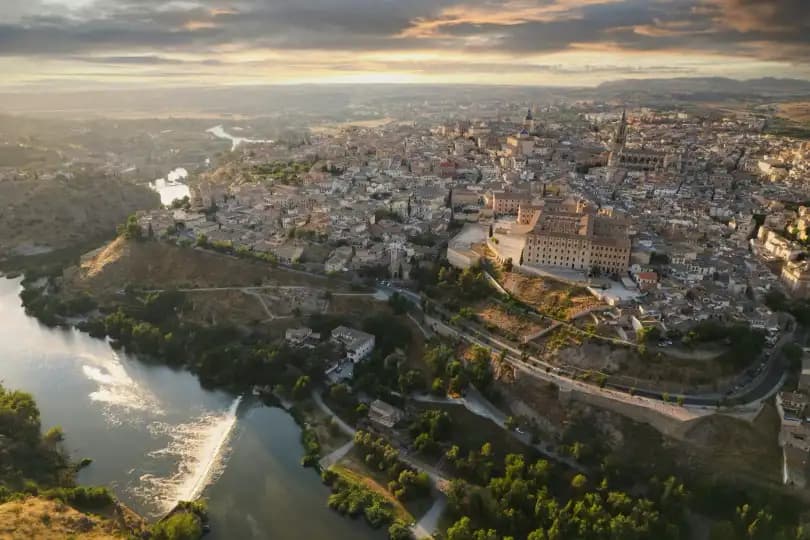
Toledo Day Trip from Madrid — ALSA Bus 7am
Insider tip
El Greco lived and painted in Toledo from 1577 to 1614. The Greco Museum (Museo del Greco, Calle Samuel Levi — free entry, the house and gardens where he is believed to have lived, the most concentrated El Greco collection outside the Prado) is the most undervisited Toledo stop.
Spanish Food Circuit — The Three Essential Meals
Three specific Spanish food experiences:
Tapas in Madrid (the Mercado de San Miguel — covered market at Plaza Mayor, 33 bars selling tapas and pintxos, best introduction to Spanish bar food in a single building.Pa amb tomàquet in Barcelona (a Catalan dish of bread rubbed with ripe tomato and drizzled with olive oil — the base of all Catalan food, available at any Barcelona café for €1.50, the most underrated food moment in Spain).
Jamón Ibérico (acorn-fed Iberian black pig cured ham — finest jamón comes from the dehesa oak forests of Extremadura and Huelva.
Insider tip
The Mercado (covered market) circuit gives the most efficient Spanish food introduction: Mercado de San Miguel (Madrid), La Boqueria (Barcelona — avoid the tourist stalls at the front, go to the back stalls where local prices apply), Mercado de Triana (Seville, across the Guadalquivir bridge — no tourists, freshest produce and most honest prices in Seville).
Mirador de San Nicolás — Granada 7am
Walk from the Darro River (the Paseo de los Tristes, the most beautiful street in Granada) up through the Albaicín lanes (15 minutes, steep, paved with Moorish-era stones) to the Mirador de San Nicolás viewpoint (the Ermita de San Nicolás church, the terrace in front). At 7 a.m. in February: 8 people, the Alhambra lit from below in the pre-dawn, the Sierra Nevada behind it. By 10 am: 200. The February Alhambra view from the Mirador — the palace complex red-gold in the morning light, the snow on the Sierra Nevada visible behind — is the most specifically Granada visual moment available.
Insider tip
The Mirador del Rey Chico (further along the Albaicín hill from San Nicolás, less signposted, and requires a 5-minute additional walk) offers the closest possible Alhambra view from the Albaicín — the palace at eye level, with the distance reduced to 300m. Much less visited than San Nicolás, even in February.
Sample Itineraries for Spain 8/12/16 Days
See how each trip is paced, from arrival to departure. These are sample day-by-day plans; we tailor the dates and details.
Spain Classic — 8 Days (Barcelona + Madrid + Andalusia Express).
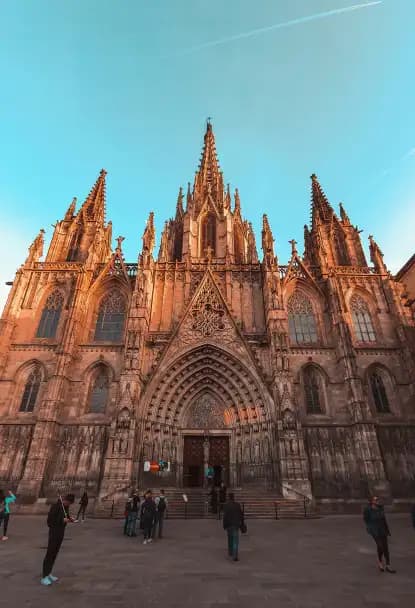
- Day 1Arrive BarcelonaGothic Quarter 8am walk · Boqueria 10am · Sagrada Família exterior evening.
Advice
Gothic Quarter at 8am before the tourist wave. Pre-book Sagrada Família before any other Spain booking. - Day 2BarcelonaSagrada Família 9am (pre-booked) · Casa Milà rooftop · Barceloneta beach.
Advice
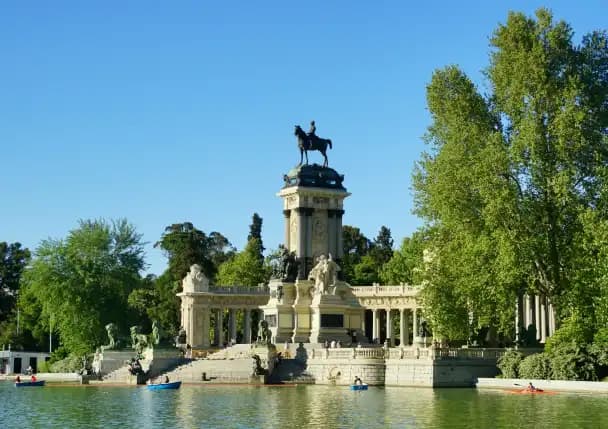
Pre-book Sagrada Família 9am at sagradafamilia.org minimum 2 weeks ahead. - Day 3Barcelona → Madrid (AVE, 2.5 hrs)9am AVE · Prado Museum afternoon · Retiro Park evening.
Advice
Free Prado entry 6-8pm (Mon-Sat). AVE pre-book at renfe.com 4-6 weeks ahead for €25-35 vs last-minute €85+. - Day 4MadridToledo day trip (ALSA 7am, return 7pm) · Puerta del Sol evening.
Advice
Toledo before day-trip crowds: 7am bus from Estación Sur. - Day 5Madrid → Córdoba (AVE, 1.5 hrs)Mezquita free entry 8:35am · Judería walk · ALSA → Seville afternoon.
Advice
Mezquita free window 8:30-9:30am — most valuable free hour in Spain. - Day 6SevilleAlcázar 9:30am · Cathedral + Giralda · Flamenco tablao 9pm.
Advice
Casa de la Memoria flamenco: book 3 days ahead. - Day 7Seville → Granada (bus, 3 hrs)Alhambra (pre-booked) afternoon · Albaicín sunset · Mirador San Nicolás.
Advice
Pre-book Alhambra Nasrid Palaces 2-3 months ahead — even February. - Day 8Granada → Madrid → DepartAlbaicín 7am · Flight Madrid (or Málaga, 1.5 hrs).
Advice
Fly Málaga if cheaper — closer to Andalusia.
Spain Popular — 12 Days
- Day 1Arrive BarcelonaGothic Quarter 8am · Picasso Museum · Barceloneta evening.
Advice
Day 8 Cádiz Carnival (if it falls in your February window — check cadizturismo.com for 2026 exact dates) is the specific addition that makes the February Spain circuit irreplaceable. If Carnival dates don't align with your travel window, replace the Cádiz day with a Ronda day trip from Seville (the mountaintop city above a 120m-deep gorge, 2 hours by ALSA, the Puente Nuevo bridge spanning the gorge). - Day 2BarcelonaSagrada Família 9am · Palau de la Música Catalana · Casa Batlló exterior.
- Day 3BarcelonaParc Güell · Casa Milà rooftop · El Born neighbourhood.
- Day 4AVE → Madrid9am AVE · Prado Museum afternoon (free 6-8pm) · Taberna La Bola dinner.
- Day 5MadridToledo day trip 7am · Mercado San Miguel dinner.
- Day 6AVE → CórdobaMezquita 8:35am free · Judería · ALSA bus Seville afternoon.
- Day 7SevilleAlcázar 9:30am · Cathedral + Giralda · Santa Cruz afternoon.
- Day 8Cádiz day trip (Carnival if dates align)ALSA 9am · Cádiz old city + Carnival street · Return 11pm.
- Day 9Seville → Granada (bus, 3 hrs)Arrive afternoon · Albaicín walk · Mirador San Nicolás sunset.
- Day 10GranadaAlhambra 8:30am (pre-booked) · Generalife + Alcazaba · Sacromonte evening.
- Day 11GranadaMirador 7am · Albaicín morning · Capilla Real (where Ferdinand and Isabella are buried).
- Day 12Fly from Málaga (1.5 hrs)Bus Granada → Málaga · Airport.
Spain Complete — 16 Days.
- Day 1BarcelonaSagrada Família · Gothic Quarter.
Advice
San Sebastián (Day 4) is the single most undervisited Spanish city by Indian tourists and the best food city in Europe per capita (more Michelin stars per square metre than any other city in the world including Paris). The pintxos circuit in the Parte Vieja (30 bars in 4 streets, each serving their signature pintxo on the bar counter — Gilda, anchovy-olive-pickled pepper; the Basque tortilla; the spider crab vol-au-vent) is the most specific food experience in Spain. - Day 2BarcelonaParc Güell · Casa Milà · Picasso Museum.
- Day 3BarcelonaEl Born + La Boqueria + Modernisme walk.
- Day 4San Sebastián (4 hrs from Barcelona by AVE)Pintxos circuit in Parte Vieja · La Concha beach · Peine del Viento.
- Day 5San Sebastián → Bilbao (1 hr)Guggenheim Bilbao (Frank Gehry, 1997) · Casco Viejo.
- Day 6Bilbao → Madrid (AVE 5 hrs)Travel day + Madrid arrival · Mercado San Miguel dinner.
- Day 7MadridPrado · Reina Sofía (Guernica).
- Day 8MadridToledo day trip.
- Day 9AVE → CórdobaMezquita free 8:35am · Judería + Synagogue.
- Day 10SevilleAlcázar + Cathedral + flamenco tablao.
- Day 11Cádiz day tripCarnival or Ronda (if Carnival doesn't align).
- Day 12GranadaAlhambra 8:30am · Albaicín.
- Day 13GranadaSacromonte zambra · Capilla Real.
- Day 14MálagaPicasso Museum Málaga · La Malagueta beach · Tapas El Pimpi.
- Day 15Valencia (4 hrs from Málaga)City of Arts and Sciences (Santiago Calatrava complex) · Paella at beachfront restaurant.
- Day 16Valencia → Fly homeValencia Airport or train to Madrid.
Where to Stay in Spain
Barcelona — Gothic Quarter/El Born
Madrid — Centro/Barrio de las Letras
Seville — Barrio Santa Cruz
Granada — Albaicín
Córdoba — near Mezquita
Toledo
Travel Costs for Spain (Per Person · INR · Excluding Flights)
Budget
₹4,000 – ₹8,000Money-saving travel- Stay
- Hostels (€20-40/night ≈ ₹1,780-₹3,560) · Barcelona Generator Hostel · Madrid The Hat · Seville Oasis Backpackers · Granada hostels · Toledo budget guesthouses · Cordoba near Mezquita budget options
- Food
- Tapas bars standing at counter (€2-4/tapa) · Boulangerie breakfast · Market lunches at Mercado San Miguel/Boqueria/Triana · Menu del día (€10-15 lunch fixed menu)
- Getting around
- AVE booked 4-6 weeks ahead (€25-35) · Madrid Metro day pass €8.40 · Barcelona T-Casual 10 trips €11.35 · ALSA buses Andalusia €10-15/leg
Mid-range
₹10,000 – ₹18,000Comfortable everyday travel- Stay
- 3-4 star hotels Barcelona Gothic Quarter/El Born (€80-150) · Madrid Centro/Barrio de las Letras · Seville Santa Cruz boutique · Granada Albaicín with Alhambra view (€90-180) · Cordoba near Mezquita 4-star · Toledo Parador edge
- Food
- Mix tapas + restaurant dinners + market lunches · Casa de la Memoria flamenco €22 · Quality tablao €30-40 · Spanish dinner €25-35/person at neighbourhood restaurants
- Getting around
- AVE premier class · Pre-paid airport transfers · Private guided Toledo/Cordoba tours · Bolt taxis within cities · Direct flights Barcelona-Granada when efficient
PREMIUM
₹22,000 – ₹38,000per person, per day- Stay
- Boutique 4-5 star · Hotel Casa Camper Barcelona · NH Collection Madrid · Hotel Alfonso XIII Seville (1929 historic) · Palacio de Santa Paula Granada · Hospes Palacio del Bailío Córdoba · Parador de Toledo
- Food
- Fine dining (Disfrutar Barcelona, DiverXO Madrid, Aponiente Cádiz · 3 Michelin stars) · Wine pairings (Rioja, Ribera del Duero, Penedès) · Private chef in Andalusian carmen
- Getting around
- AVE first class · Private driver Andalusia · Private guided Alhambra access · Private flamenco performance in Sacromonte cave
Luxury
₹45,000 – ₹2,00,000+Premium comfort- Stay
- Hotel Alfonso XIII Seville (1929, the Mudejar palace hotel where everyone from royalty to film stars has stayed) · Mandarin Oriental Barcelona · Four Seasons Madrid · Hotel María Cristina San Sebastián · Hospes Palacio Andalucía Sevilla · Marbella Club Hotel
- Food
- Michelin 3-star (Disfrutar Barcelona, DiverXO Madrid, Aponiente Cádiz) · Private chef tasting · Vineyard private tour · Truffle hunting
- Getting around
- Private chauffeur Mercedes Spain-wide · Helicopter Barcelona-Madrid · Private yacht Mediterranean coast · Private jet Madrid-Málaga
How to Reach Spain and Getting Around
How to reach Spain and how to get around once you are there: the routes, how long they take and what they cost.
Plan your route ↗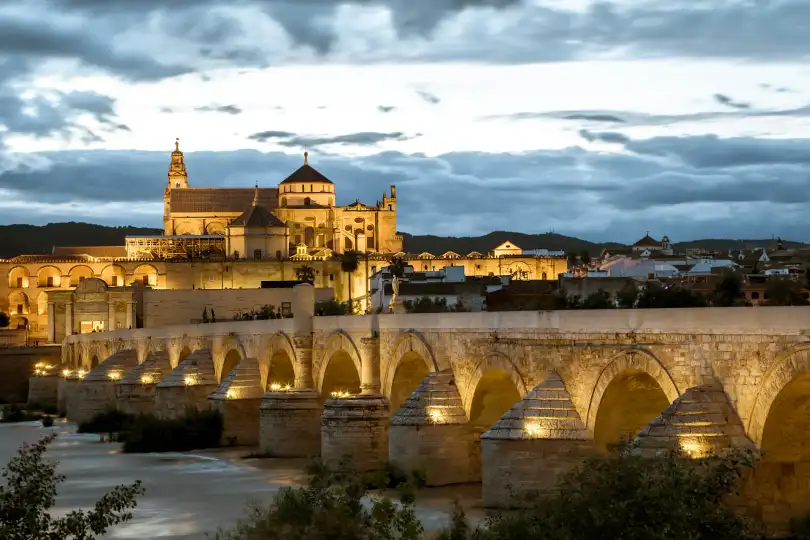 12 ways to travel
Delhi → Barcelona (BCN)
Air India (direct), Emirates (via Dubai), Lufthansa (via Frankfurt) · Direct: 9 hrs · 1-stop: 11-14 hrs · return.
Delhi → Madrid (MAD)
Iberia (direct, seasonal), Air India (via London), Emirates (via Dubai) · Direct: 9.5 hrs · 1-stop: 11-14 hrs · return.
Mumbai → Barcelona/Madrid
Lufthansa, KLM, Air France (via hub) · 1-stop: 12-15 hrs · return.
AVE (High-Speed Train)
Madrid → Seville 2.5 hrs from · Madrid → Barcelona 2.5 hrs from · Madrid → Granada 3.5 hrs · Book renfe.com 4-6 weeks ahead.
Madrid Metro
Covers all major Madrid sites, including the airport (M3 line).
Barcelona Metro
T-Casual 10 trips · Most efficient Barcelona transport.
Taxi/Bolt
Bolt app works across Spain · Airport fixed-rate from Barcelona and Madrid airports.
ALSA Bus
Budget option for Andalusia circuit (Córdoba → Granada → Seville → Málaga → Cádiz).
Toledo from Madrid
ALSA bus from Estación de Autobuses Sur.Best Toledo access at 7 am to beat day-trip crowds.
Seville → Cádiz
RENFE train · 2 hrs · Multiple daily departures · Best for Cádiz Carnival day trip.
Granada → Málaga
ALSA bus · 2 hrs · Closer airport (AGP) for Andalusia departures, cheaper flights to India.
Barcelona ↔ San Sebastián
AVE train · 4 hrs. or domestic flight (Vueling) 1 hr. Connects Catalonia + Basque Country.
12 Travel Tips
Barcelona's tourist tax (Taxa Turística) of €3.25–6.75/night is added to all accommodation bills — it is a mandatory legal tax, not a hotel fee; budget it separately when comparing accommodation costs.
Menu del Día (Menu of the Day) at Spanish restaurants is genuinely the best value dining in Europe — a 3-course lunch with wine for €12–18 in a restaurant that charges €35–50 at dinner; request it at lunchtime Tuesday–Friday.
Barcelona's La Rambla and Gothic Quarter have the highest pickpocket density in Europe — thieves work in coordinated groups; phone snatching while in use, wallet removal from front pockets, and bag-drop distraction are the primary methods.
Do not accept assistance with ATMs or ticket machines from strangers — common at Barcelona's Metro machines; accomplices shoulder-surf PIN numbers while a "helper" watches the screen.
Spanish meal times are genuinely different — lunch is 2–4pm, dinner starts at 9–10pm; restaurants before 8:30pm for dinner are either tourist traps or serving tourist versions of Spanish food; eat when Spain eats.
Catalonia has a distinct cultural identity — in Barcelona, acknowledging Catalan language and culture (even with a "bon dia" instead of "buenos días") will be warmly received; insisting only on Spanish can be received coolly.
Three-card Monte and shell games on La Rambla — illegal street gambling with shills in the crowd who appear to win; tourists who play always lose; police are present but shufflers disappear when they approach.
Unauthorized Sagrada Família "skip the line" ticket sellers at the entrance — all Sagrada Família tickets must be bought at sagradafamilia.org; any seller at the physical queue is selling fakes.
Flamenco "tablaos" near tourist offices in Seville and Granada that offer dinner + show packages at €60–90 — authentic flamenco in Jerez's peñas or Triana's neighbourhood bars costs less and is far more genuine; research specific performers.
What is worth it,
and what to avoid.
Last reviewed 2026-05-11.
- Sagrada Família 9amMorning stained glass. 200 visitors vs July's 3,000. Most extraordinary building under construction anywhere.
- Alhambra Nasrid Palaces 8:30amCourt of the Lions with 30 people. 2-3 months advance booking. Specific Islamic architecture has no equivalent.
- Mezquita Córdoba (Free)Forest of 856 columns free in February morning light. Most architecturally extraordinary free experience in Spain.
- Prado Museum 6pm (Free)Las Meninas, Saturn Devouring His Son, 36 El Grecos — free entry Mon-Sat 6-8pm. Finest Spanish art collection free.
- Cádiz Carnival (Free street carnival)4th largest carnival in world, most specifically Spanish public event, available only February/March. Chirigota street performances free.
- Flamenco tablao SevilleGenuine 90-min performance in birthplace of art form. Duende possible here in a way no other venue produces.
- Mirador San Nicolás 7am (Free)Alhambra at dawn, 8 people. Snow on Sierra Nevada. Most photographed view in Granada at its most available.
- Toledo ALSA bus 7 amMedieval capital with 3 religions' architecture in one UNESCO city, before Madrid day-trippers arrive.
- AVE high-speed train Madrid-Seville2.5 hours direct. Most efficient Spain transport. Renfe.com 4-6 weeks ahead for best prices. Spain's high-speed rail network among finest in Europe.
- Sacromonte zambra Granada— Specific Sacromonte flamenco form performed inside a cave. Audience 15 people maximum. Dance and architecture in conversation. Most intimate flamenco available.
- Alhambra without advance bookingNasrid Palaces fill weeks ahead year-round including February. Book alhambra-patronato.es 2-3 months before travel. Without ticket: gardens and Alcazaba only. Like visiting Taj Mahal from outside the gate.
- Sagrada Família walk-inWalk-in queues July: 3 hours. February: 45 minutes. 9am pre-booked ticket: 5 minutes. Pre-book at sagradafamilia.org before any other Spain booking.
- Missing the Mezquita free windowCórdoba Mezquita free Mon-Sat 8:30-9:30am. €13 from 10am. Free window empty; paid window has 400 visitors. Set the alarm.
- Eating paella in Madrid or SevillePaella is Valencian (Albufera rice fields). Madrid/Seville restaurant version is tourist adaptation. Eat paella in Valencia, or not at all.
- Barcelona La Boqueria at 11amMarket at tourist-peak 11am-2pm: front stalls tourist-priced, maximum crowd. Visit 9am (local market energy, back stalls at local prices) or after 4pm.
- Toledo only 2 hoursALSA bus from Madrid 1 hour each way. Give Toledo 6 hours (9am-5pm) for Cathedral + two mosques + synagogue + El Greco Museum. 2-hour quick visit sees 20% of city.
- Spain without the Basque CountryPintxos culture of San Sebastián (finest food bars in Europe, €2-3 per pintxo), Guggenheim Bilbao (most significant late 20th-century building), Basque coast. Most Indian itineraries skip. Add 2 days.
- Not checking Cádiz Carnival datesCarnival falls February/March based on Shrove Tuesday (varies by year). Check cadizturismo.com before booking Spain flights. For February visit: most specifically available Spain experience.
- AVE train tickets booked last minuteRenfe prices climb dramatically from €25 (4-6 weeks ahead) to €85+ (week of travel) on Madrid-Seville and Madrid-Barcelona routes. Book at renfe.com immediately after visa approval. Up to 70% saving.
- Park Güell monumental zone walk-inGaudí's monumental zone (with the famous mosaic dragon and serpentine bench terrace) requires pre-booking at parkguell.barcelona. Walk-up tickets fill by 11am even February. Book 1 week ahead for early-morning slot.
Spain FAQ
Visas, costs, safety and the practical questions travellers ask us most.
Spain Schengen Visa for Indians — Process 2026?
Spain Trip Cost from India — 12 Days 2026?
Best Time to Visit Spain from India 2026?
Alhambra Booking — How Far Ahead?
Is Barcelona Worth Visiting in February?
India to Barcelona/Madrid Flight Cost 2026?
What is the Cádiz Carnival and Should I Go?
Spain Mein Kitne Din Chahiye?


Have a Spain trip
in mind?
Choose a package, or tell us the dates, hotels and experiences you want. We check the details and send you a clear quote. Pay in BTC, ETH, USDT, USDC and 90+ other coins, with other methods confirmed on request.